

The golf season for golfers closed on our standard day, October 15th. Since then we have worked to prepare the course for the winter and put it to sleep. Next up are our winter operations, with our winter trails opening to cabin guests on December 15th. So far this fall, the snow has been light: 4 inches (2 inches on October 31st and 2 inches on November 1st), according to Keweenaw County’s snowfall records.
We started the golf season for golfers on June 1st and ended October 15th as planned. We do not extend past these dates even if the weather is good enough to play golf. Planning for these dates helps us operate better, maintain the golf course in better shape, and provide a better experience for our guests. 2024 was also a milestone: it was the 90th season of golf at the Keweenaw Mountain Lodge, as the course was built in 1934.
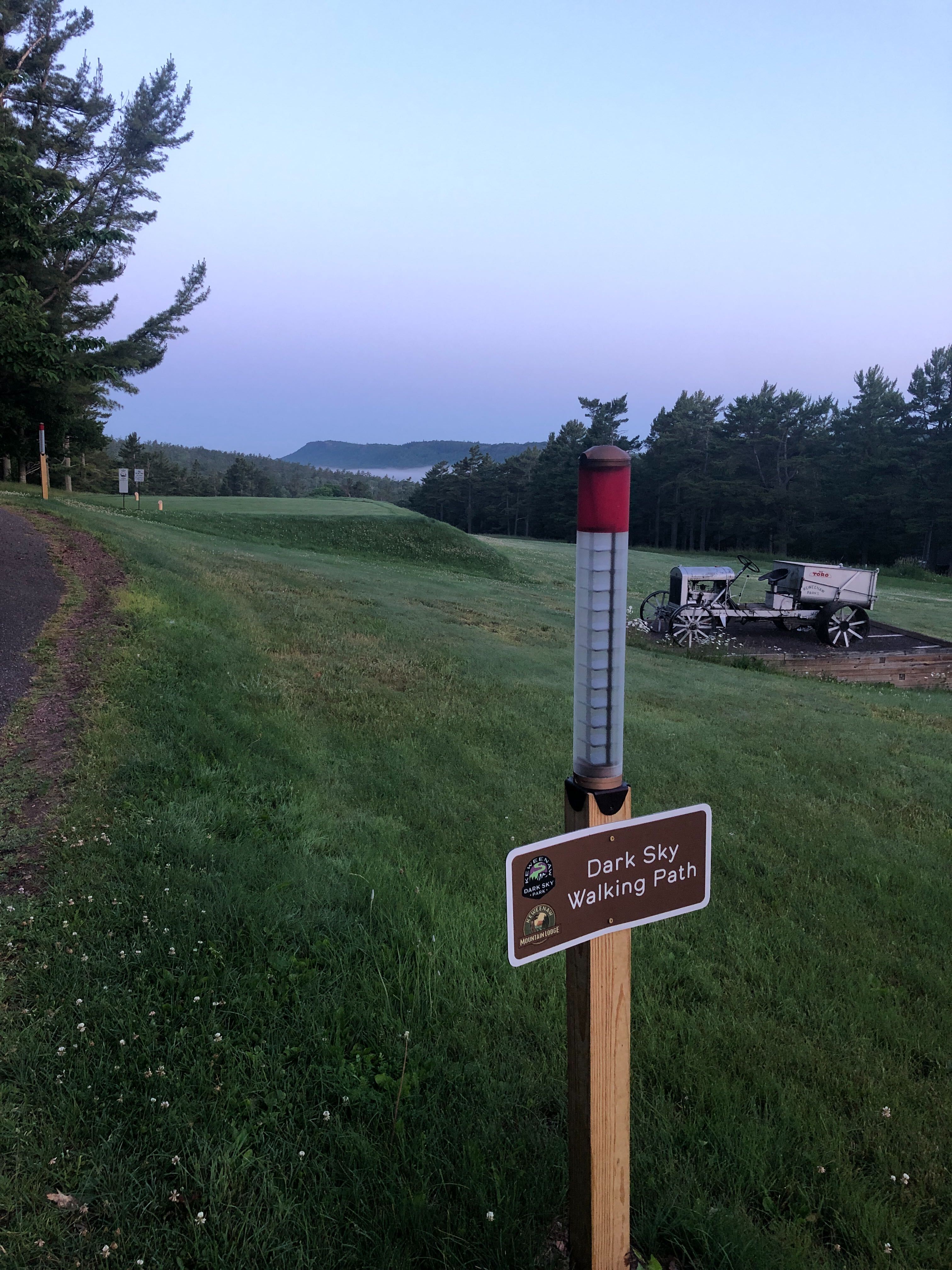
We had another wonderful golf season, with outdoor enthusiasts enjoying the fun.joyous.adventuresome atmosphere of a historic wilderness golf course — along with further education on how the golf course now plays a role in the Lodge’s dark sky activities. Individuals can play the historic golf course during the day, taking in the nature, and in the evening go stargazing. The design of the scorecard highlights this unique aspect of the Lodge property.
The outdoor activity services and golf course maintenance team members did an excellent job providing a unique experience for people playing the course throughout the season. This year we doubled down on being a historic wilderness golf course (not a golf course in the wilderness) and on focusing on our primary customers — the lodging guests (as the Lodge is a lodging establishment).
At the first tee, groups went through an orientation to better understand what is being done with the golf course and what to expect during the time they are playing. A KML team member spent the time to focus on each group, which resulted in better alignment with what golfers should expect — that we are a historic wilderness golf course, not a golf course that you take from Detroit and plop down in the Northwoods of Michigan. The orientation covered what “wilderness” means here (parts of the course are intentionally left in their natural state), why the native grasses and wildflowers in the rough were long after a wet June, our narrower fairways (more of a precision game — you might not want to hit driver), our work toward Audubon certification, and the historic touches like the 5-foot flagsticks. Many golfers thanked us after their round for taking the time to explain the course.
We continue to focus on being a resort-oriented golf course, with lodging guests as the priority. This transition to being a resort golf course started in 2020, and in 2024 we continued to refine our uniqueness. Towards the latter half of the golf season, we reserved the afternoons for lodging guests (only lodging guests could play after 1pm). And in 2025, we will move to only allowing lodging guests to play.
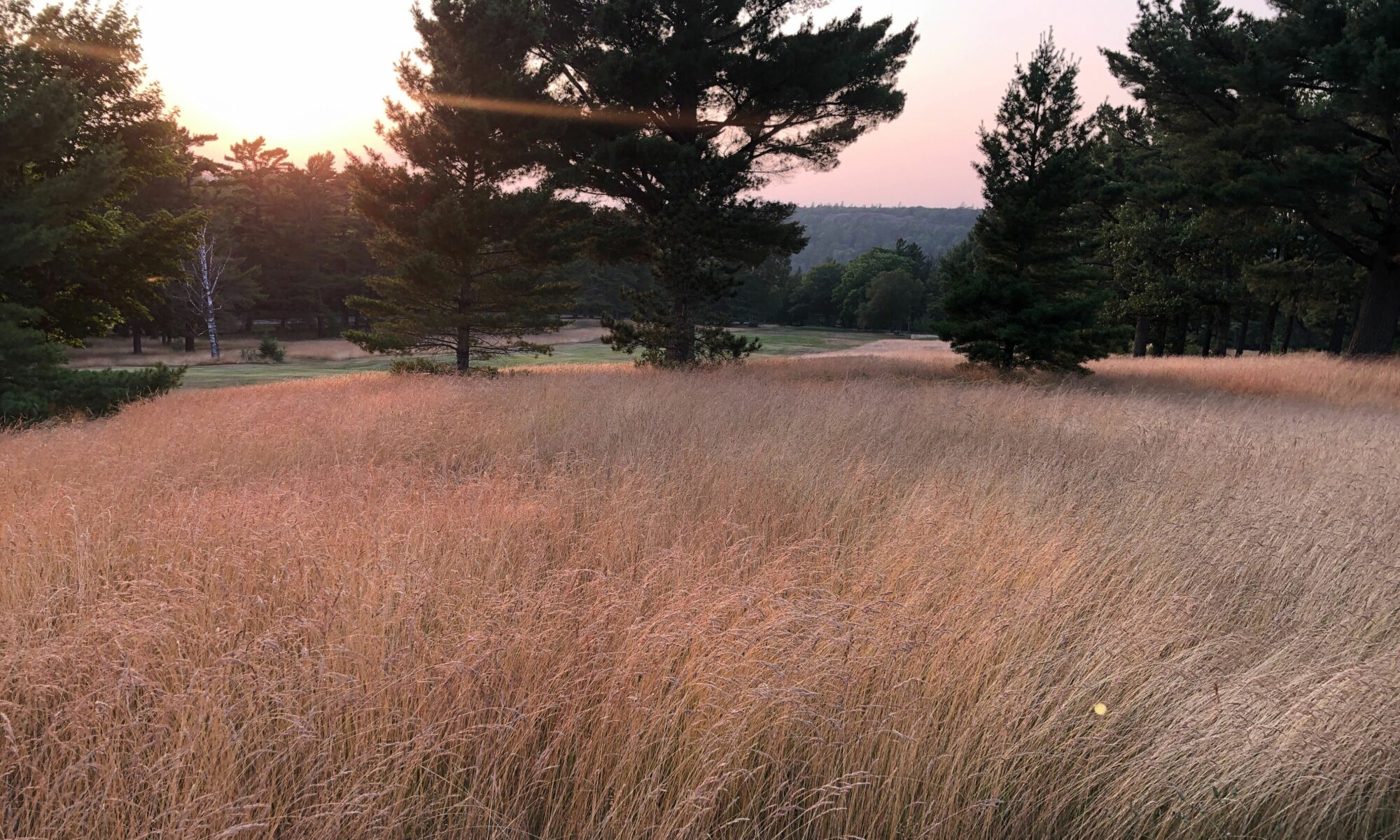
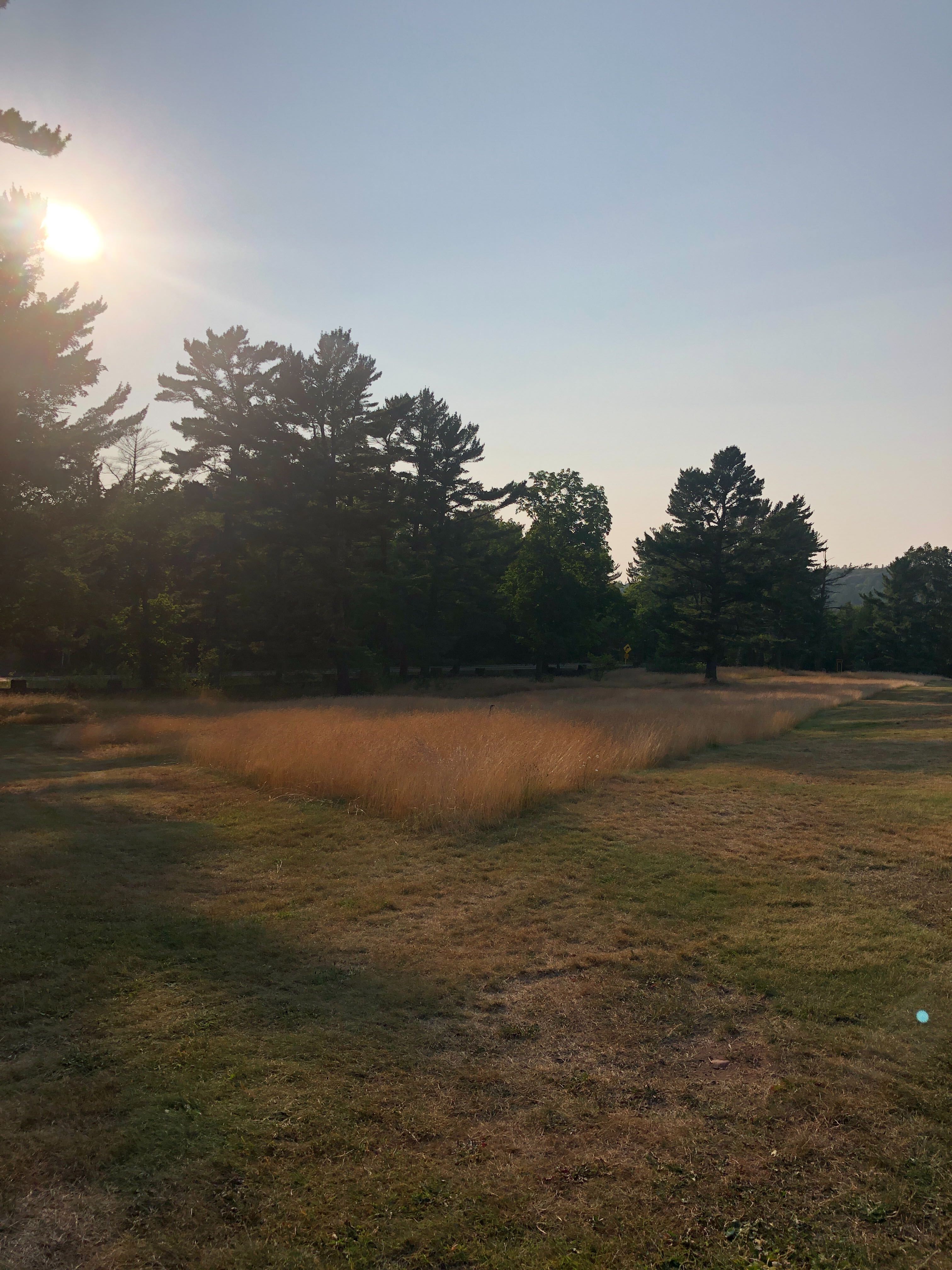
This year we further defined what a historic wilderness golf course is: a course that gets people closer to nature while playing the game of golf. We continued to encourage walking the course, moved to 5-foot wooden flagsticks made in Michigan, tested various mowing strategies, continued the move to organic fertilizers, and tweaked our application of fungicide for snow mold and dollar spot. We also let more of the natural areas grow, allowing the tall fescue to blossom, which made the golf course look more in tune with its natural environment. We spent the latter part of 2024 fine-tuning our strategy to focus our resources primarily on cabin guests. This strategy will be implemented in full during 2025, as the golf course will be open for cabin guests only — with 1 day per month open to non-cabin guests.
Outdoor Activity Center (OAC)
As a reminder, we do not have a pro shop, but rather an Outdoor Activity Center, since we offer multiple outdoor activities at the resort — not just golf (e.g., biking and hiking) — a transition made in 2020. The summer Outdoor Activity Center (OAC) is located in the historic cabin structure next to the hole 1 tee box during the golf season.
The OAC staff catered to our qualities of being a historic wilderness resort that focuses on providing an outdoor experience. We have incorporated being fun, joyous, and adventuresome by introducing alternative forms of golf to the Keweenaw — FlingGolf (note: in 2024 we closed the disc golf course, as it is not one of our main focuses). This year the OAC also added info posters about the golf course and about aerating the greens, a bag drop sign in the parking lot, and a new shipment of KML logo golf balls (a souvenir ball is now for lodging guests; everyone else is welcome to purchase one).
Score Card Design
In 2023, we redesigned the scorecard. We stayed with that design in 2024. In the design, we used more recent pictures of the golf course and integrated pictures and information about how the golf course is also part of the dark sky park.


Tee Times, Limited Rounds, No Walk-Ins, No Same-Day Tee Times, Cabin Guests Play
Tee times were available from 9am to 5pm, with golfers having to be off the golf course by 7pm. This was the same as the previous season. Golfers are off the course by 7pm so guests can walk the golf course during the evening daylight hours, and scout for where they will stargaze when darkness falls — playing golf during the day and stargazing at night.
In 2020, we went from 10-minute tee-time intervals to 15-minute tee-time intervals. In 2023, we limited the daily rounds to 44 rounds a day to ensure that golfers felt they were in the wilderness, and on August 5, 2023, we moved to 20-minute tee-time intervals. We stayed with this in 2024, and we also set it up so each group has its own tee time (we do not pair groups together).
In August, we implemented a policy to test our move to cabin guests only. The afternoon tee times (1pm to 5pm) became available only to cabin guests, and we no longer accepted walk-ins or same-day tee times. In September, tee times became required for everyone. These were stair steps toward our decision for 2025 — which is that only cabin guests will be able to play the golf course. This makes the operations run more smoothly, and ensures that golfers do their research about the golf course before coming to play.
This setup has allowed us to double down on ensuring guests understand and feel the wilderness aspect of the historic wilderness golf course at the Lodge. This also means that individuals are not rushed and have no anxiety when playing the course — ensuring a fun.joyous.adventuresome experience.
Any golfers expecting wall-to-wall manicured conditions will not enjoy the historic wilderness golf course. That expectation is fine for other golf courses — just do not expect it at the Lodge golf course. At the Lodge golf course, we strive to have golfers that want to better understand how a golf course can fit into the natural landscape, walk the golf course, and get closer to nature. The policies we continue to fine-tune help improve the probability of having those golfers stay with us and play the course.
We also reminded golfers of a few rules of the property: outside alcohol is not allowed on the golf course, and marijuana is not allowed anywhere on the property, including the golf course.
Rounds of Golf
July and August were the busiest months of the season. In July, 634 rounds were played (89 of them by lodging guests). In August, 519 rounds were played (69 by lodging guests), with close to 23% of those rounds walked.
Front 9 Endurance Golf
 This season we hosted the inaugural Front 9 Endurance Golf event. This is a golf event that plays off the Back 9 Endurance Run that we hold over Memorial Day weekend in May, and off the date we received our dark sky park certification — the longest day of the year, the summer solstice. This year the summer solstice fell on June 20th. We had several attendees participate and play 36+ holes.
Two Tee Markers
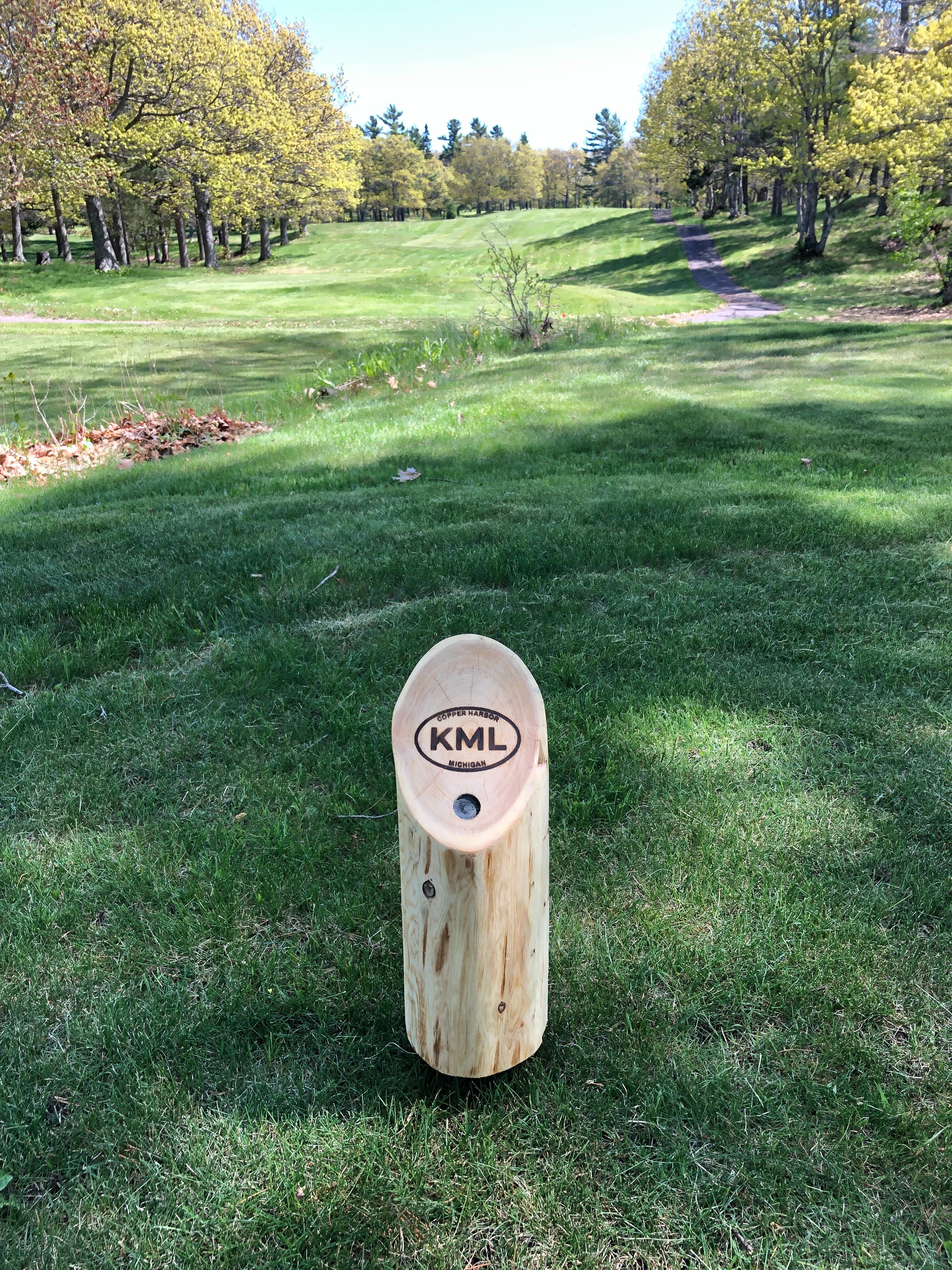
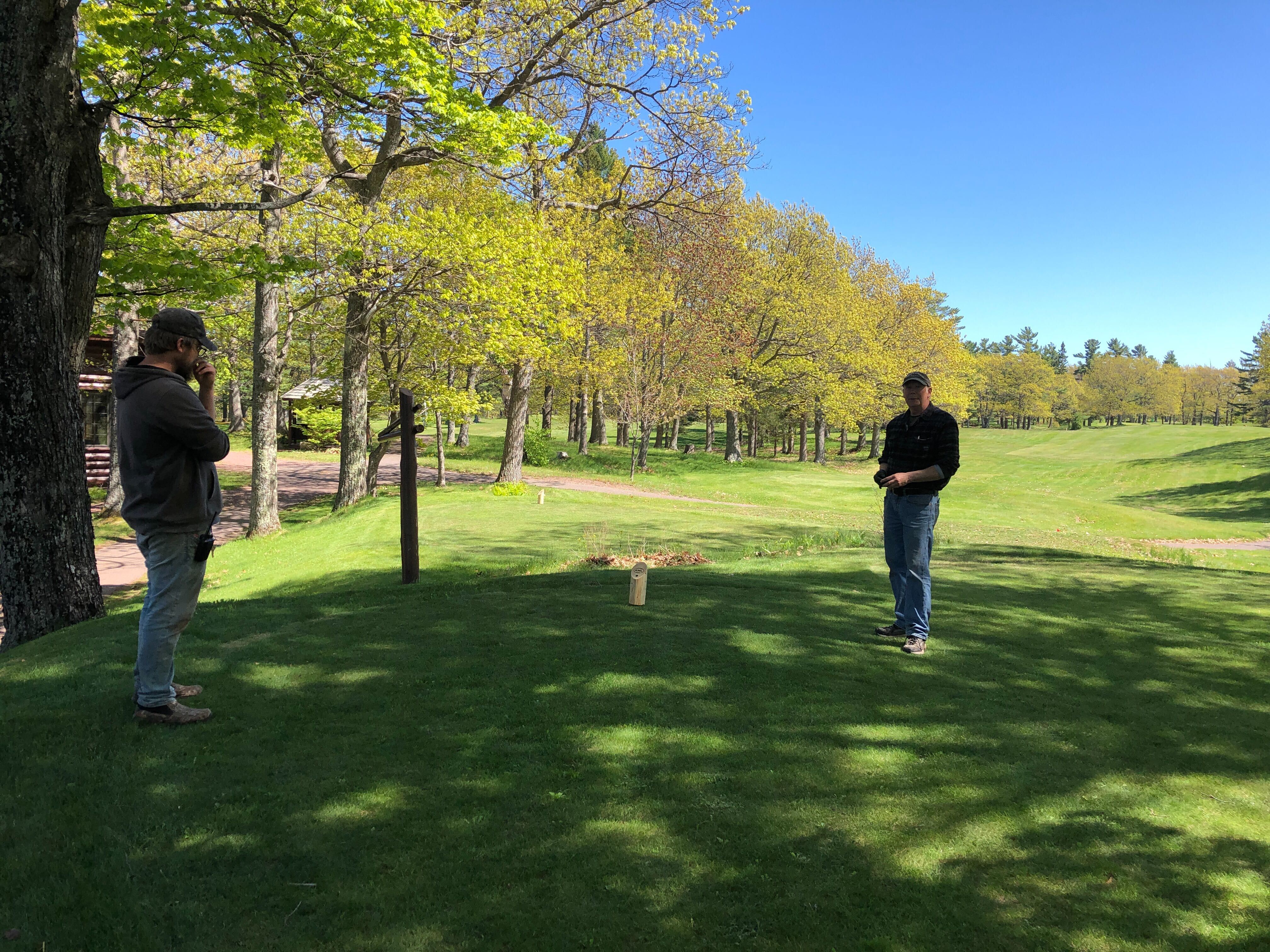
In 2023 we moved away from a four-tee system to a two-tee system: Iron (back tees) and Copper (front tees). We stayed with the two-tee system in 2024, with KML team members Hank Baron and Paul building wooden tee markers (as opposed to the plastic tee markers we had in the past). The wood came from the Keweenaw, and Hank and Paul cut, sanded, branded, and stained each one. A colored dot on each marker shows whether it is the Iron or Copper tee.
We also moved away from the gate system, where there are two tee markers for each tee. We now use only one wooden tee marker for the Iron tee and one wooden tee marker for the Copper tee. I saw this one-marker concept at Marquette Golf Club in May, and it makes a lot of sense for us: leisure golfers are not concerned with standing precisely behind the line two markers create (that is something for tournaments) — they just want to know which teeing area to hit from.
Wooden Flagsticks
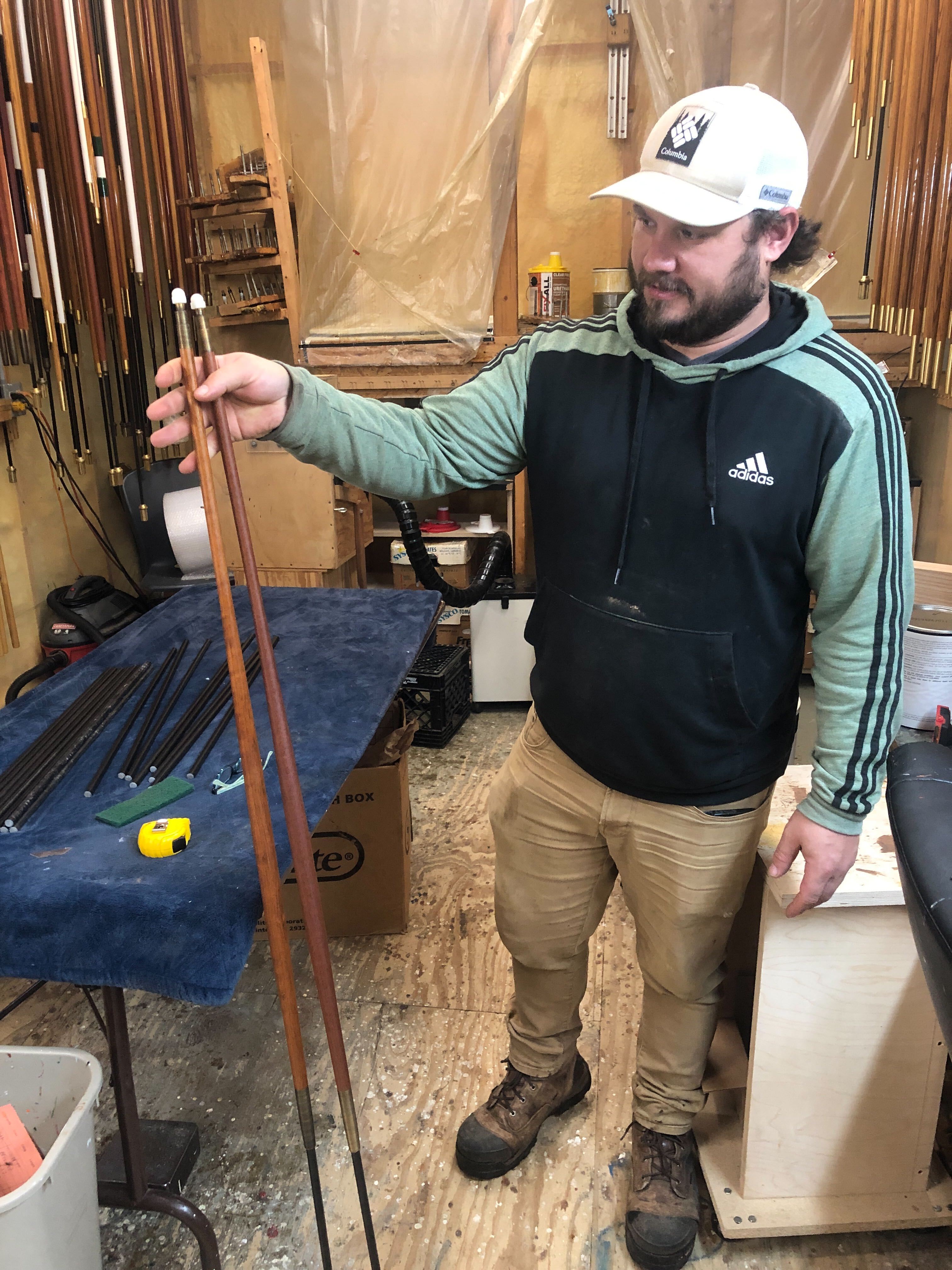
After testing out wooden flagsticks in 2023, we moved completely to 5-foot wooden flagsticks on all playing greens. When reviewing old photos of the course, we saw that in the 1930s and 1940s the course had 5-foot flagsticks, so this brings back part of the course’s history. These flagsticks are made in Michigan by Cheesebrough from Brazilian cherry wood. In late September, two flagsticks were stolen off holes 4 and 5. In November, I visited the Cheesebrough factory in Freeport, Michigan, to pick up their replacements.


Golf Course Maintenance
Our golf course maintenance crew did well this season keeping the course in great shape. The core course maintenance crew consisted of myself and Naya Mueller, with Chris Guibert and Martin Mueller filling in on push mowing and dew whipping. Everyone worked exceptionally hard to irrigate and mow to keep the turf in good shape.
Naya returned this year to help with mowing — focusing on tee boxes and fairways. She worked on these two last year, and continued this focus this year. Like last year, mowing fairways became an evening job, as we were able to do that once the golfers were off the course by 7pm.
Long-time golf course superintendent Bill Alband retired at the end of the 2021 season. However, he continues to be willing to help out to get the machines ready. This was no different this season, as he spent May and part of June making sure our machines / mowers were ready for action.
Heights of Cut
For those curious, here is how we mowed the different areas of the course this season:
- Greens: 3/16″
- Green collars and approaches: 1/2″
- Green surrounds: 1 7/8″
- Fairways: 7/8″
- Tee boxes: 1″ (with electric push mowers)
- Tee surrounds: 2″ (with electric push mowers)
- First cut of rough: 1 7/8″
- Second cut of rough: 3″
- Natural areas: left natural
Greens
We strive to have the greens in excellent shape, good tee boxes, and decent fairways. We were able to accomplish that with the golf course maintenance crew.
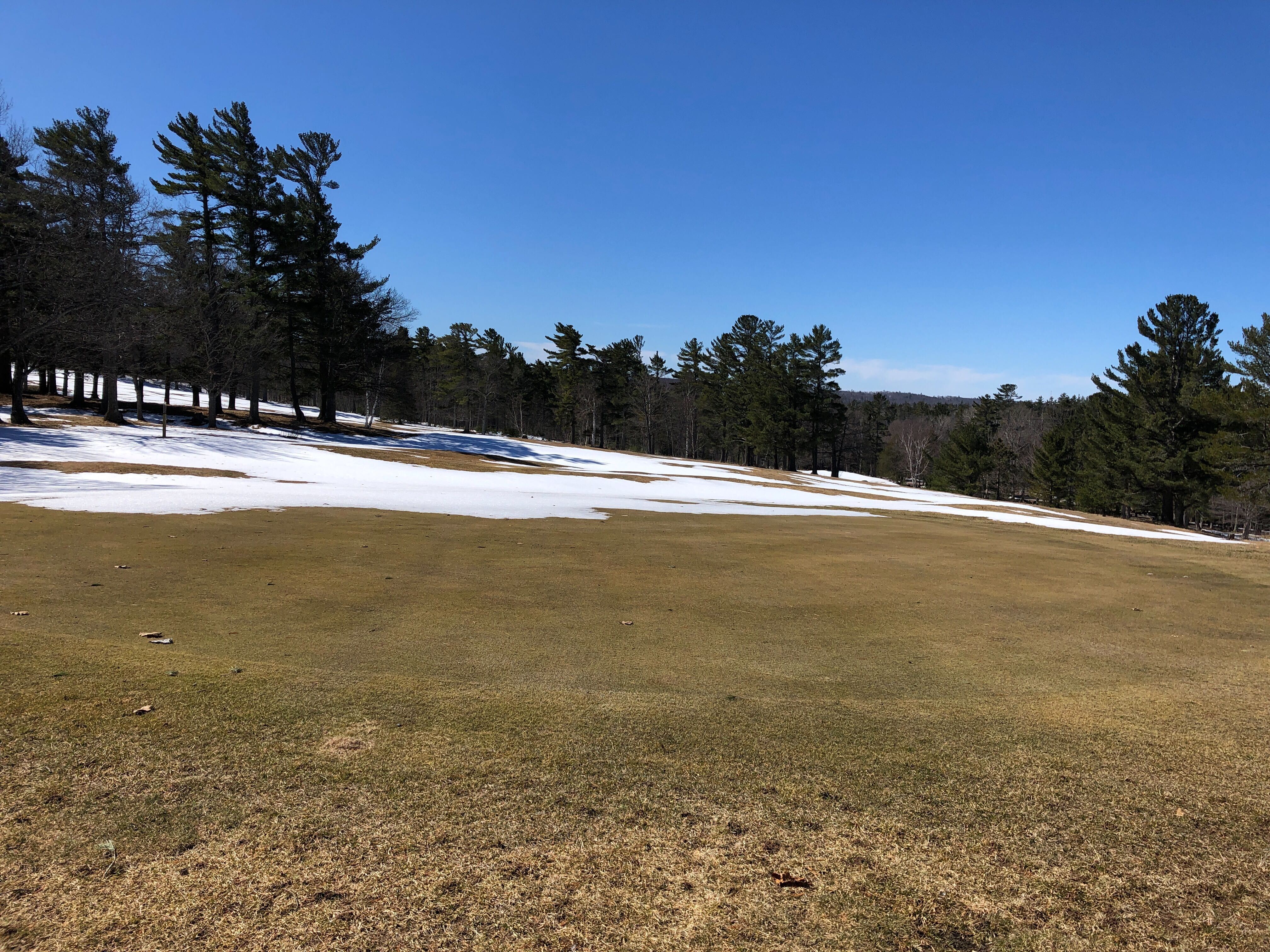
Our greens came out of winter wonderfully, with very little scarring from snow mold. With the help of various people, including Craig Moore (Marquette Golf Club / Greywalls), along with a light-snow winter (153 inches of snow for the 2023-2024 season, according to Keweenaw County, and in March there were only 5-6 inches of snow on the greens at the deepest spots, much less than the normal 2 feet), we came out of winter with very little snow mold scarring — some on holes 4 and 5. Probably only about 1% of the turf surface on the greens had snow mold scars. This was so much better than the previous year, when 30-40% of our greens’ surface had scarring from snow mold. In early April, we shoveled the remaining snow off the greens to help them along.
The greens did wonderfully throughout the entire season. They were smooth and consistent. On the Stimpmeter, the greens ran between 6′ 9″ and 7′ 10″ through the summer (average to semi-fast), which fits a walking, wilderness course. The cups did not need to be moved often: after moving them on July 3rd, we went almost 10 weeks before moving them again before aerating in September.
We did see an increase in moss on the greens, which was probably due to a wet spring. I did not apply a herbicide this year (e.g., QuickSilver), but used Ultra Dawn for spot spraying to keep the moss at bay. [ We will probably want to do an application of QuickSilver in late May / early June in 2025 to deter the moss during the 2025 season. ]
During the summer / fall, we did several sprays with fungicides on the greens for dollar spot and pink snow mold. We also did several spot applications of granular fungicides when it was not necessary to do a spray.
We did one application of an insecticide, which was to treat cutworms early in the season (in June).
Fertilizer and Soil Testing
We continued our move to more organic fertilizers. On the greens we used Contec BioMend DG 9-4-9 several times during the season, and finished in October with Nature Safe 8-3-5. This was also our second year applying humic acid (Humic DG) to the greens. On the tees and fairways, we moved to Nature Safe 16-0-2, an organic-based fertilizer that is new to us (in 2023 we used a 21-0-7, and the year before that a 23-0-10).
In September, we took soil samples, and in October Dean Musbach of Reinders visited to review the results with me. The greens look good for the most part. The tees and fairways have a low pH and a phosphorus deficiency, which we will address over the next few seasons. Dean put together a 2025 fertilizer and chemical application plan based on the soil analysis.
Aerating and Top Dressing the Greens
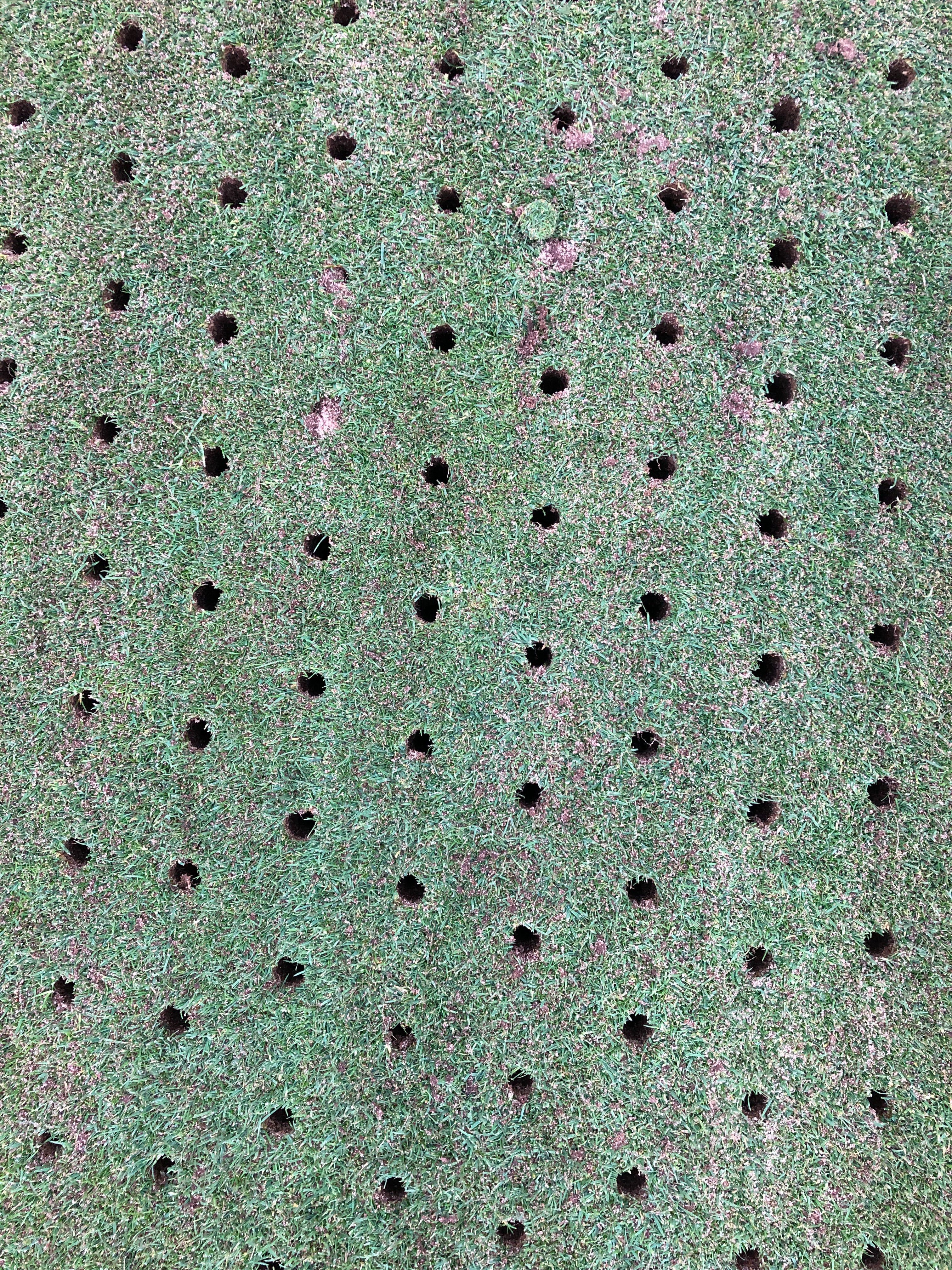
We started aerating in September. After the 3rd green, our aerator (a Jacobsen Vaerator VA-24) was acting up — its linear actuator was not consistently lowering or raising. We did not get it working properly, so we only aerated 3 greens: holes 5, 9, and 7.
To keep the turf robust on the greens, I double verticut the remaining greens. Then we spent time brushing and hand raking in the sand on greens 5, 9, and 7 (and using the vibrating rollers on our greens mower) to ensure the aerating holes were filled with sand.


Fairways
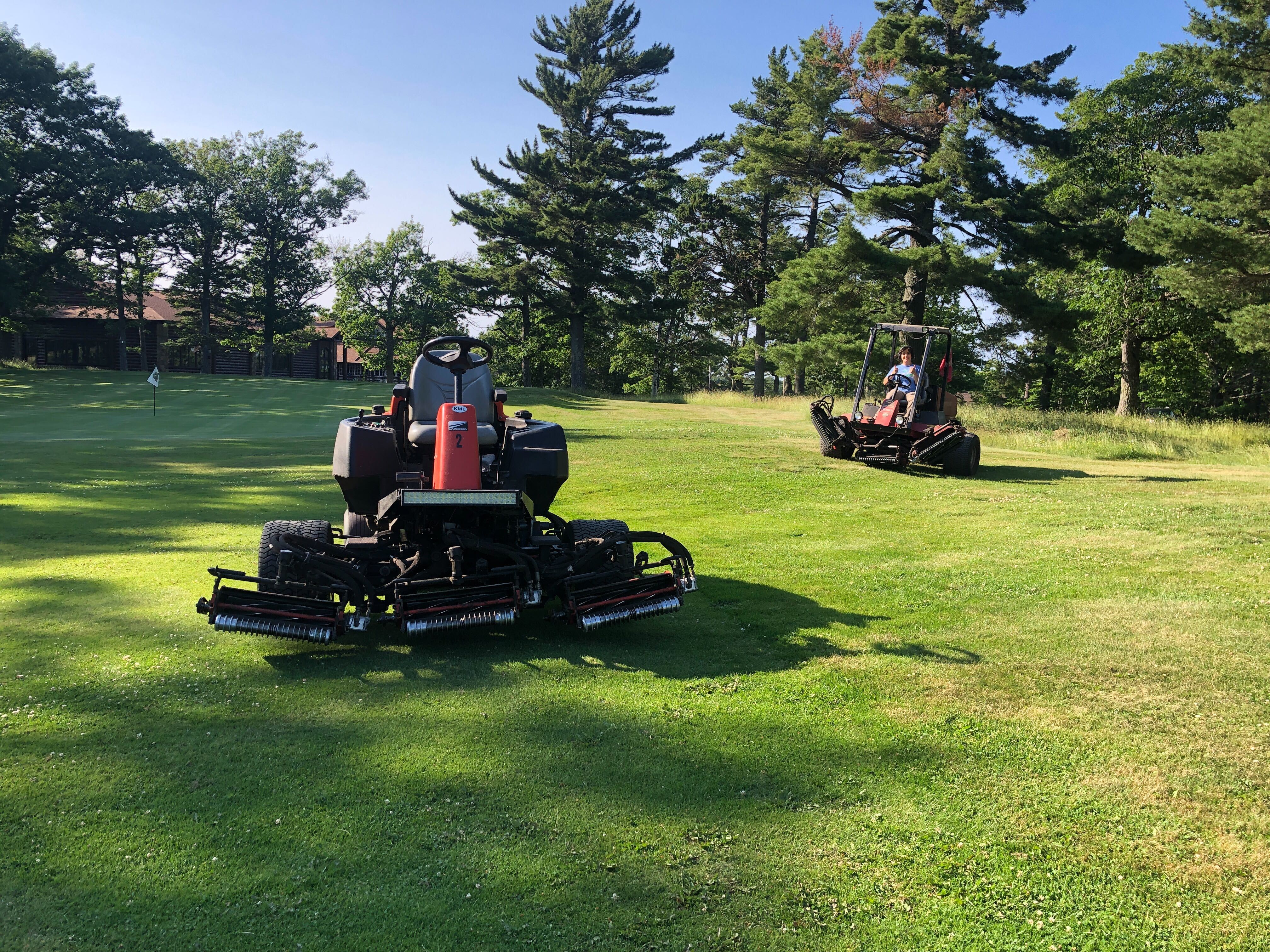
Naya and I cut the fairways twice a week at 7/8″ in July, August, and September. We continue to be able to mow the fairways in the evenings in tandem with two fairway mowers (Toro 5400D and Jacobsen SLF 1880). In early July, both fairway mowers were down at the same time waiting on parts, so the fairways were a little long and hairy for a few days.
I did a spot spray of a herbicide on the fairways to address plantain, clover, and dandelions that rose above our threshold. This was mainly on the hole 2 and 4 fairways, along with some areas on the hole 1, 5, and 7 fairways.
Water
Our irrigation pond is filled by our well and by a pump that brings water up the hill from Lake Superior. This season the Lake Superior pipeline needed attention: in June we found and fixed a leak near the Grant Township water tank (caused by excavating work done near the pipe the previous fall), and in late July a contractor working nearby damaged a valve on the pipe, which was then repaired. The pump itself also needed a new filter housing in August. We blew out the irrigation system on October 30th (later than our usual early-to-mid October) and winterized the Lake Superior pump in early November.
Resources
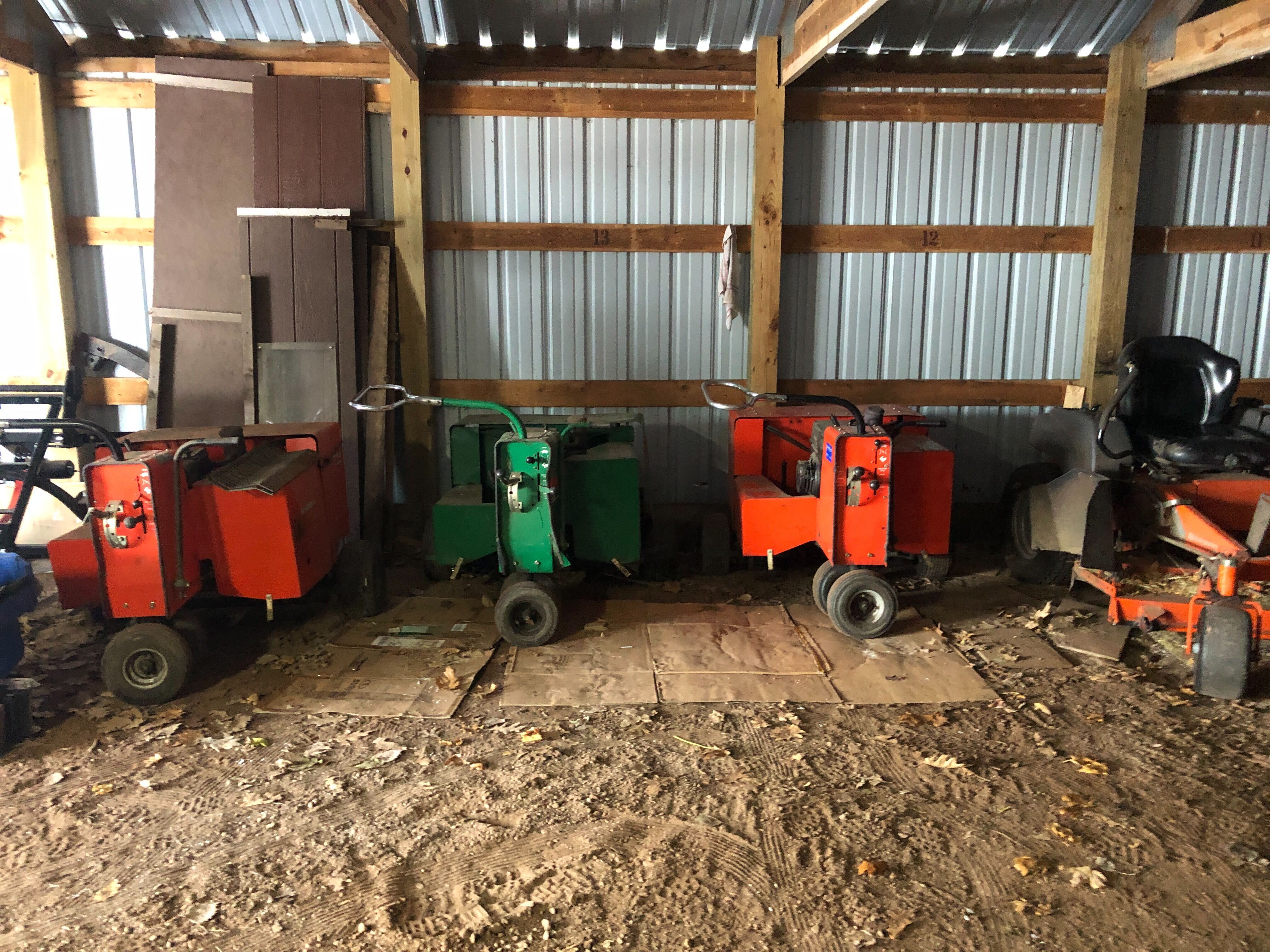
We continued to improve our resources for golf course maintenance. In 2023, we purchased a Foley reel grinder and a Foley bedknife grinder to keep our mowing units sharp (sharp units help keep the grass healthy when cutting blades of grass), along with a Bobcat mini-excavator for special projects around the Lodge, including on the golf course.
In 2024, after our aerator gave us trouble in September, we found a way to add redundancy. In December, Craig Moore and I drove out to New York to pick up three Jacobsen / Ryan Greensaire 24 aerators from Pelham Country Club and Leewood Golf Club, whose superintendents were looking to part with them. These will allow us to do more aerating where and when it is needed.
The four-year lease on our two Tempo Walk carts ended this season, and we returned them in October. Our EZ-GO electric golf cart lease also ended with the 2024 season.
Now that the season has come to a close, the grounds crew is preparing for the upcoming winter in order to prevent snow mold and other casualties that could harm the course. The putting green is again part of the WinterTurf research project, led by the University of Minnesota and working with Michigan State University and other universities, which studies how winter stresses affect turfgrass in northern climates. Last winter (2023-2024), we took weekly snow depth and temperature readings at four spots on the putting green, and a WinterTurf sensor box, powered by a solar panel, sat on the putting green until May. We will be taking our weekly readings again this winter.
Wildlife and Nature on the Golf Course
An aspect of the Keweenaw Mountain Lodge’s golf course that is regularly commented on by guests is the likelihood of seeing wildlife on and around the course. This can be in the form of crows sounding a “wake-up alarm” around the cabins, painted lady butterflies feeding on nectar from the viburnum planted in front of the Lodge, deer eating apples from the apple tree along the hole 4 fairway, or the occasional black bear that strolls through our campus. One-on-one encounters with wildlife really emphasize for people the surrounding wilderness landscape and connect them personally with our environment.
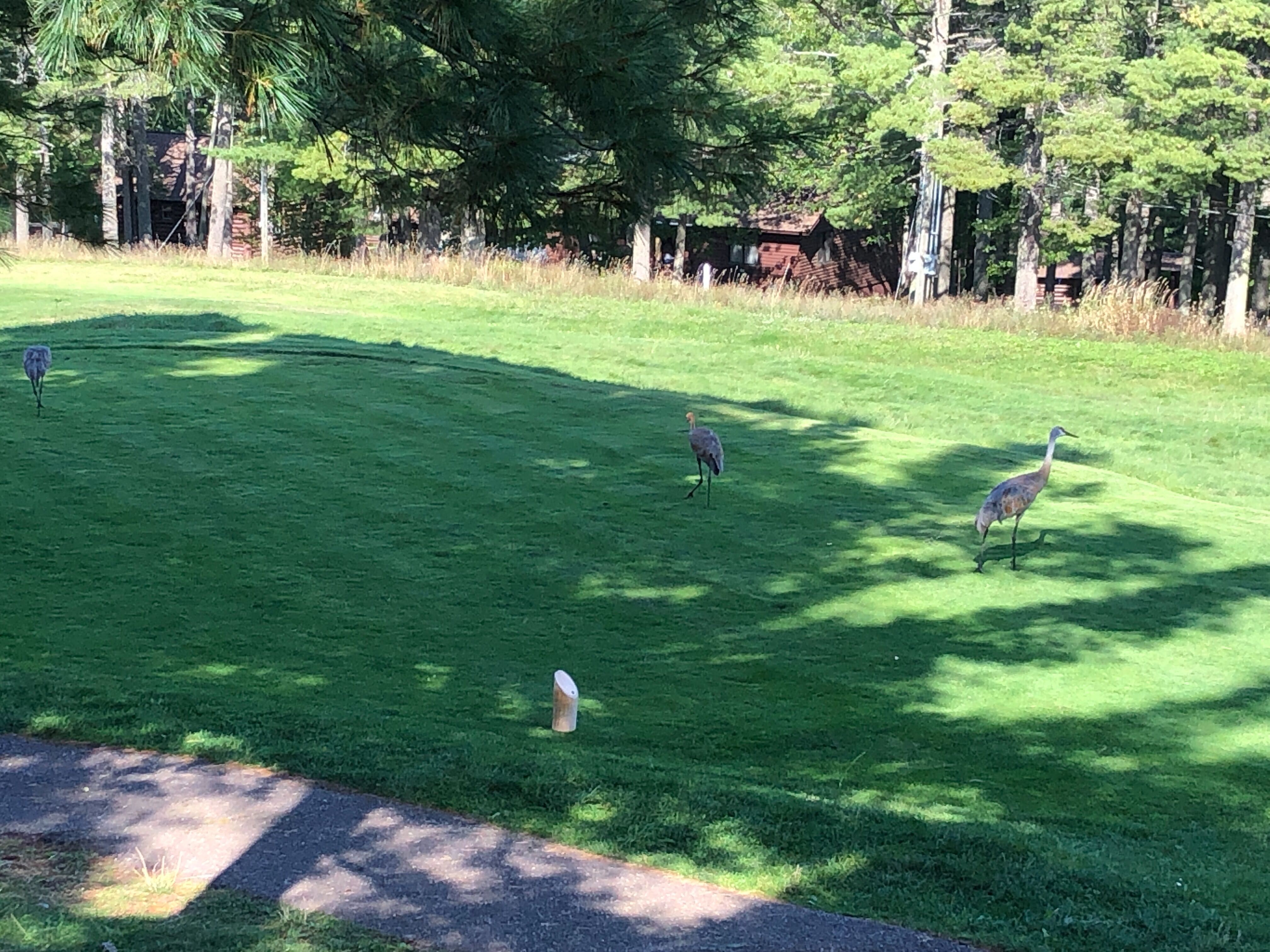
This season we were frequented by deer, woodchucks, chipmunks, grey and black squirrels, merlins, geese, turkeys, and our resident pair of Sandhill Cranes. The cranes were back on the course by mid-April, and were regular mowing buddies throughout the summer. One golfer had a round to remember in July, when a mother turkey nesting off the right side of the hole 2 fairway chased him out of the woods while he was looking for his ball.
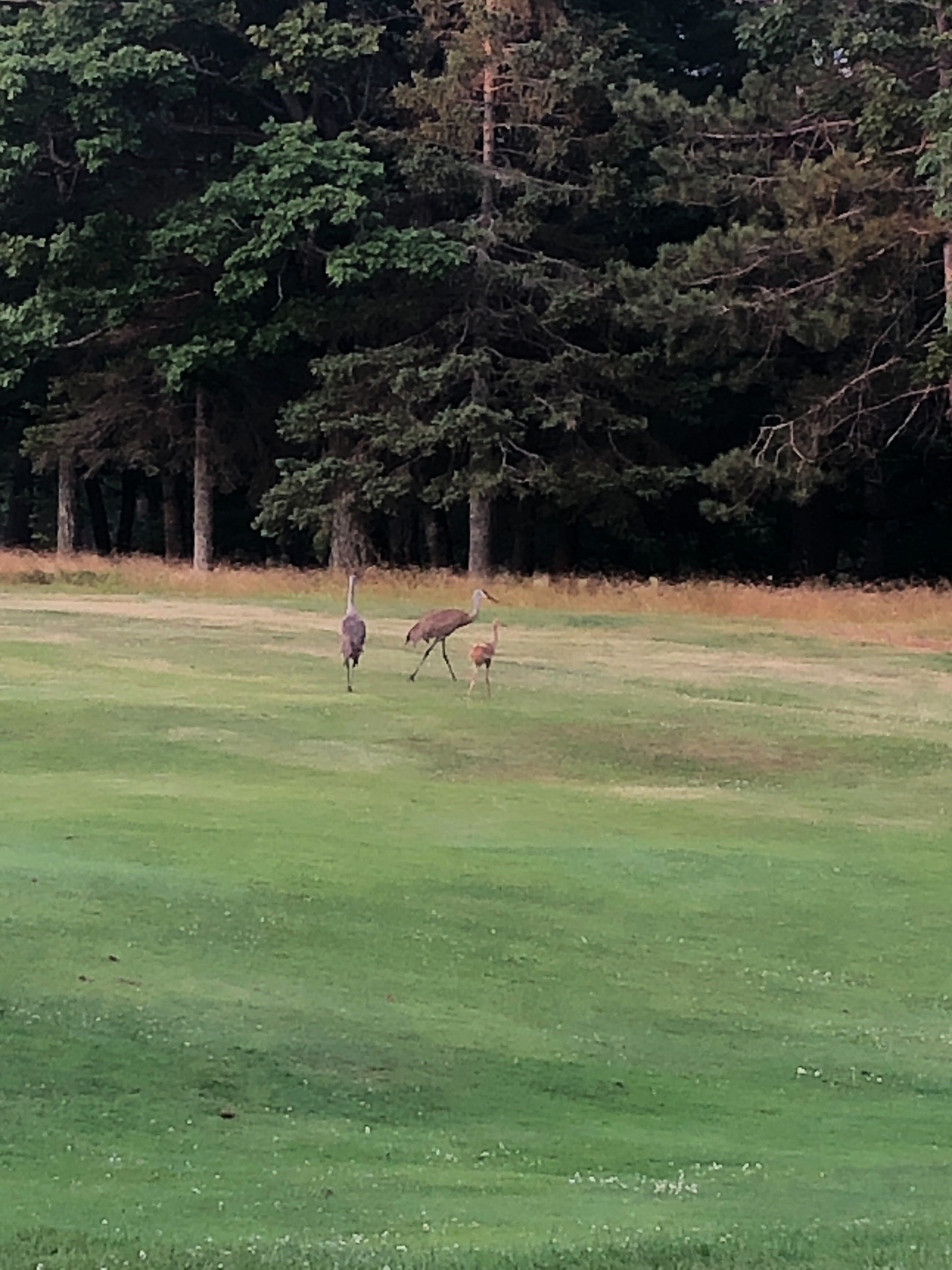
The cranes stayed on the course throughout the season, spending their last couple of weeks saying good-bye around the buildings and cabins before migrating south in late September. After they left, the course became a turkey playground.
Audubon Cooperative Sanctuary Program for Golf
We recognize the value of maintaining healthy ecosystems and getting the chance to encounter wildlife in such ways. To help protect our environment while preserving the natural heritage of the game of golf, the Keweenaw Mountain Lodge is a member of the Audubon Cooperative Sanctuary Program for Golf (ACSP-Golf). ACSP-Golf is an education and certification program developed by Audubon International to help enhance the valuable natural areas and wildlife habitats that golf courses provide, improve efficiency, and minimize potentially harmful impacts of golf course operations. The ACSP-Golf program takes stock of, and then develops a plan for improvement around, six key environmental components:
- Environmental Planning
- Wildlife and Habitat Management
- Chemical Use Reduction and Safety
- Water Conservation
- Water Quality Management
- Outreach and Education
Much of our effort will occur without much notice by guests. However, when you visit us over the next several years, there are some aspects you might see. For instance, we are converting some areas of rough to help local pollinators and aid the Monarch butterfly migration by planting native wildflowers and grasses. In May, we staked out our first “Monarchs in the Rough” trial plot between the hole 2 and hole 7 fairways, and we started a milkweed garden for the monarchs.
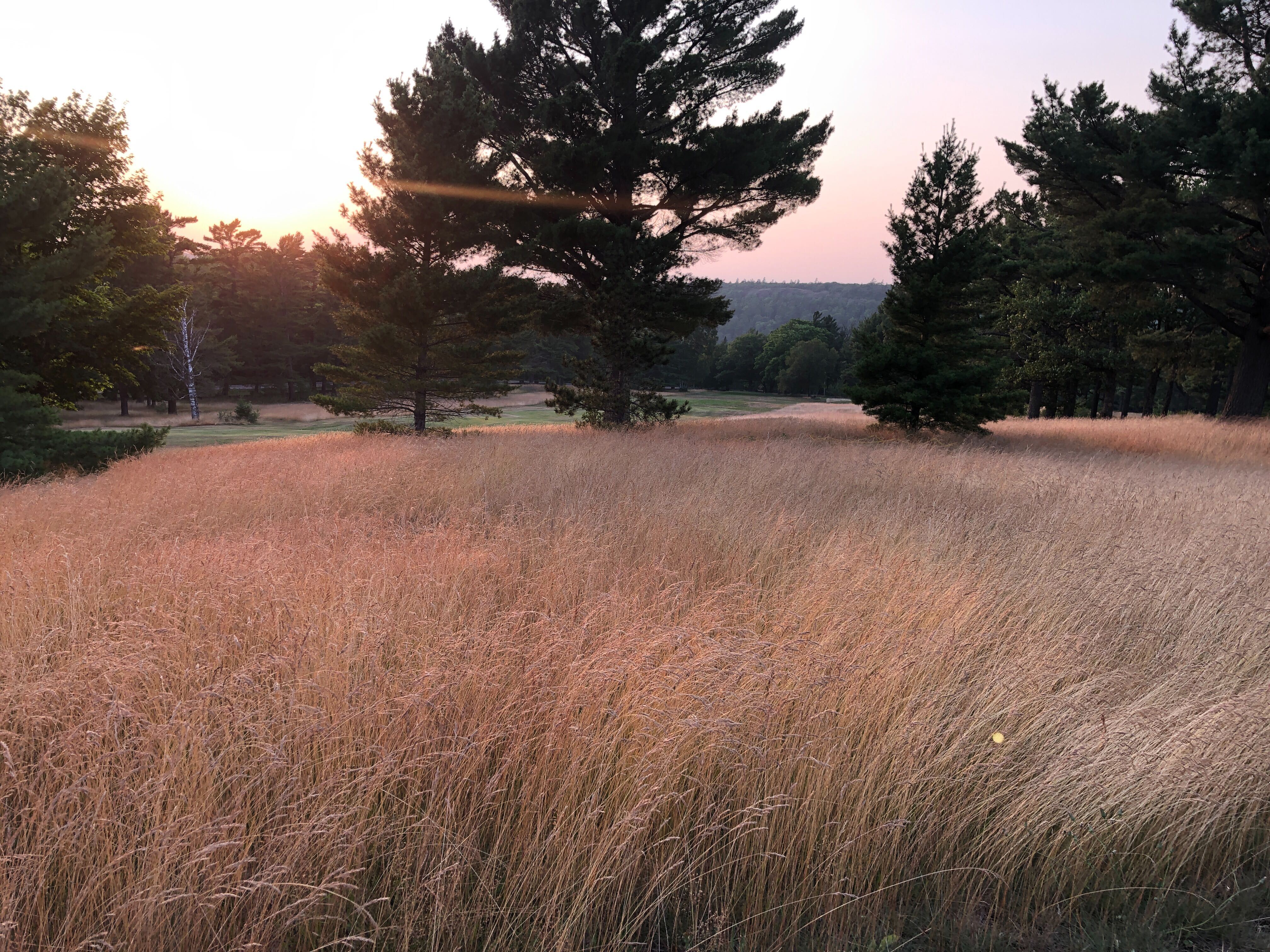
If you see work being done on the course and are not sure what it is, please ask. We are very excited to talk about the future of ACSP-Golf at the Keweenaw Mountain Lodge.
Scott Turner of Audubon International visited in late August. We are working on various levels of the certification, and we want to work on the following 3 things in 2025:
- Dedicated wash area with a non-permeable surface
- Dedicated mixing area with a non-permeable surface
- Fuel containment for our fuel tanks
[ Learn more about the application ]
Visited Greywalls / Marquette Golf Club, Bandon Dunes Resort, Pelham Country Club, Leewood Golf Club
This year I visited several new places, which provided me some ideas for how to maintain the Lodge golf course. In May, Craig Moore toured me around Greywalls in Marquette. In November, during our Thanksgiving holiday, my family and I walked around the Bandon Dunes complex in Oregon. And in December, Craig Moore and I drove out to New York to pick up the aerators he found to help us out at Pelham Country Club and Leewood Golf Club. Jeff Wentworth also gave us a tour of the Pelham course. The extra aerators will be beneficial for creating healthier turf at the Lodge course.
Looking Forward: The 2025 Season
Here are several items we will be focusing on in 2025:
- Opening the golf course to cabin guests only (with 1 day per month open to non-cabin guests)
- Continuing to promote exercise / walking, by carrying one’s bag or using a pull cart. We will be moving from 15 to 10 golf carts, so cabin guests who want a golf cart will want to reserve one early with their tee time. We continue to encourage walking — it is better for people and better for the golf course. It is what golf is about: walking and being outside as a form of exercise.
- Continuing to improve the historic nature of the golf course
- Continuing to improve the wilderness nature of the golf course
- We will no longer allow alcohol on the golf course. Any alcohol will be enjoyed at the Lodge (the 19th hole) or in one’s cabin. At the Lodge, golf is treated as a sport, not a drinking party.
- Increasing the awareness of the wildlife and nature associated with the golf course
- Moving through the process of becoming a certified Audubon Cooperative Sanctuary Golf Course (wash area, mixing area, fuel containment)
- Further focusing our resources on cabin guests
The golf course is now closed for the 2024 golf season and has been put to sleep for the winter. We will open for the 2025 golf season on June 1, 2025.
[ Read the 2023 Golf Season Recap ]
[ Read the 2025 Golf Season Recap ]
[ a historic wilderness golf course ]
— not a golf course in the wilderness —
[simple-author-box]