
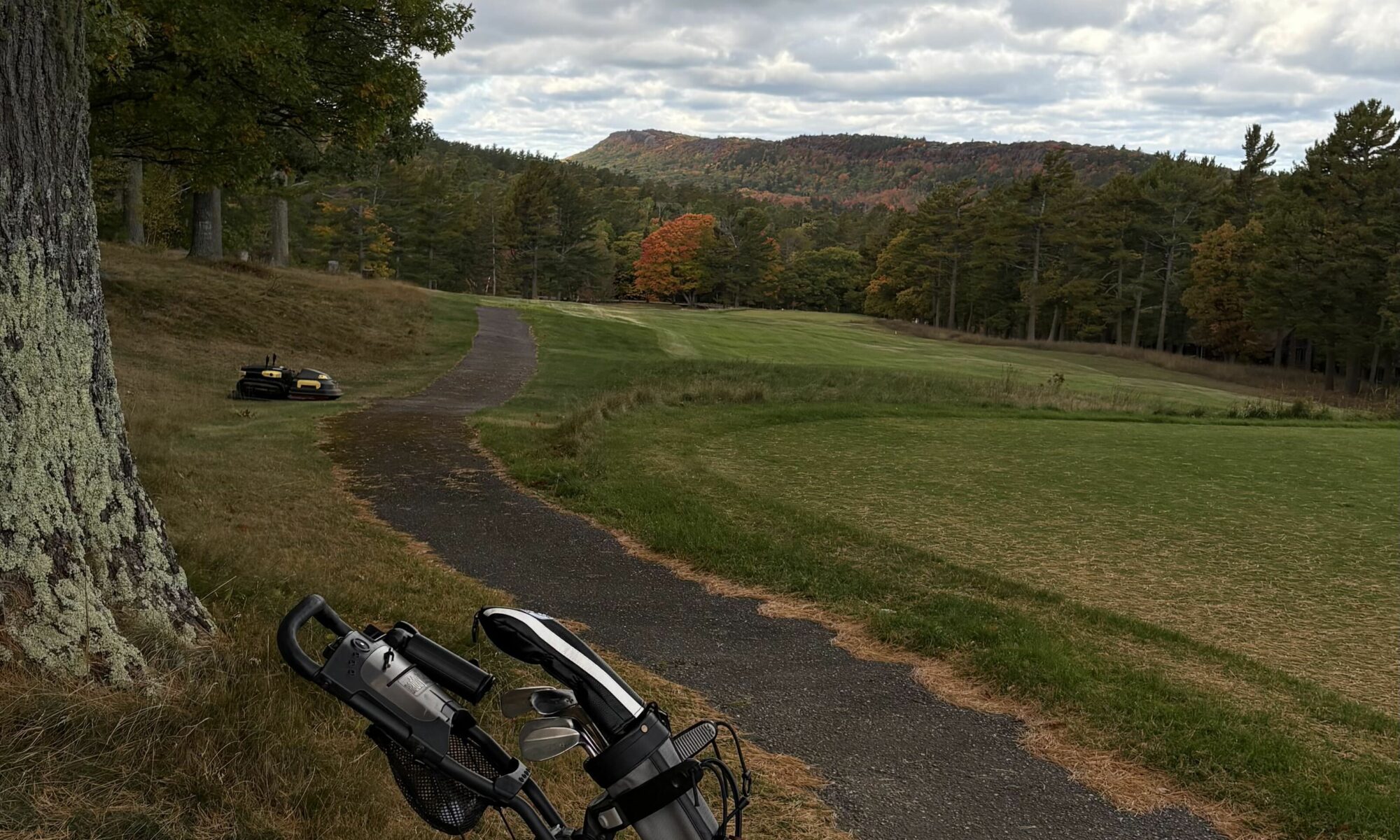
The 2026 golf season is in the books. The golf course was open for cabin guests from June 1st through our standard closing day, October 15th. Since then, we have put the course to sleep for the winter, and the first snow of the 2026-2027 winter arrived on November 6th.
2026 will be remembered as the year the golf course became what we have been building toward: a walking-only, hickory-only historic wilderness golf course. We had planned to get there by 2028. A dry summer and the way guests took to the hickory clubs moved us there two years early. It was also the year the course became a Certified Audubon Cooperative Sanctuary, and the year robots started mowing our fairways.
Coming Out of a 360-Inch Winter
The winter of 2025-2026 brought 360 inches of snow to the Keweenaw (according to Keweenaw County’s snowfall records), with blizzards and temperatures as low as -14 degrees in January. The snow and ice were off the putting green by April 19th, and off all the greens by May 1st.
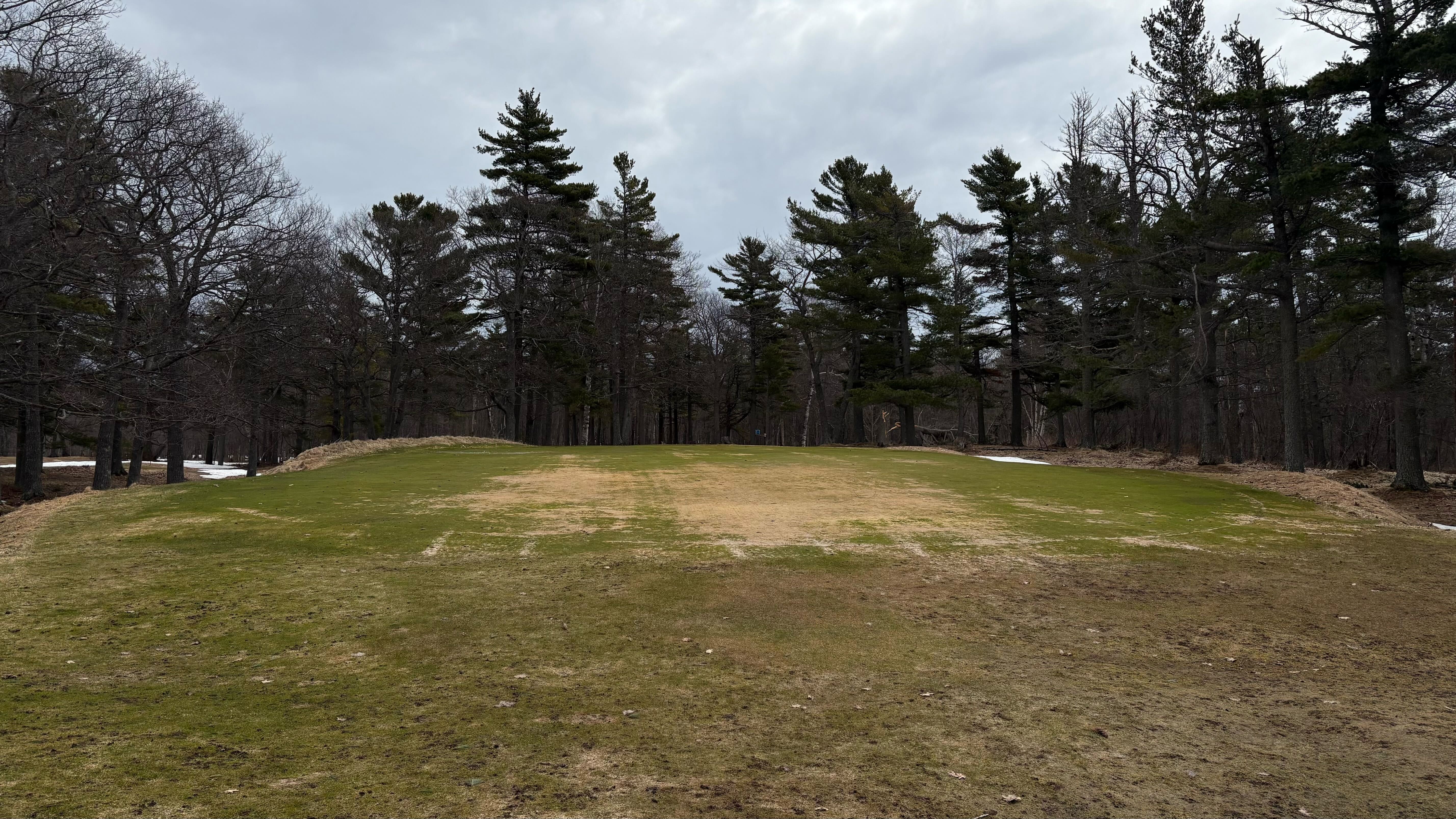
Like last year, the long snow cover was hard on several greens. Hole 4 green had a big swath of snow mold and ice suffocation in the middle of it, and holes 2, 3, and 6 also had snow mold. In late April and early May, we blew off and brushed in the sand clumps, and dragged a cocoa mat across the greens to work the sand into the canopy, pull out the dead grass, and help the wet greens dry out. In late May, we seeded the scarred areas on greens 5 and 9. By the third week of June, the greens looked healthy.
Expanding the Greens
We continued to expand the greens this season. Since we started expanding them in 2024, the greens have grown from about 1 acre of putting surface to 1.66 acres. By 2027, we will be closer to 1.8 acres. This brings the greens closer to their original size when the golf course was built in 1934. Larger greens help with maintenance, especially with the drainage of water, and they play more like they did in the 1930s, when the course was played with hickory clubs.
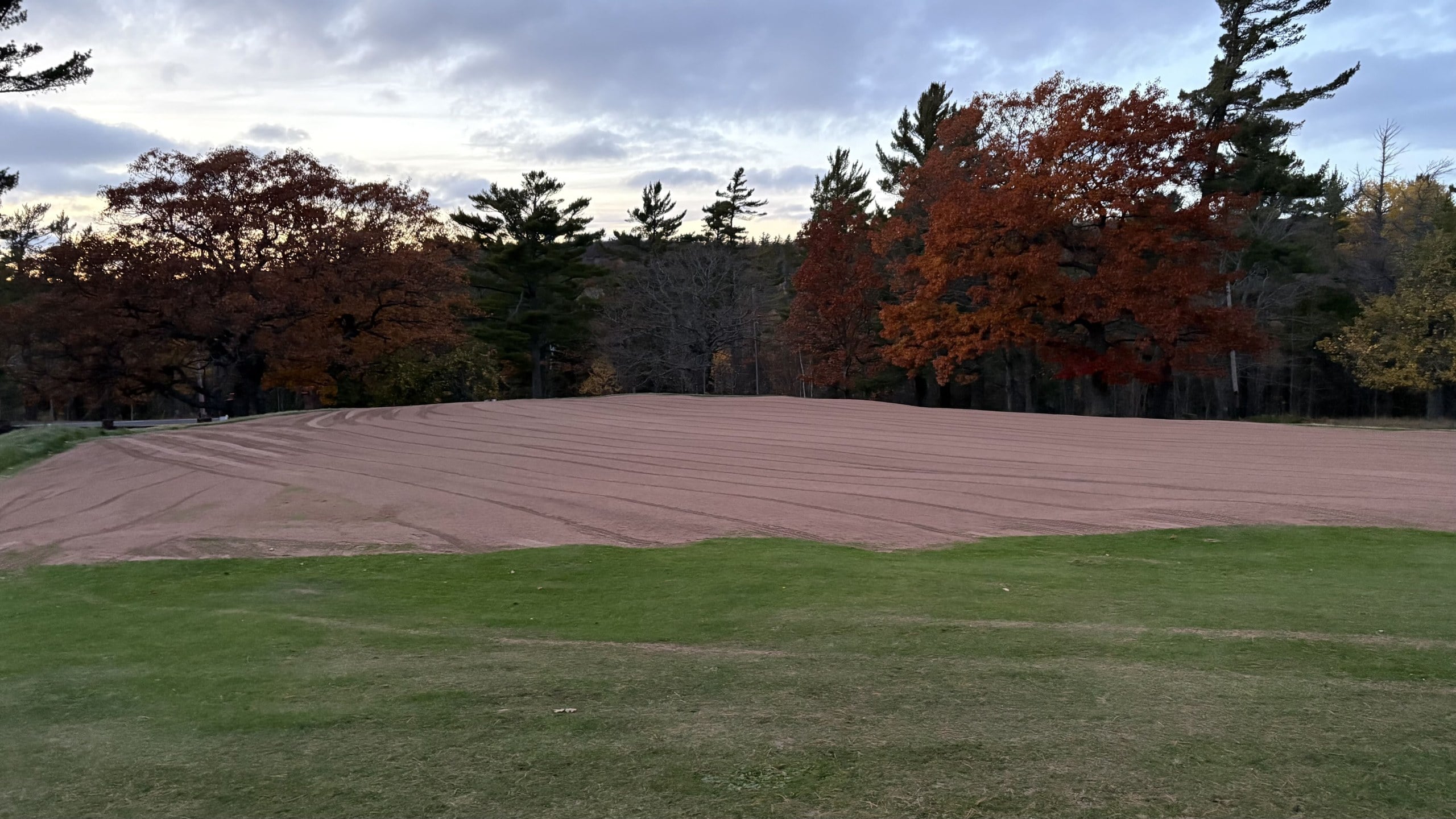
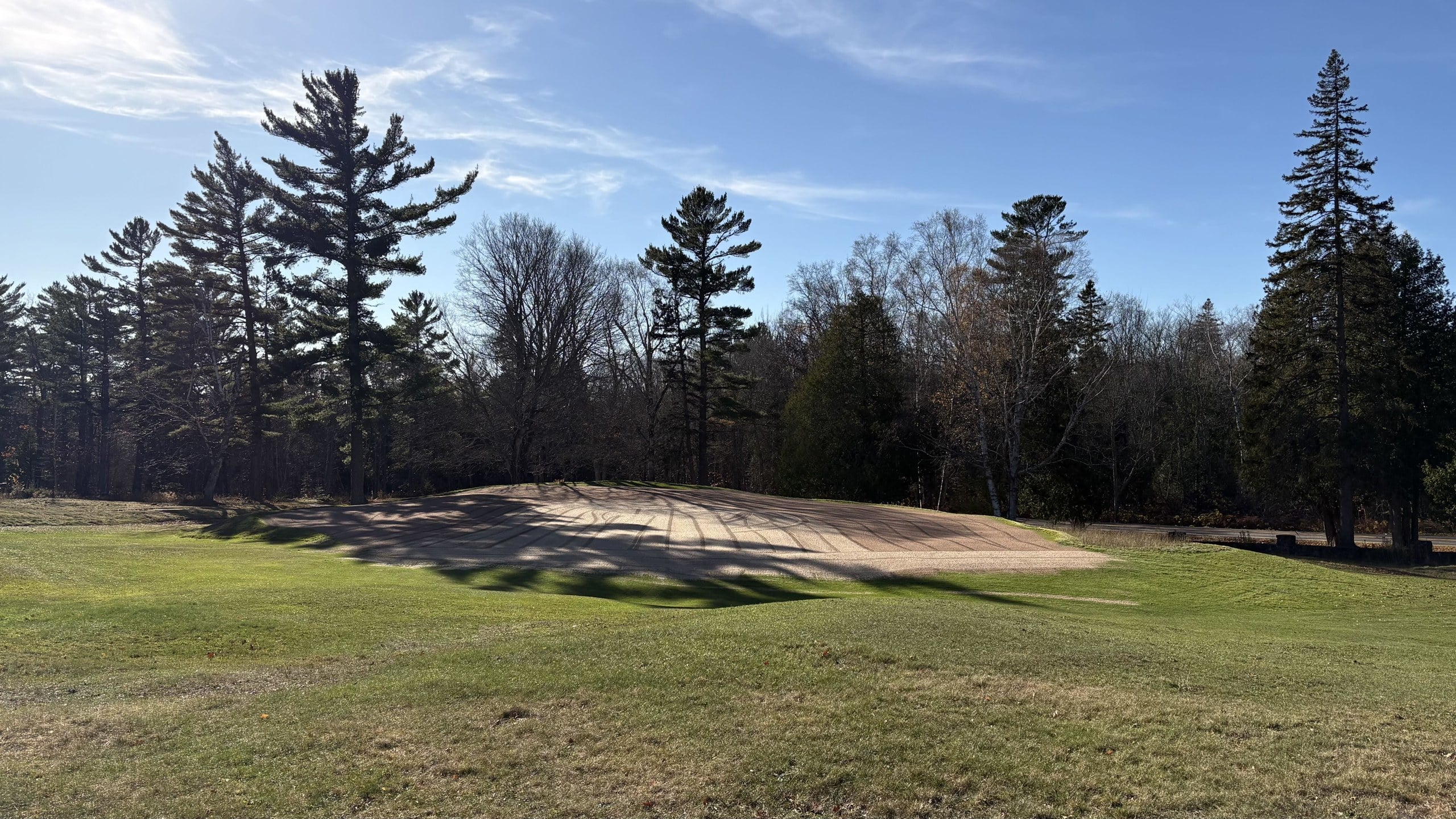
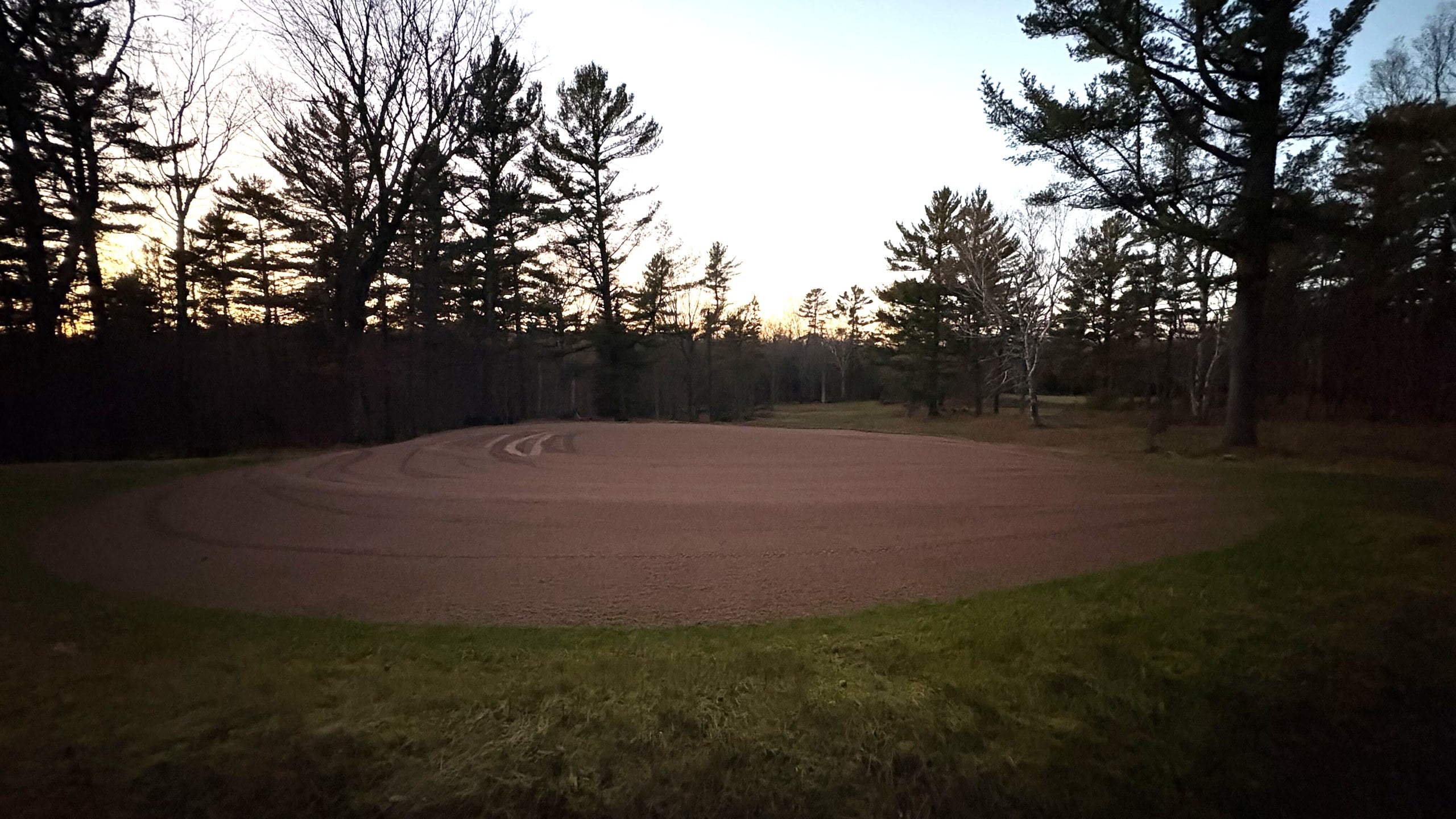
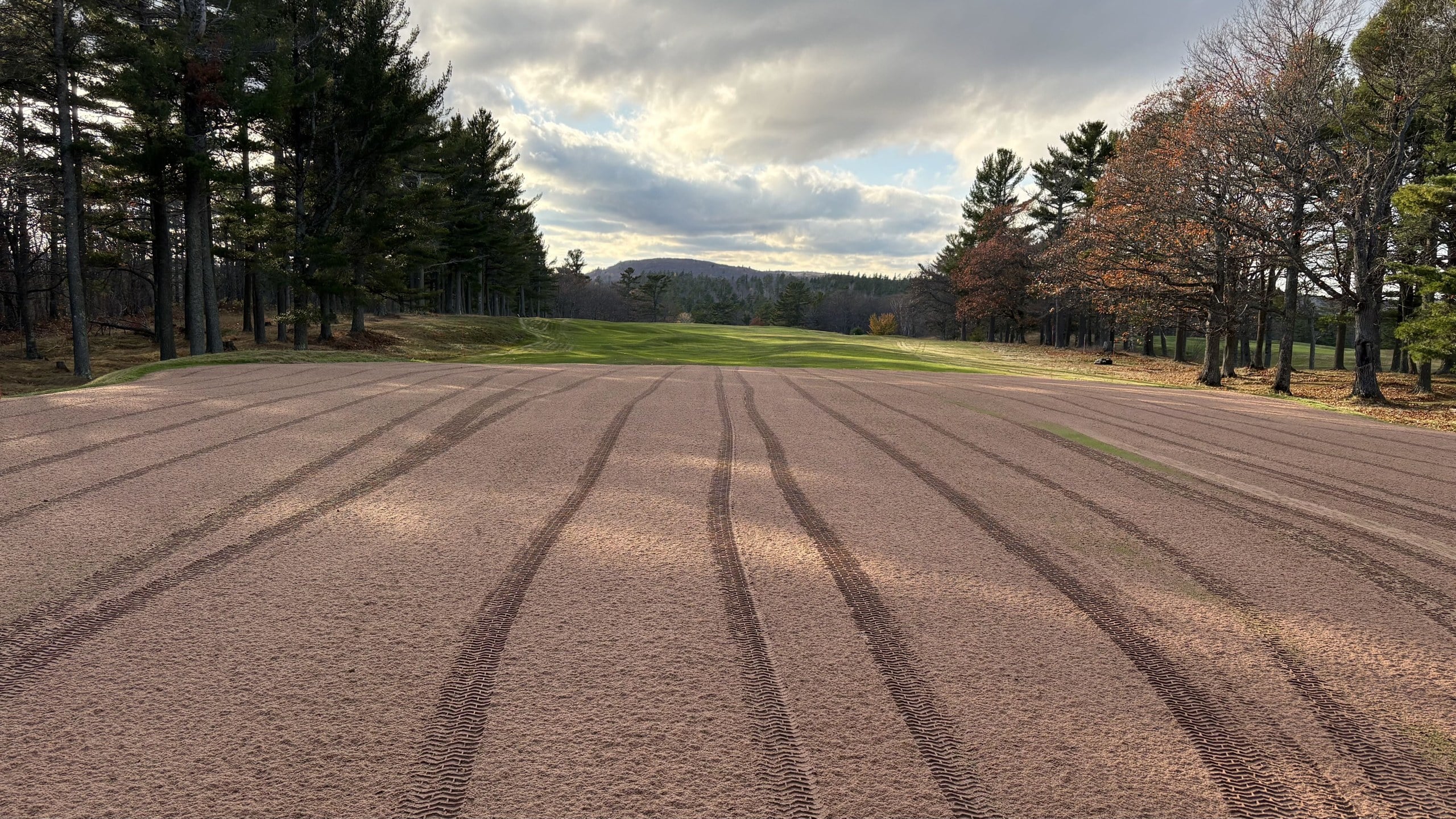
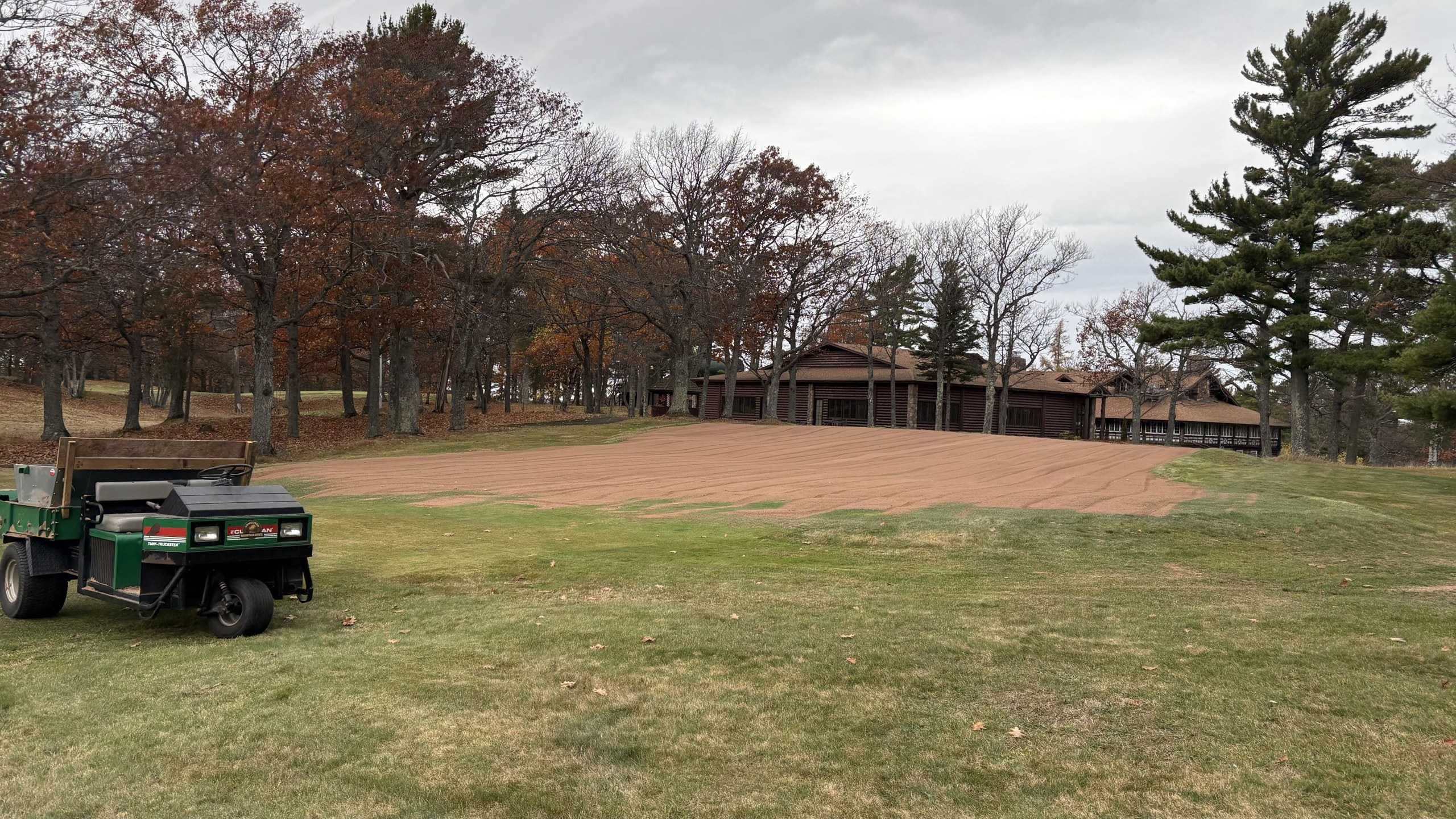
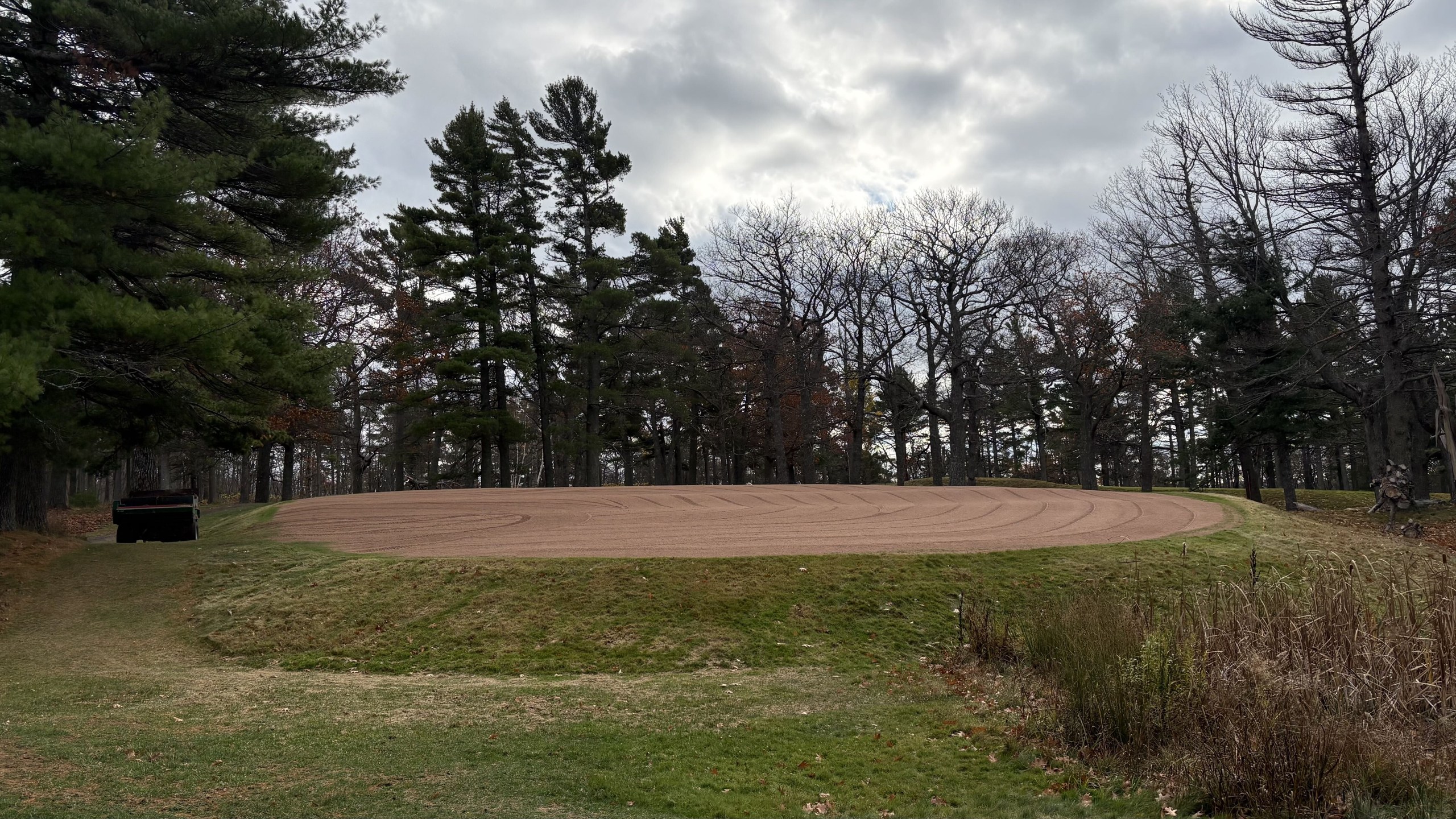
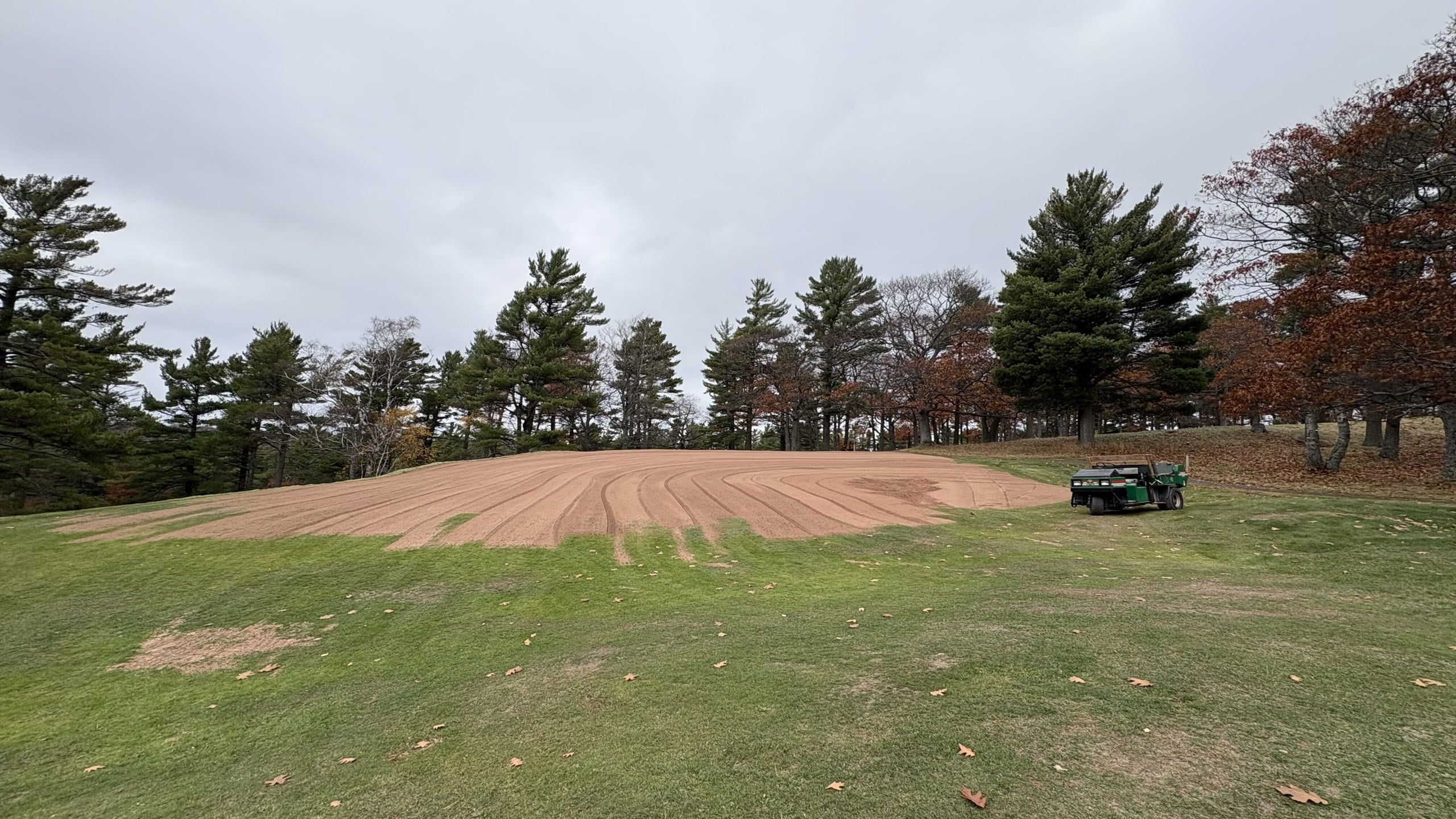
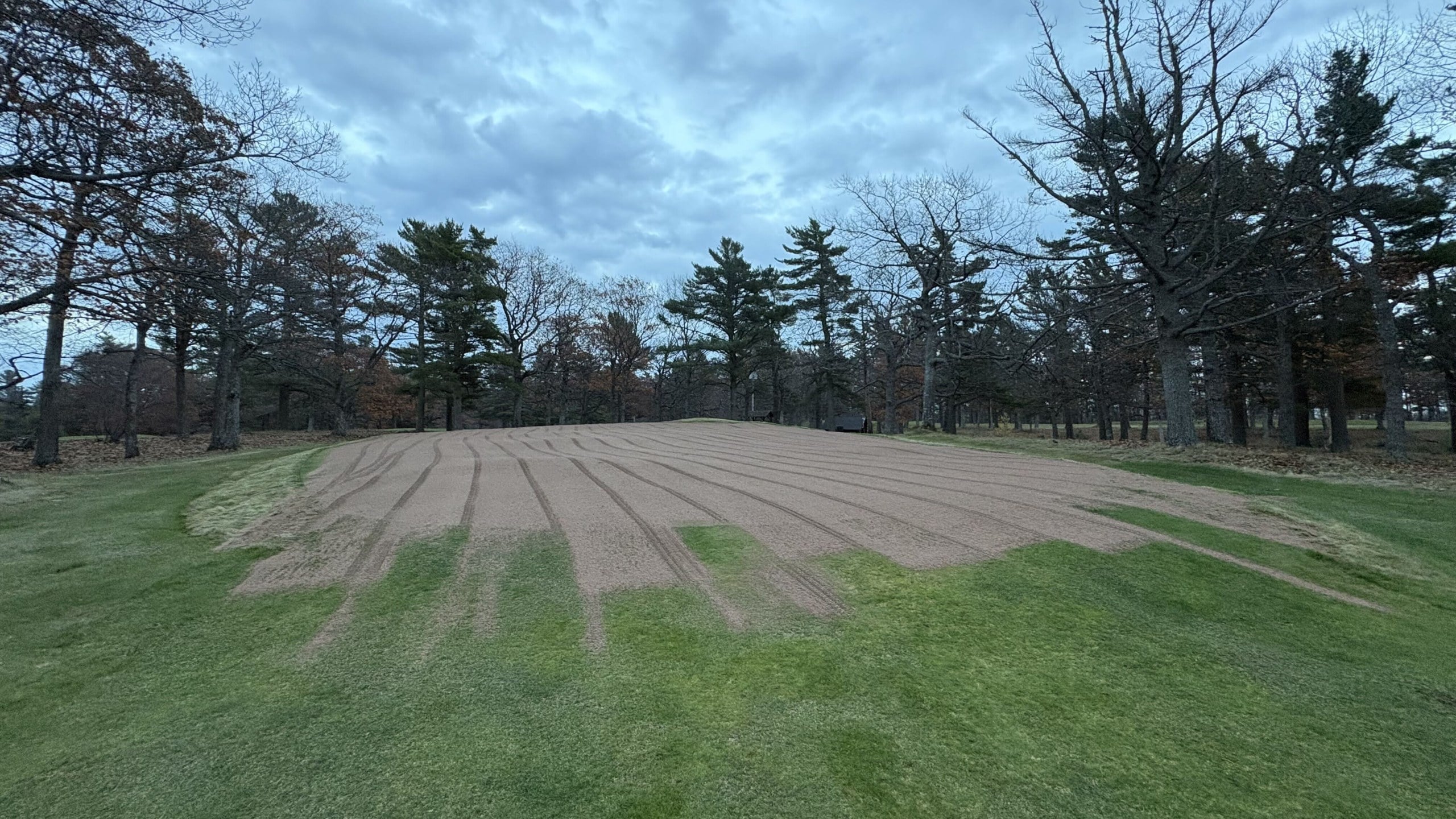
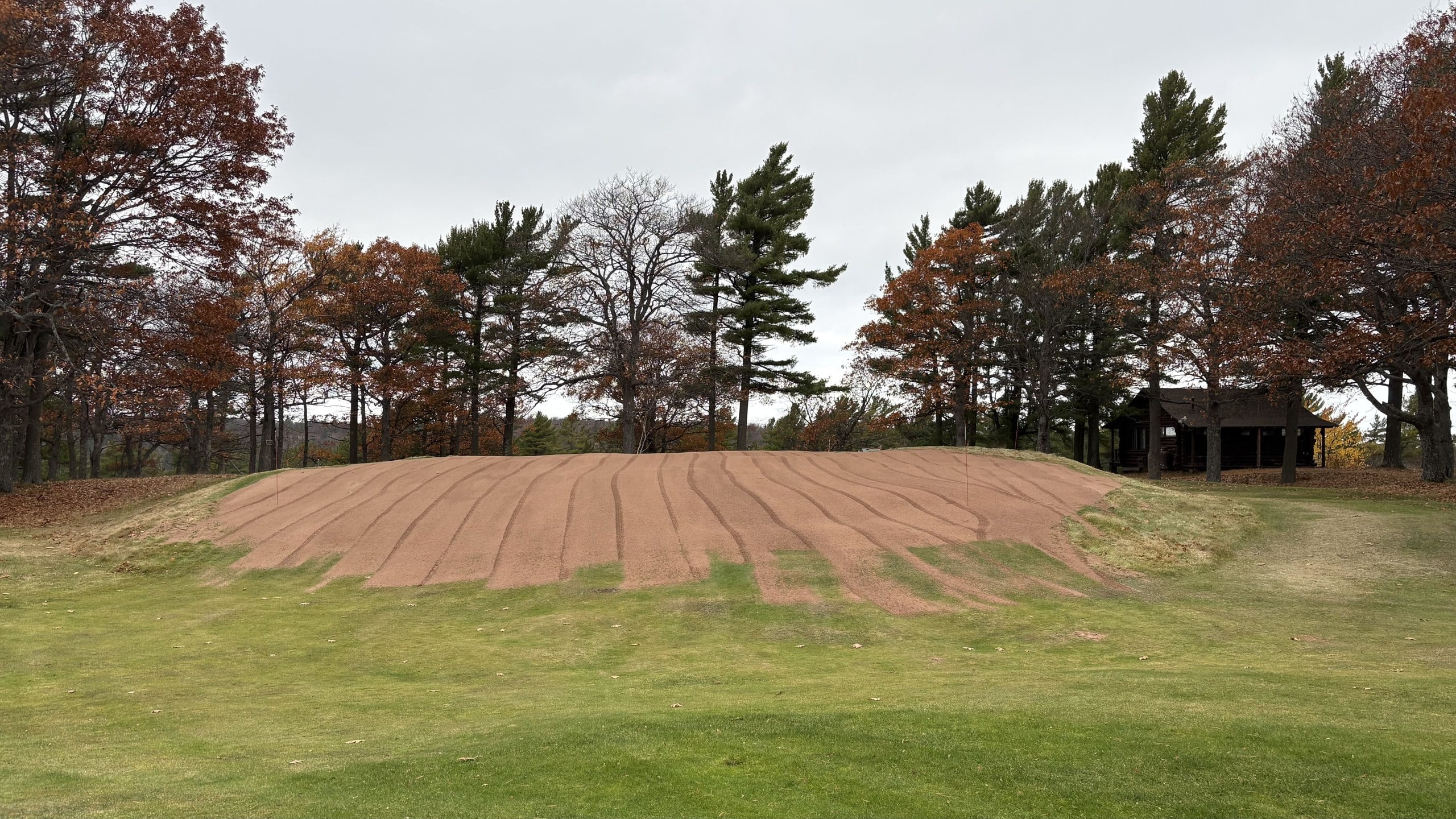
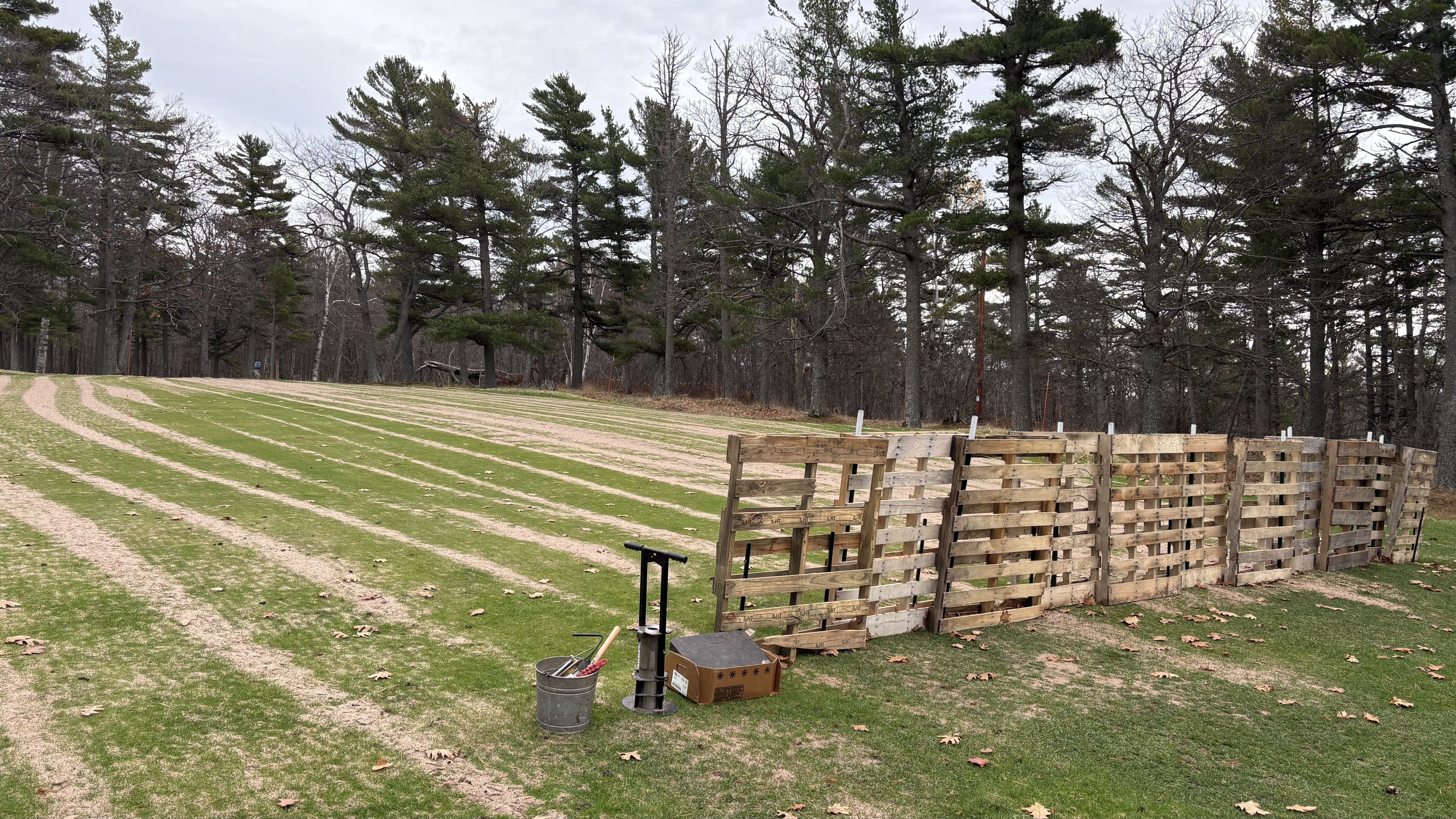
The best way to see this year’s expansion is right after the winter top dressing. When we covered the greens with sand at the end of October, the sand showed the full outline of each green — including the new turf we added on the front, sides, and back this season. Here is each green, holes 1 through 9, under its winter blanket of sand:
New Flags, New Ball
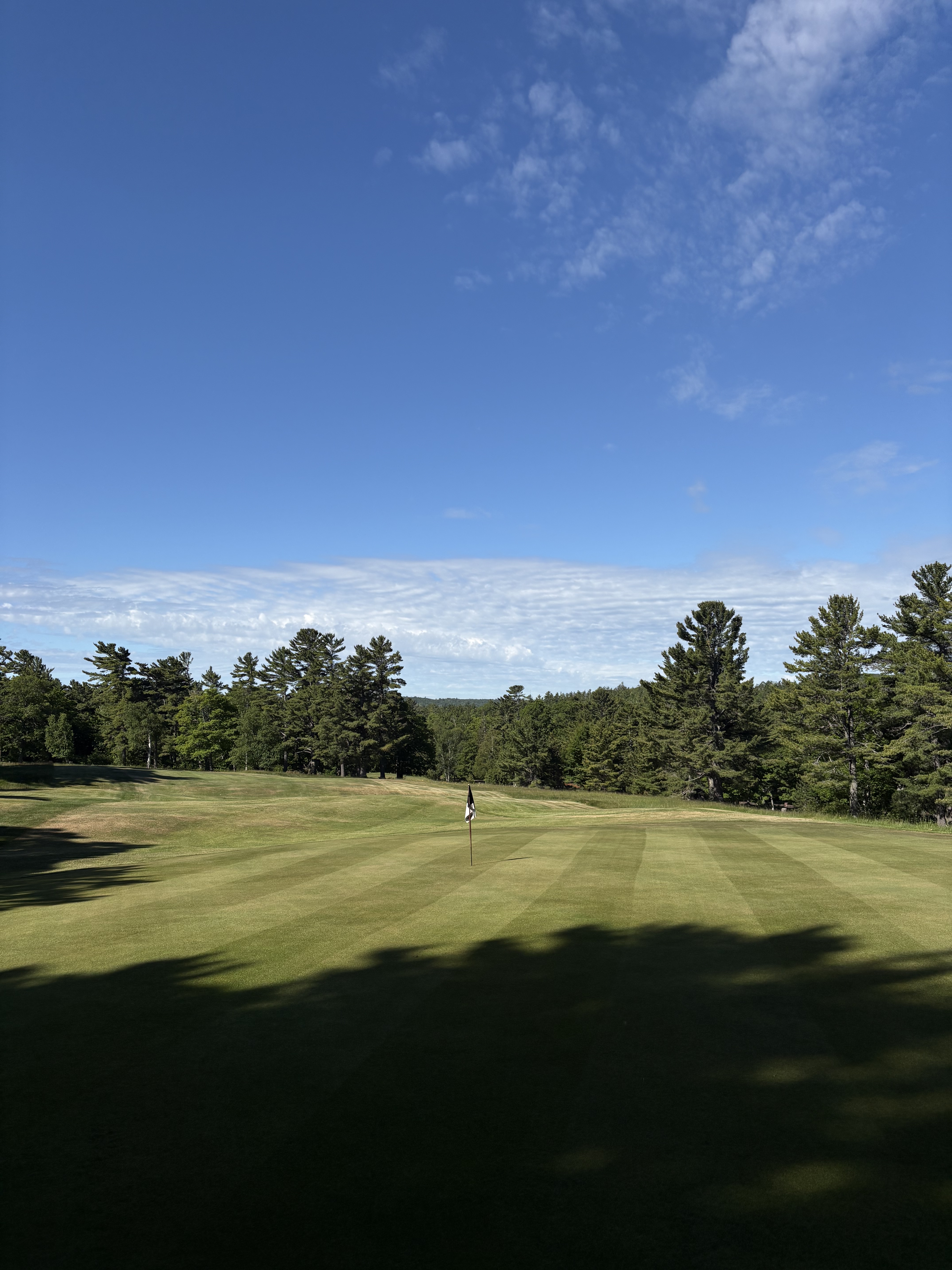
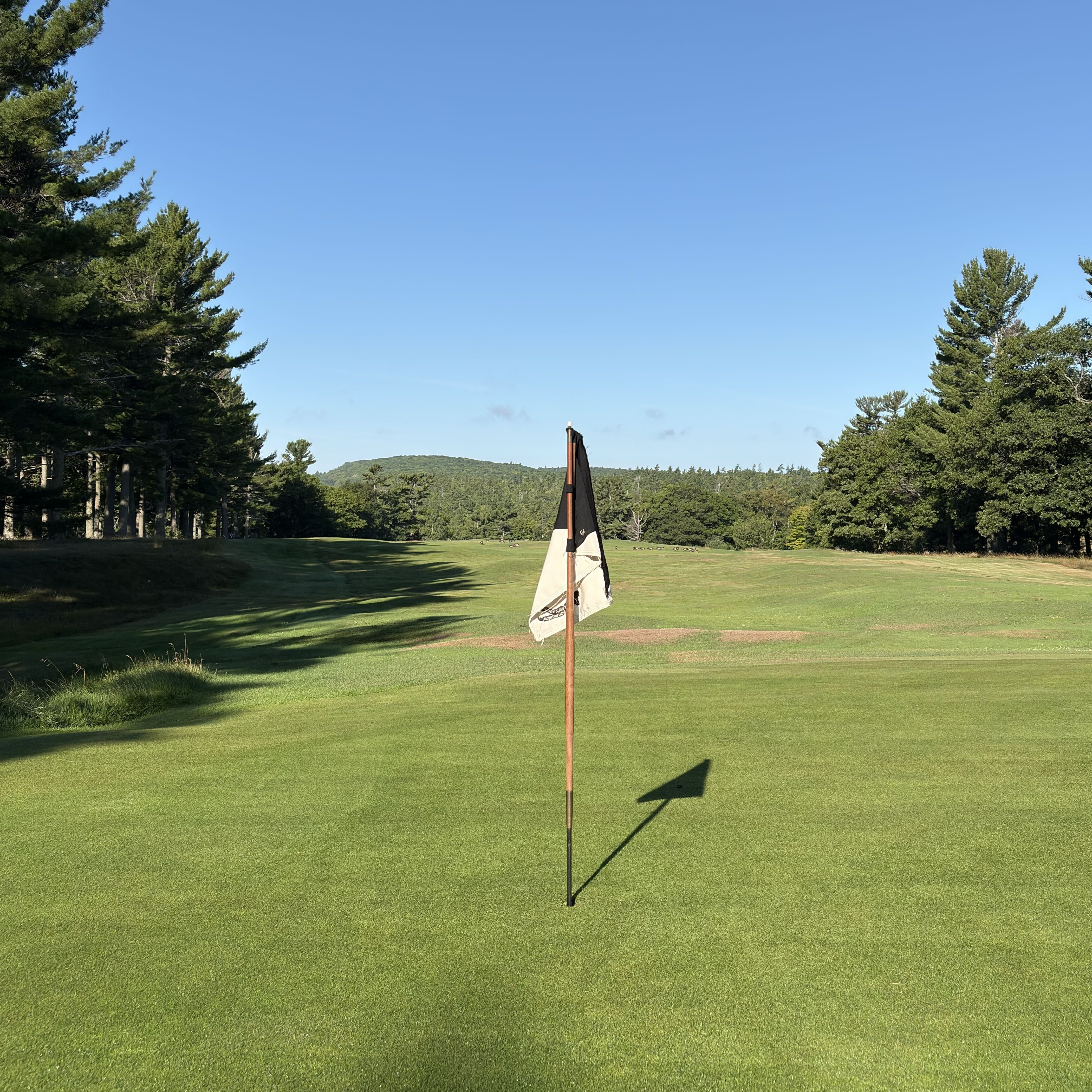
The new vintage cloth flags from Cheesebrough arrived just in time for opening day. They are a black and canvas design with a distressed look, made from Sunbrella outdoor fabric, and embroidered with “f.j.a.” — for fun.joyous.adventuresome. We continue to use our 5-foot wooden flagsticks. Both the wooden flagsticks and the new cloth flags were made by Cheesebrough.
We also brought in a new logo golf ball for 2026: the Callaway Supersoft with the new golf course logo.
Walking Only
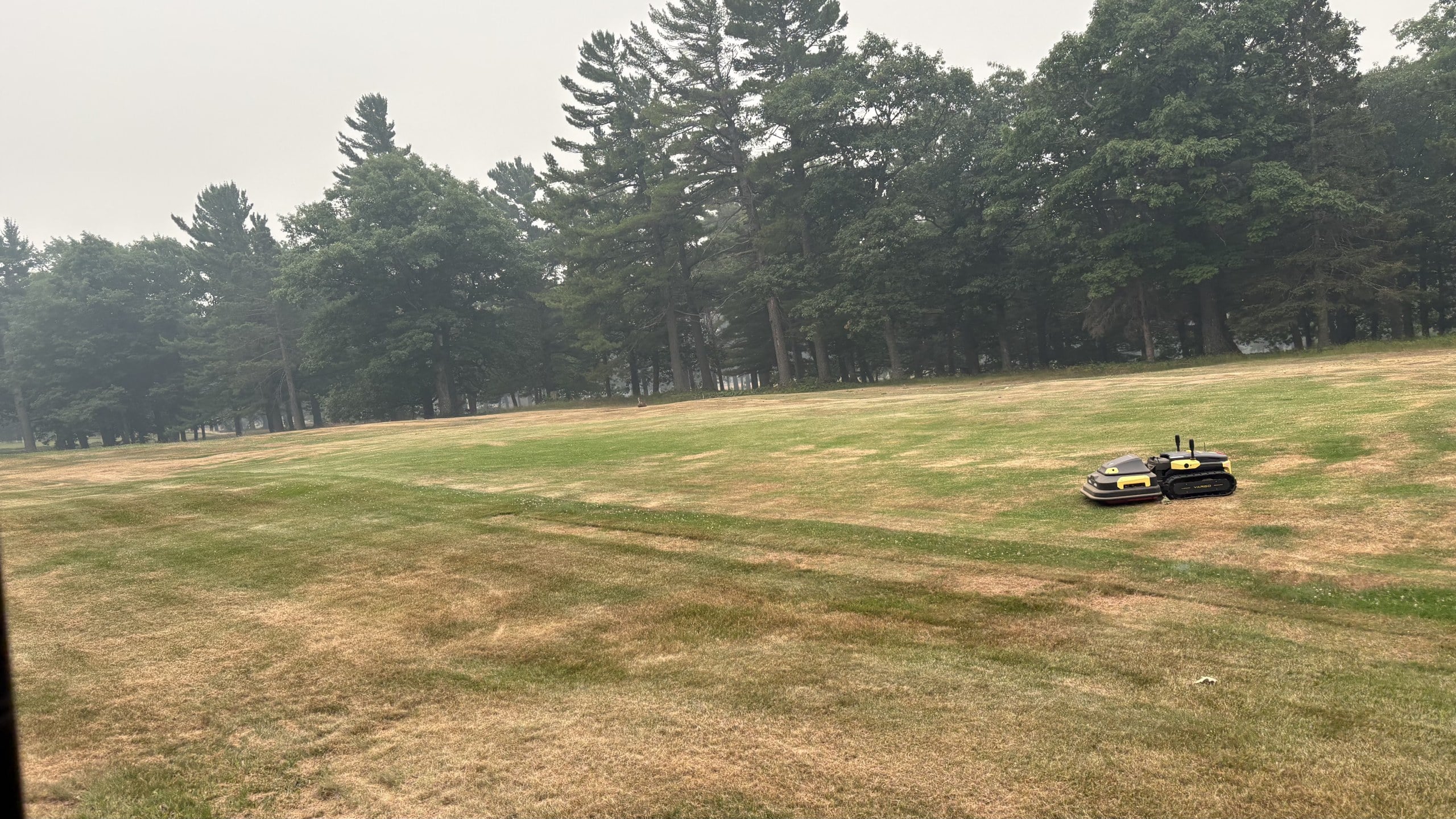
In early July, a lack of rain and a shortage of water (our well was struggling and the Lake Superior pipeline had breaks) meant we had to make a choice. We let the fairways go dormant — turning yellow to protect the grass rather than let it die — and watered only the greens and tees. To protect the dormant fairways, we turned off the golf carts, and golfers walked the course.
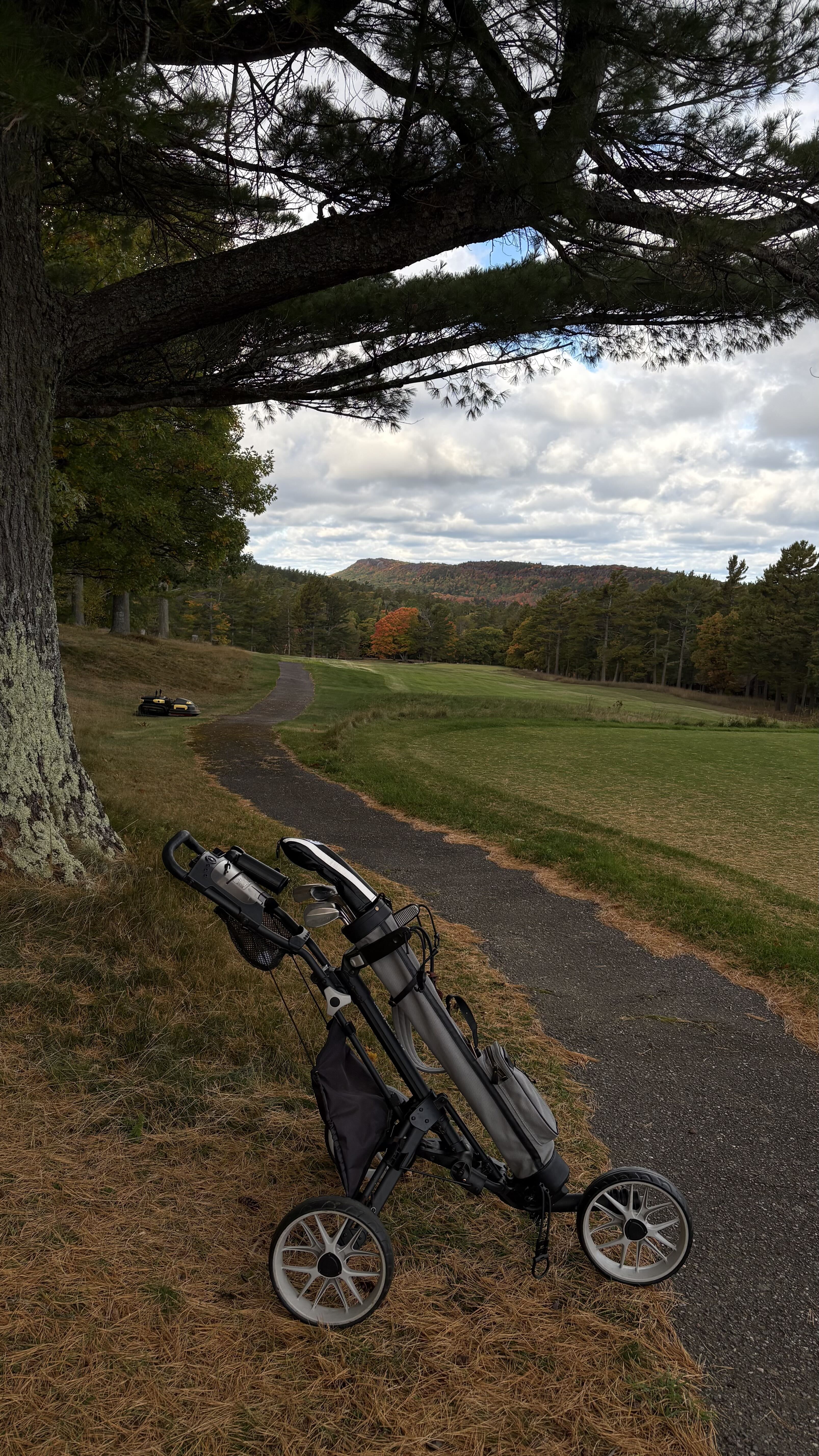
We were already planning to become walking only by 2028. Since we were already walking only because of the dry conditions, it made sense to make it permanent. On July 28th, we announced that the golf course is now walking only. Golfers with a permanent disability can still use a golf cart (limited to where the cart can go), with documentation from a medical doctor provided more than 14 days before their tee time. With carts no longer part of the game, we kept a few for that purpose and for maintenance and housekeeping, and sold the rest.
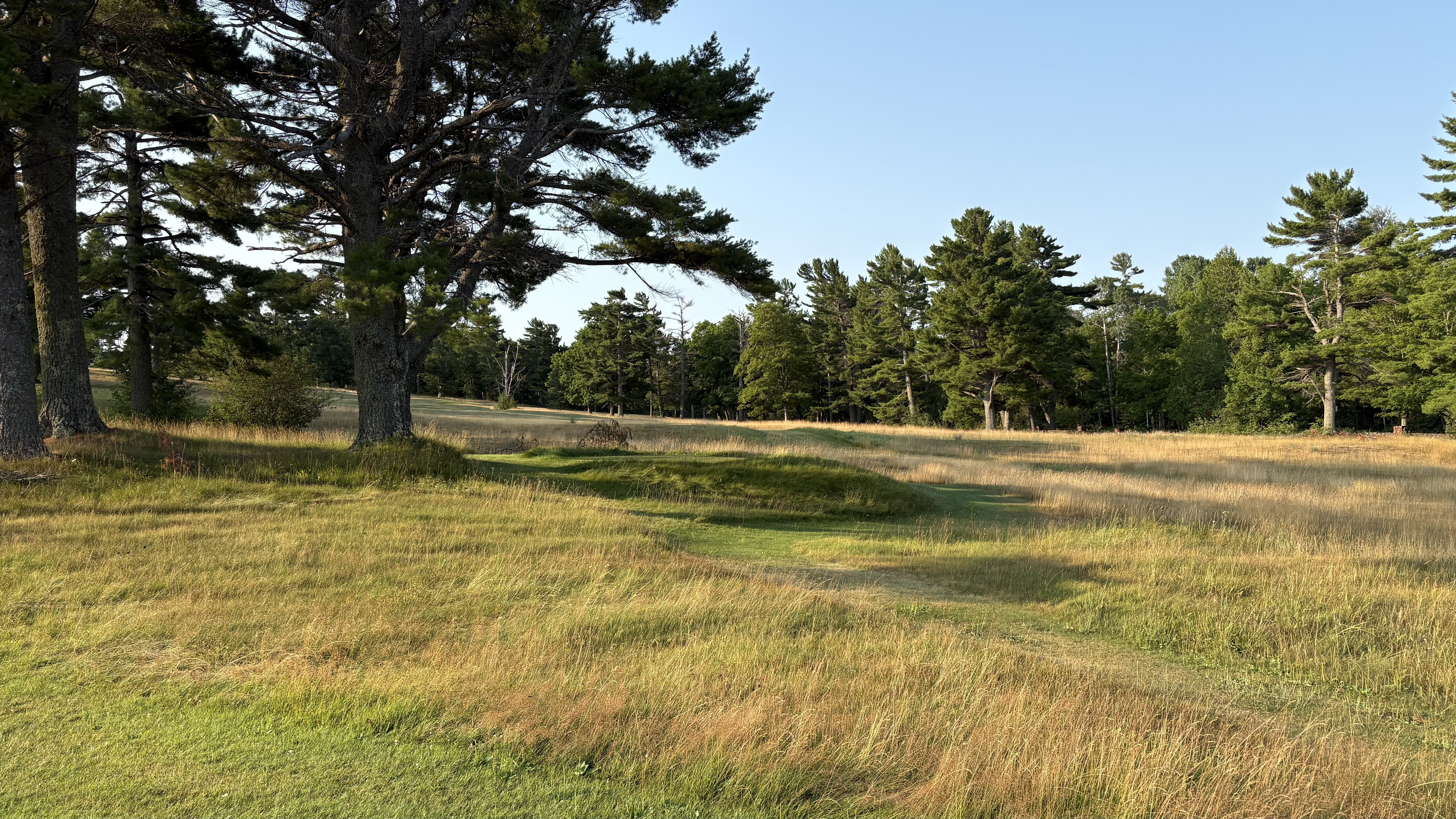
Walking fits what the course is about: getting people closer to nature. Golfers see the course differently on foot — the wildlife, the tall fine fescue, the views of Brockway Mountain — and walking is better for people and better for the golf course.
Hickory Only
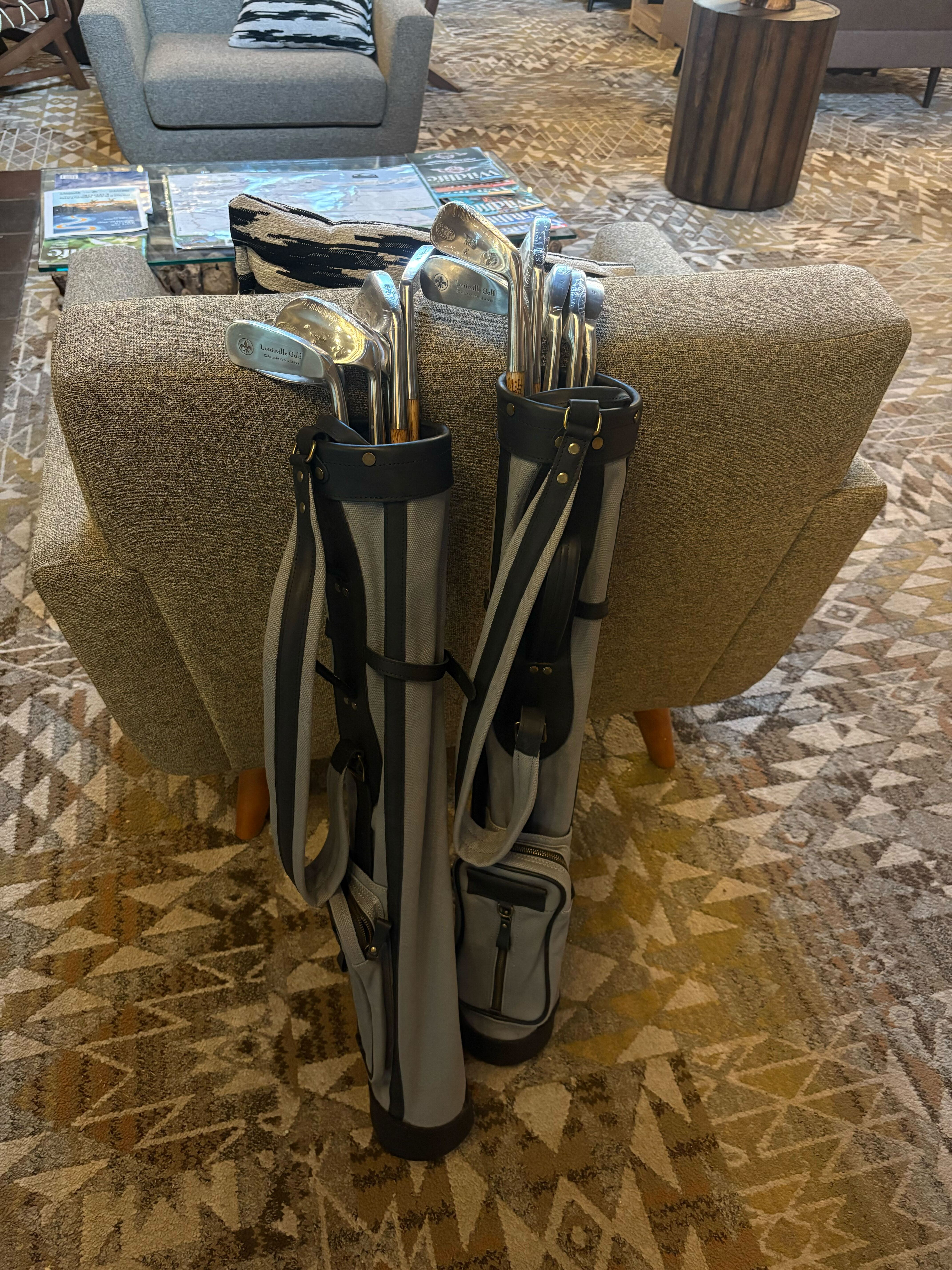
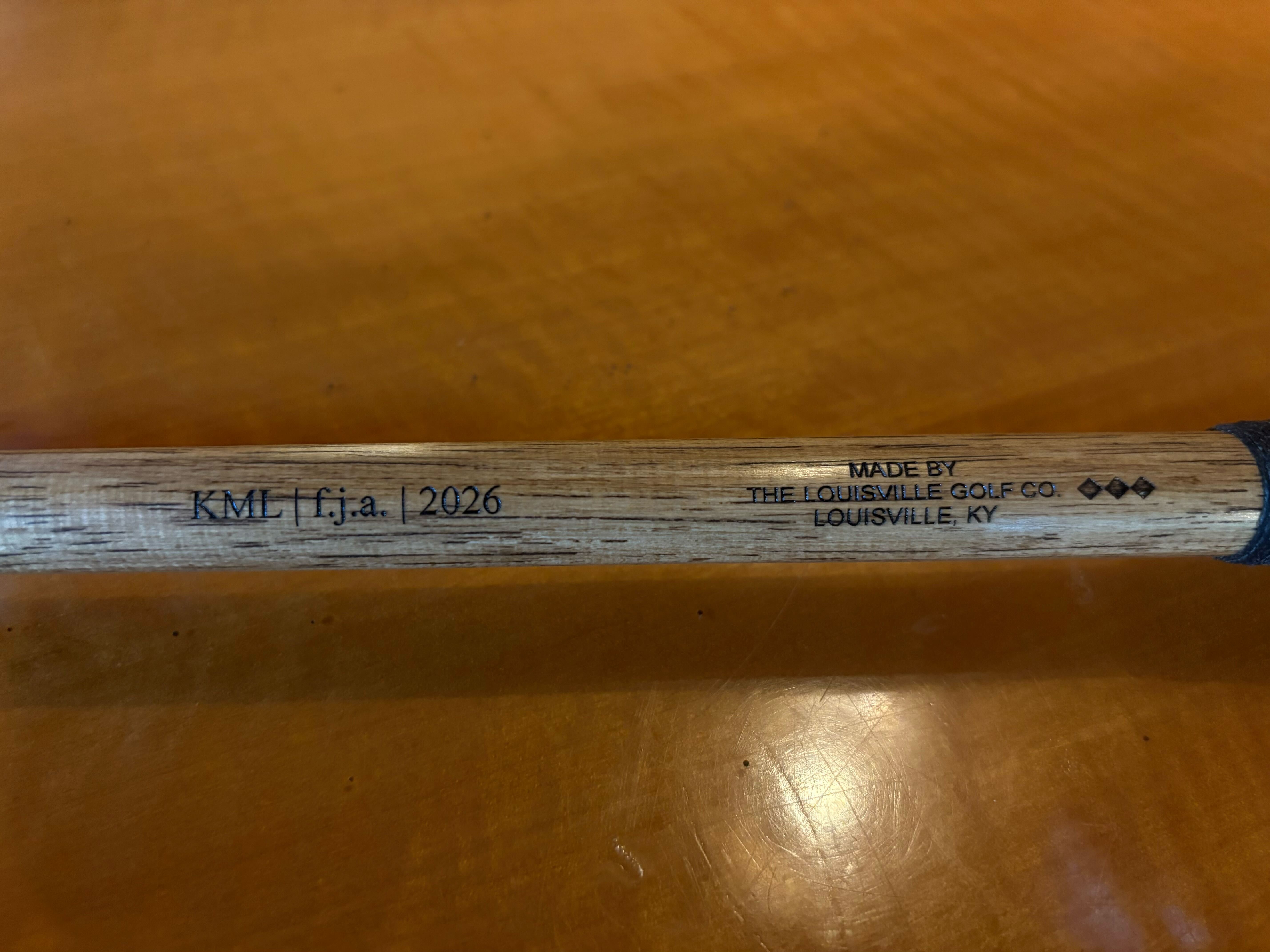
In the spring, we started building a fleet of hickory golf clubs for guests. From Louisville Golf in Louisville, Kentucky, we ordered five sets this year — four right-handed and one left-handed. The sets include hickory irons, a Calamity Jane putter, a spoon, and a vintage pencil bag, and each shaft is marked “KML | f.j.a. | 2026.” One set went on display in the Tasting Post. In the fall, we added hickory irons and putters from St. Andrews Golf Co. in St. Andrews, Scotland, each clubhead stamped “KML | F.J.A | 2026.” We ordered four sets, and the first two arrived in late October.
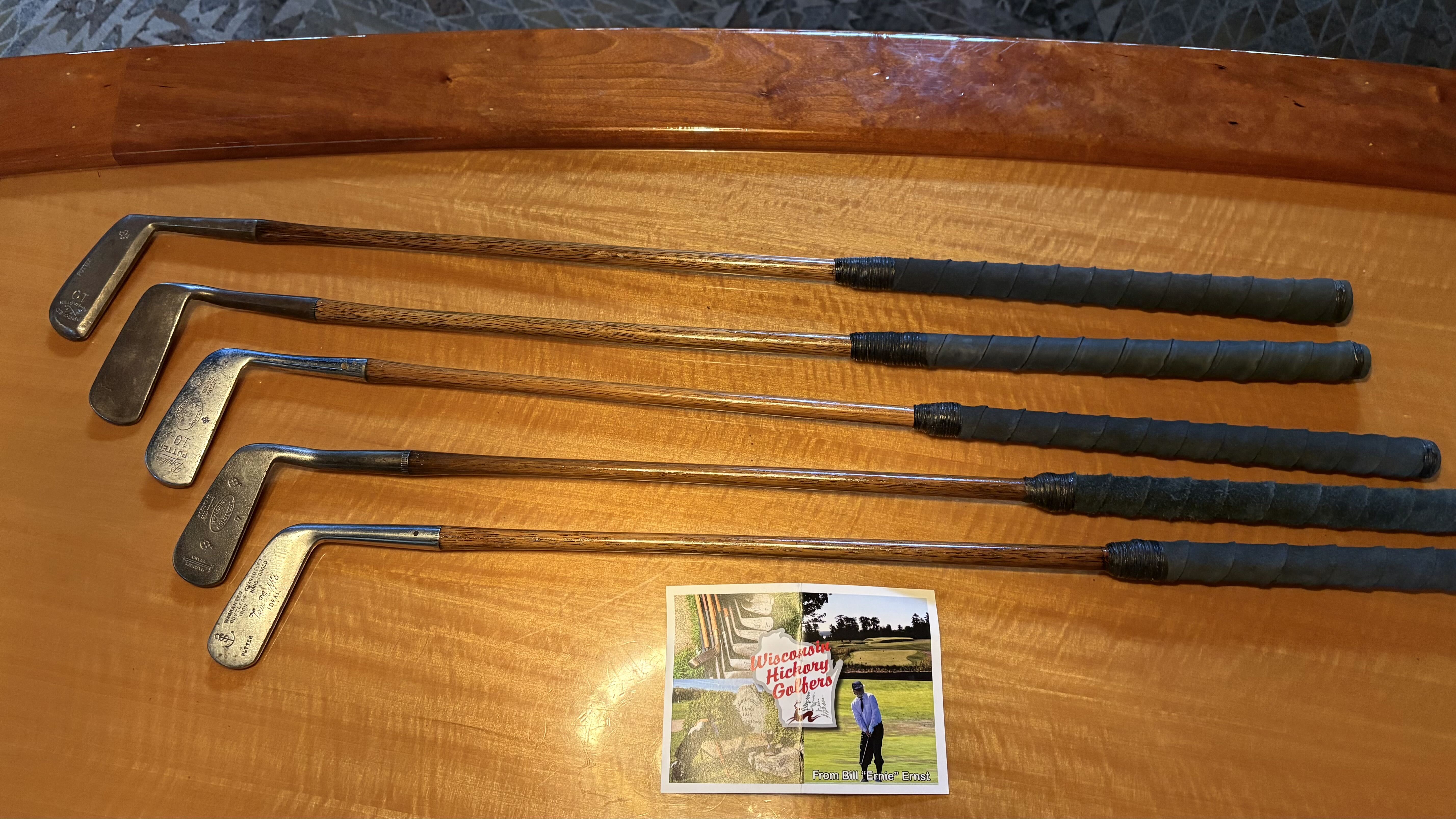
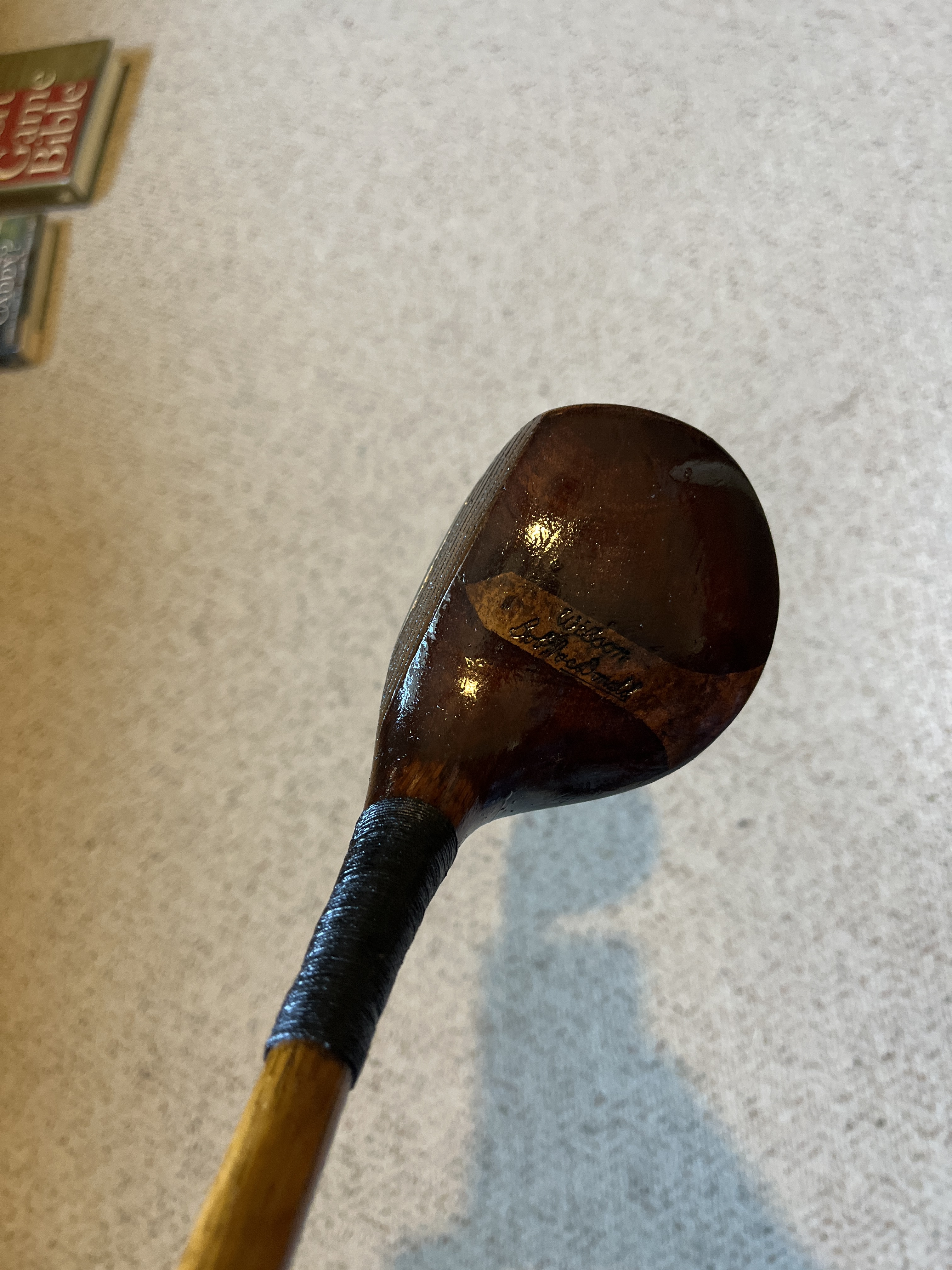
To go with these sets, Bill Ernst of Play Hickory Golf provided hickory spoons and putters that he refurbished. The spoons include clubs from Auchterlonie of St. Andrews, Wright & Ditson, and Wilson, and the putters include a Spalding Gold Medal, a MacGregor, and a George Nicoll offset putter. (One highlight of the season: a 90-foot putt on hole 5 with the Calamity Jane.)
Watching how guests played the course with hickory clubs this summer, it did not make sense to wait until 2028. On August 15th, we announced that the golf course is now hickory only. Guests with lodging reservations made by August 31st, 2026 could still play with modern clubs this season; going forward, the course is played with hickory clubs only.
Hickory clubs and walking go together. They fit the Lodge’s focus on getting people closer to nature, and our concept of marrying history with the future to create a vibrant and progressive present. The course dates to 1934, and these clubs let guests play it much the way golfers of that era did.

Front 9 Endurance Golf
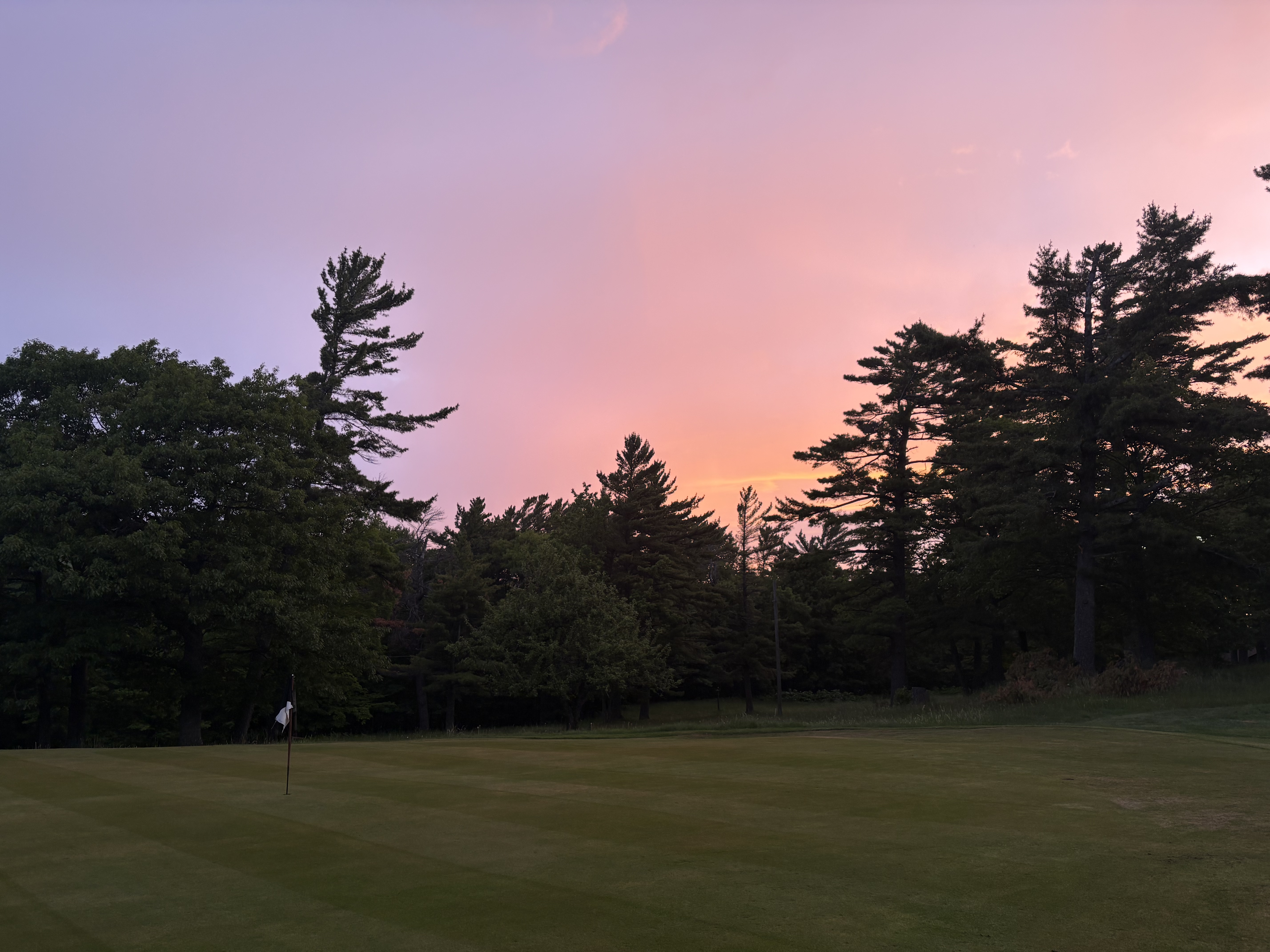
On June 21st, the summer solstice, we held Front 9 Endurance Golf for the third year — the longest day of golf on the longest day of the year. The day started with a double rainbow in the morning, and ended with a glowing evening sky. [ Read the 2026 Front 9 Endurance Golf Recap ]
Tee Times on the Half Hour
Tee times run from 9:00am to 5:00pm, and all golfers are off the course by 7:00pm. On June 20th, we moved tee times to the half hour (9:00am, 9:30am, 10:00am, and so on). This is the latest step in spacing out our tee times over the years:
- 2018-2019: 10-minute tee time intervals
- 2020: 15-minute intervals, starting with our first season of online tee times
- August 5, 2023: 20-minute intervals
- June 20, 2026: 30-minute intervals
Each step has given golfers more room on the course. With tee times on the half hour, each group can feel like it has the course to itself — out in the wilderness, closer to nature, and without feeling rushed. The golf course remains for cabin guests only: each guest who plays needs to be on the lodging reservation, and can play from check-in through check-out.
The golf course is a place in nature, shared with the wildlife that lives here. So there is no alcohol and no music on the golf course. In August, we hung No Alcoholic Beverages and No Outside Music signs at the front of the Outdoor Activity Center as a reminder.
The WALL-Es: Autonomous Mowing
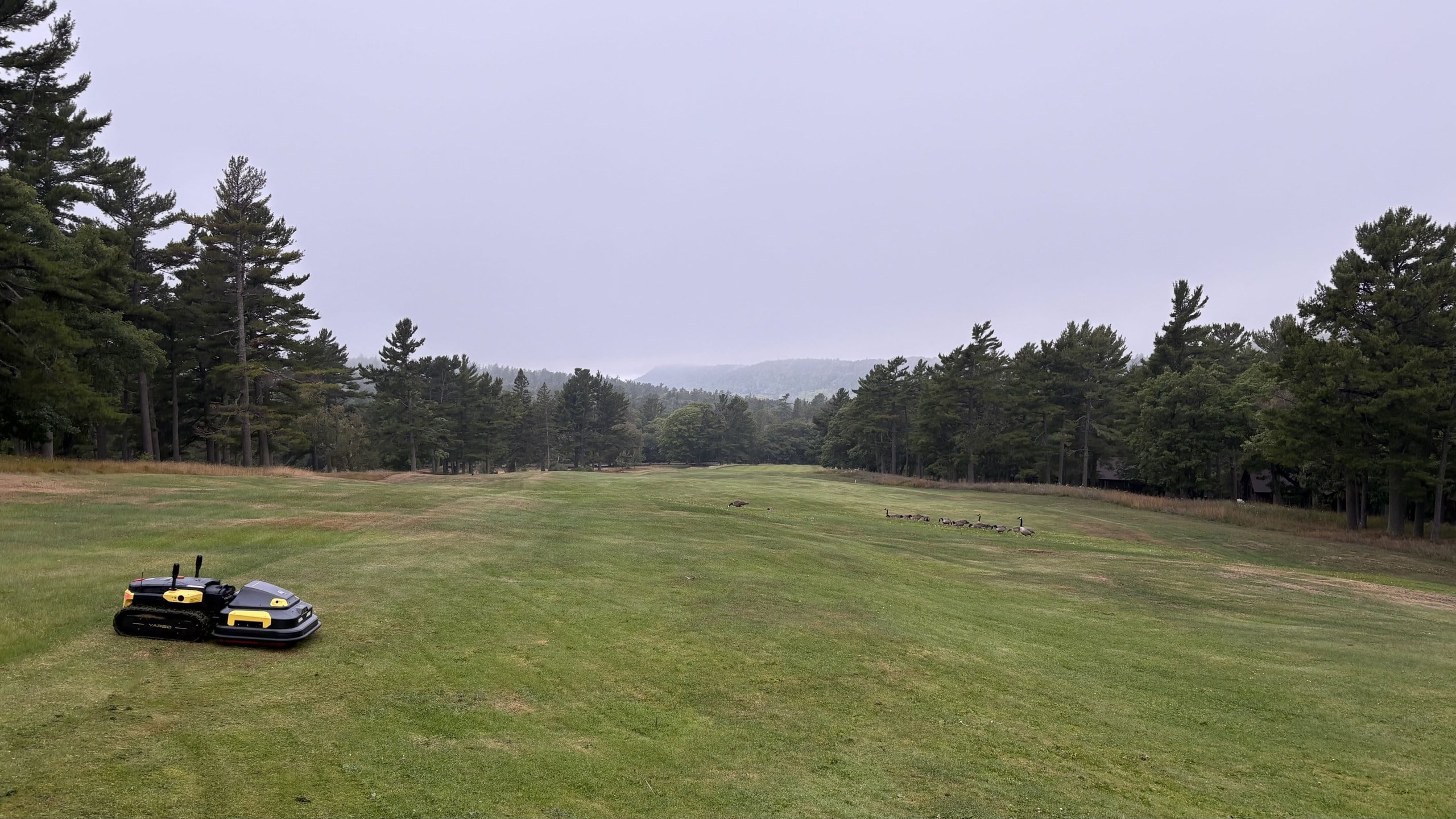
Last year, our test of an autonomous mower did not work out because of the spotty cell service. This year, we tried a different approach. In June, we bought a Yarbo autonomous mower — a tracked robot with a 20-inch mowing deck — to test on the roughs and possibly the fairways. It did well, and by late August we had four of them, which we call the WALL-Es, mowing all of the fairways except hole 2 (which we let go dormant) and hole 3 (which has no fairway). They cut at 1.1 inches, and work quietly with no direct emissions.
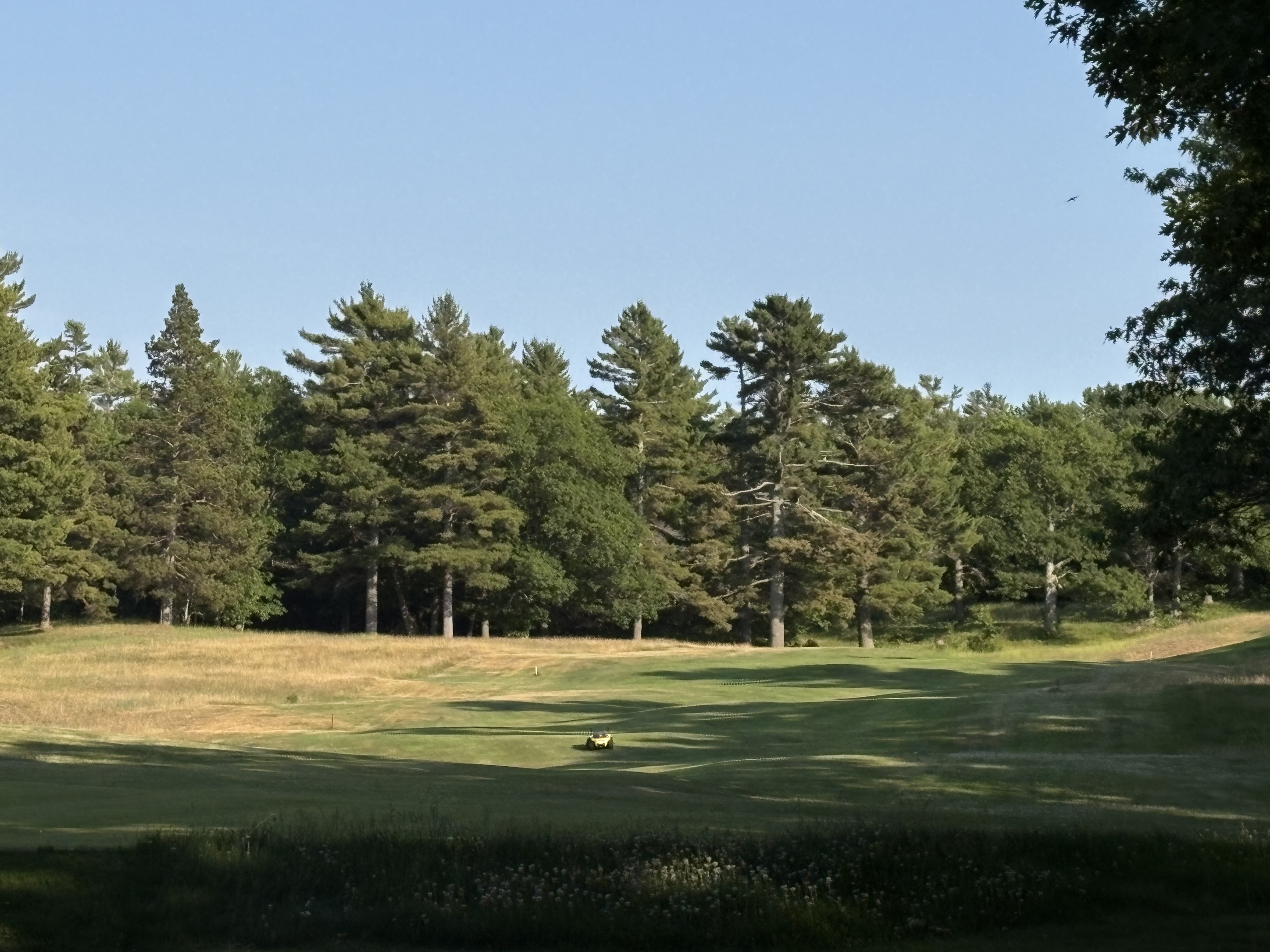
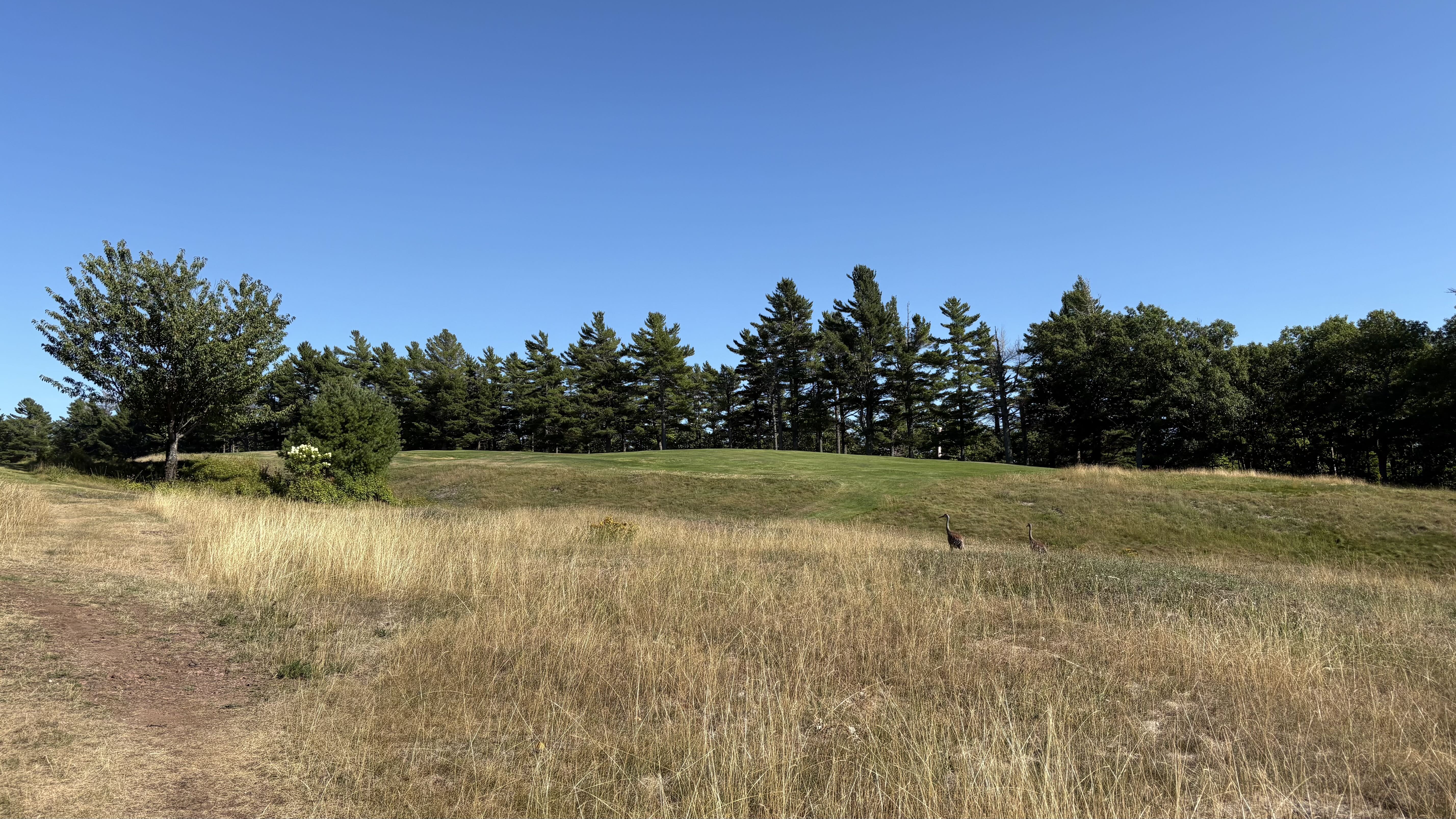
One of the best surprises of the season was how the wildlife took to the WALL-Es. Because they are quiet and slow, the animals did not run from them — they came over to see what they were. The foxes were the most curious. On the evening of August 6th, two of them sat on the course watching WALL-E 1 mow. On the morning of August 28th, three of the baby foxes trotted around WALL-E 2 while it mowed hole 1, until the pair of cranes joined in and walked the foxes off the fairway. On hole 9, a lone crane lay down on the fairway while WALL-E 1 mowed around it, and the geese kept grazing while WALL-E 2 worked past them.
It was the same with our electric Toro e3370 greens mower, the quiet mower that I ride on the greens (we count it as a WALL-E now too). On August 7th, three baby foxes joined me while I was mowing hole 5 green.
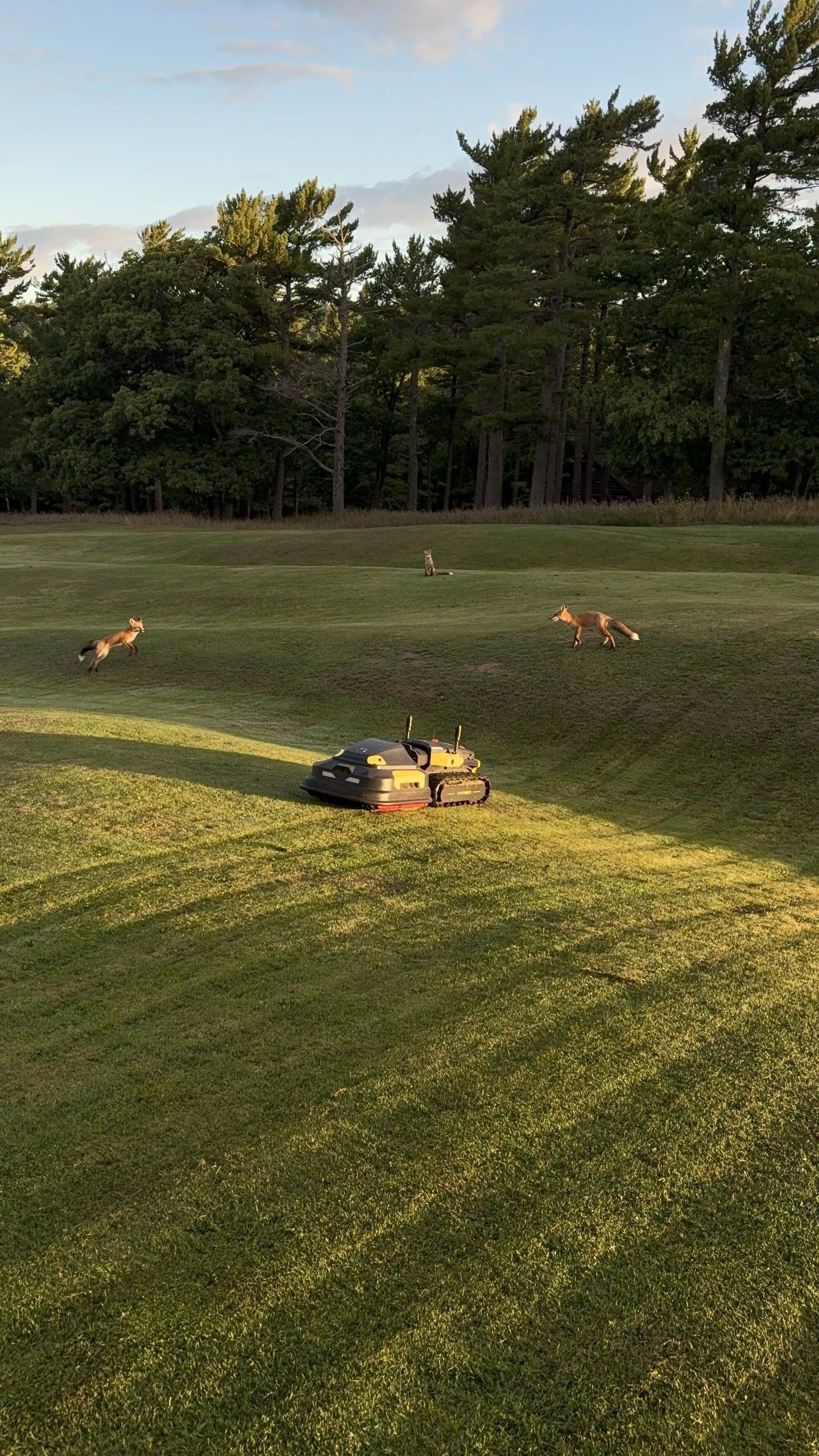
Videos: the baby foxes with WALL-E 2 on hole 1, and the pair of cranes walking them off the fairway (August 28th).
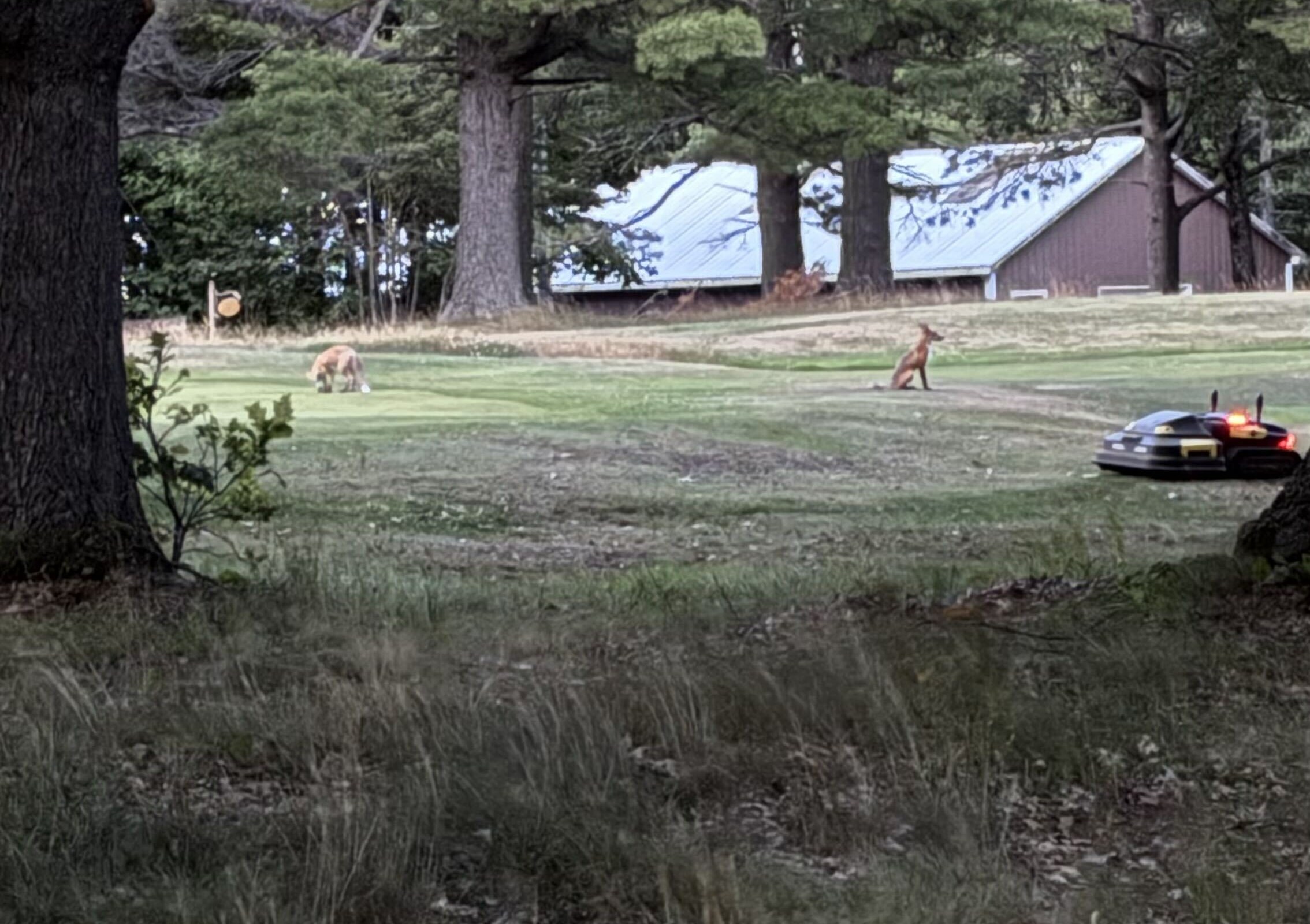
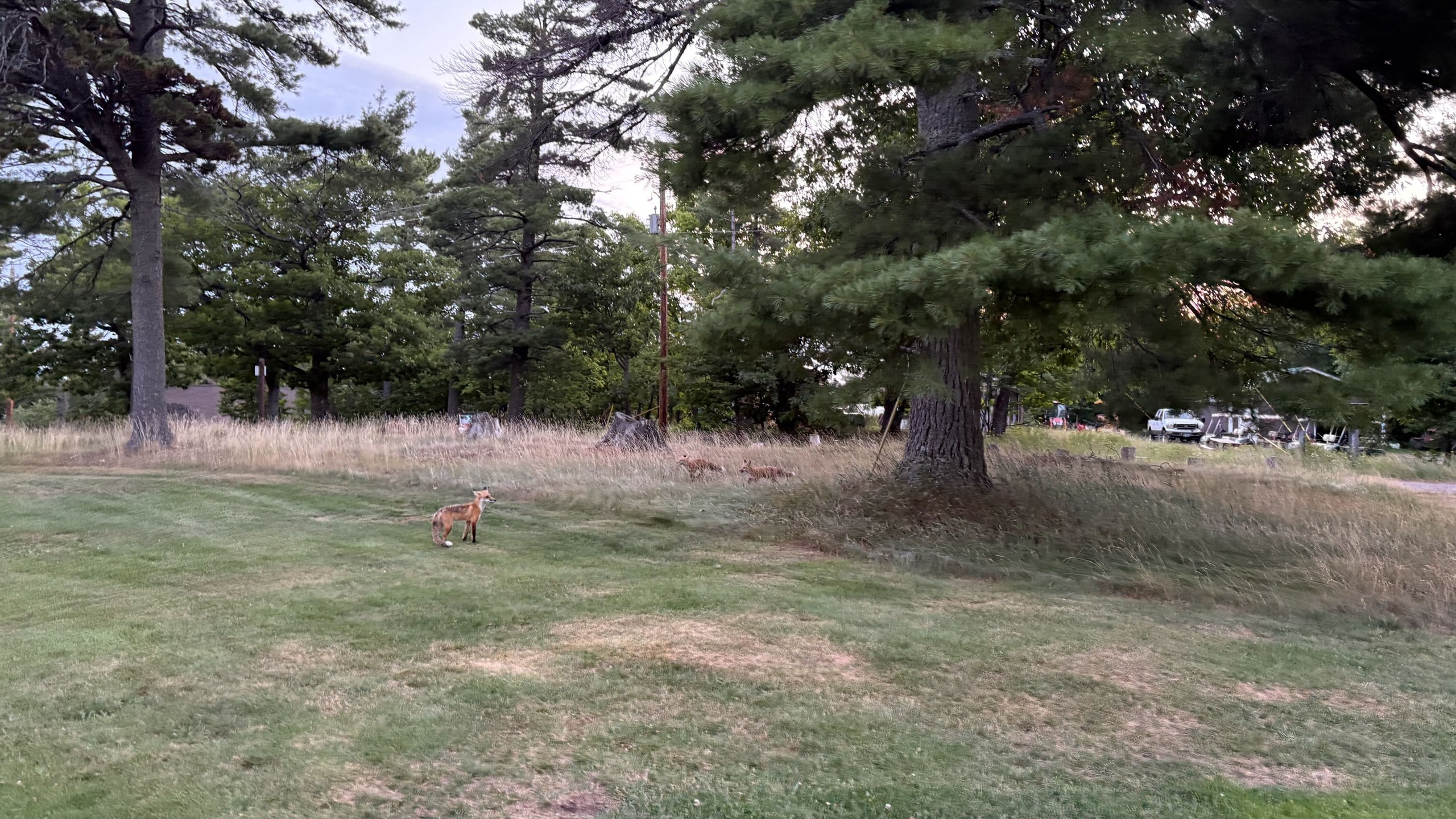
Video: the three baby foxes joining me on hole 5 green, while I mow with the electric Toro e3370 (August 7th).
Weather: A Hot, Dry Summer
The Keweenaw Mountain Lodge has its own weather station, KMICOPPE1 on Weather Underground, at 1,076 feet. We looked back at its numbers for the golf season, June 1st to October 15th, and compared them with the last two seasons. The numbers back up what we saw on the course.
Rain. The station recorded 7.00 inches of rain during the 2026 golf season, compared with 12.06 inches in 2024 and 9.80 inches in 2025. Even allowing for a few gaps in the station’s data (see the note below), 2026 was the driest of the three seasons, with roughly a third less rain than either of the last two. The rain also came in small amounts. It rained on 48 days, but the wettest day of the season brought only 0.78 inches (July 17th), and we never had a 1-inch day. In 2024 and 2025, single storms dropped 1.33 and 1.93 inches.
The driest stretch came at the worst time. From June 14th to July 11th — four weeks at the start of summer — the station recorded just 0.38 inches of rain. That is when our well was struggling, the Lake Superior pipeline had breaks, and we let the fairways go dormant.
By month, the station recorded 1.34 inches in June, 1.84 inches in July, 1.05 inches in August (through August 27th), 1.10 inches in September (from September 8th), and 1.67 inches from October 1st to 15th. The first half of October brought more rain than all of June.
Heat. For the season as a whole, temperatures were close to the last two years: the average daily high was 72.1°F, compared with 71.8°F in 2024 and 71.9°F in 2025. But midsummer ran hot. June 30th reached 93°F, and July 13th reached 94.6°F, the hottest day the station recorded in any of the last three golf seasons. July averaged a high of 79.4°F, two to three degrees warmer than July in 2024 or 2025. Hot days with little rain meant the turf was losing the most water right when we had the least water to give it.
Fall. The coolest morning of the season was 39.7°F on October 6th, and there was no frost before we closed on October 15th.
| June 1 — October 15 | 2024 | 2025 | 2026 |
|---|---|---|---|
| Rain recorded | 12.06 in | 9.80 in* | 7.00 in* |
| Wettest day | 1.33 in (June 5) | 1.93 in (Sept. 22) | 0.78 in (July 17) |
| Average daily high | 71.8°F | 71.9°F | 72.1°F |
| July average high | 77.2°F | 76.2°F | 79.4°F |
| Hottest day | 90.1°F (July 28) | 89.1°F (June 22) | 94.6°F (July 13) |
| Days 90°F or warmer | 1 | 0 | 2 |
* The weather station did not report data from August 28th to September 7th, 2026, or from June 1st to 20th, 2025 (along with a few other days in 2025). The totals for those seasons are a little lower than the rain that actually fell. Source: the Keweenaw Mountain Lodge weather station, KMICOPPE1, on Weather Underground.
Month by month in 2026. The same numbers, broken out by month for the 2026 season:
| 2026 | June | July | August* | September* | October 1–15 |
|---|---|---|---|---|---|
| Rain recorded | 1.34 in | 1.84 in | 1.05 in | 1.10 in | 1.67 in |
| Wettest day | 0.43 in (June 11) | 0.78 in (July 17) | 0.38 in (Aug. 7) | 0.44 in (Sept. 14) | 0.45 in (Oct. 13) |
| Average daily high | 73.4°F | 79.4°F | 74.2°F | 67.4°F | 57.9°F |
| Average daily low | 52.3°F | 60.7°F | 57.6°F | 51.9°F | 45.8°F |
| Hottest day | 93.0°F (June 30) | 94.6°F (July 13) | 87.1°F (Aug. 6) | 82.8°F (Sept. 11) | 79.2°F (Oct. 11) |
| Days 90°F or warmer | 1 | 1 | 0 | 0 | 0 |
* The station did not report data from August 28th to September 7th, so the August and September totals are a little lower than the rain that actually fell.
Water
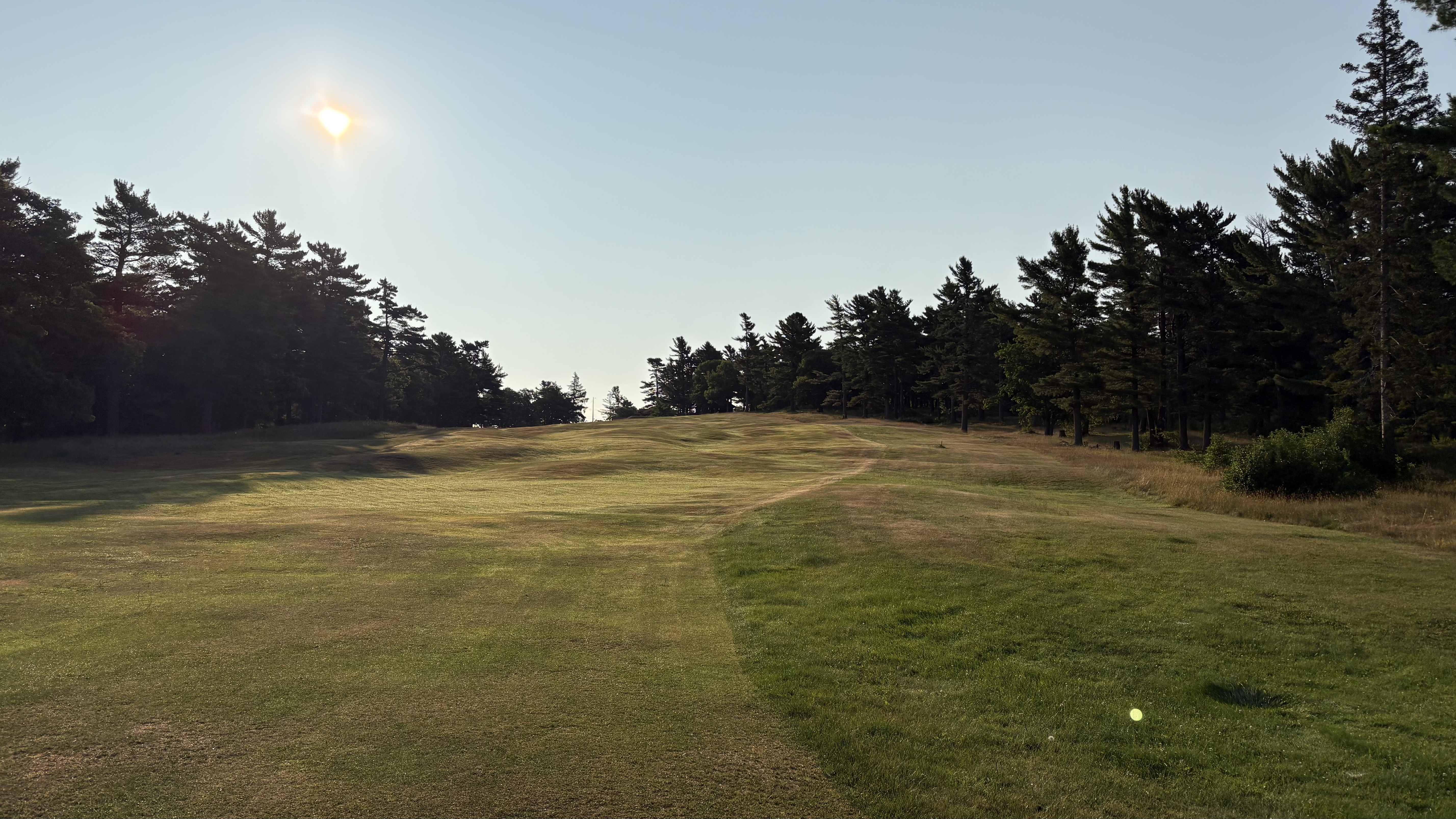
Water was the story of the summer. Our irrigation pond is filled by our well and by a pump that brings water up the hill from Lake Superior. Early in the summer, the well struggled and the Lake Superior pipeline had breaks. We worked on the pipeline through the summer, fixing several breaks, and by late summer the Lake Superior pump was filling the pond again. That let us start watering the fairways once more, bringing back some green to the fairways while keeping the mix of yellow and light green that fits a natural, walking golf course.
We also tested the pH, nitrogen, and phosphorus of our water — from the well and the pond, with the Lake Superior analysis still in progress — as part of caring for the water that runs through the property.
Golf Course Maintenance
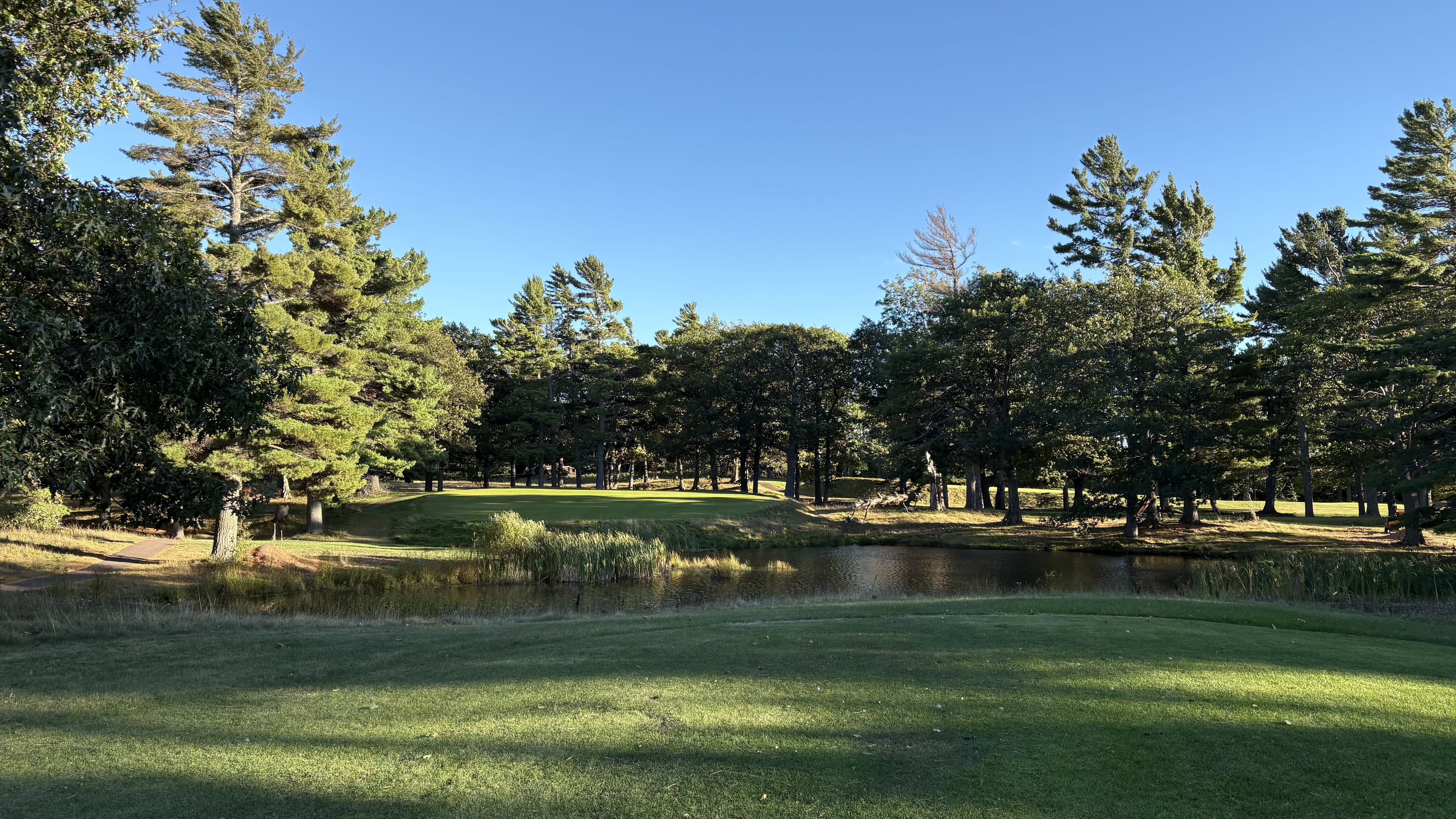
Some of the other work on the course this season:
- Verticutting: We borrowed verticutting units from Craig Moore of Marquette Golf Club. With them, we were able to pull thatch out of the greens, the tee boxes, and several fairways.
- Trees: This past winter was a windy one, and it left downed trees across the property. We bought a chipper in the fall of 2025, but it did not arrive until the snow had started falling, so this season was our first using it. We chipped the downed trees from the winter. We also trimmed trees throughout the golf course, namely around the hole 4, 5, 7, 8, and 9 greens, which gives the greens better sunlight. The wood chips went around the base of the trees near hole 5 green.
- Hole 6 green: In July 2025, lightning struck a 100-foot white pine next to hole 6 green. We have been slowly cleaning up the debris, but have kept part of the tree next to the green as part of the course. The green now gets more evening sun.
Aerating and Putting the Course to Bed
After the season closed, we put the greens to bed for the winter in five steps. We aerated all of the greens (October 19th to 22nd, with our Greensaire aerator), rolled them, sprayed them with our winter spray for snow mold, fertilized them, and then top dressed them heavily with mason sand to cover them for the winter (around 70 tons of sand). This is the second year we have covered the greens with sand for the winter, a strategy we learned from Craig Moore at Marquette Golf Club. We also applied lime to the fairways to raise the soil pH, which our soil testing showed was low, and blew out the irrigation system on October 24th.
For the winter, we installed a snow fence on hole 4 green. On November 9th, we also installed winterkill sensors in hole 4 green for the WinterTurf research project, working with the University of Minnesota and Michigan State University. WinterTurf studies how winter stresses affect turfgrass in northern climates, and the readings from our green will help researchers better understand winterkill — something we know well after the last two winters. Dean Musbach of Reinders has put together our fertilizer and chemical plan for 2027.
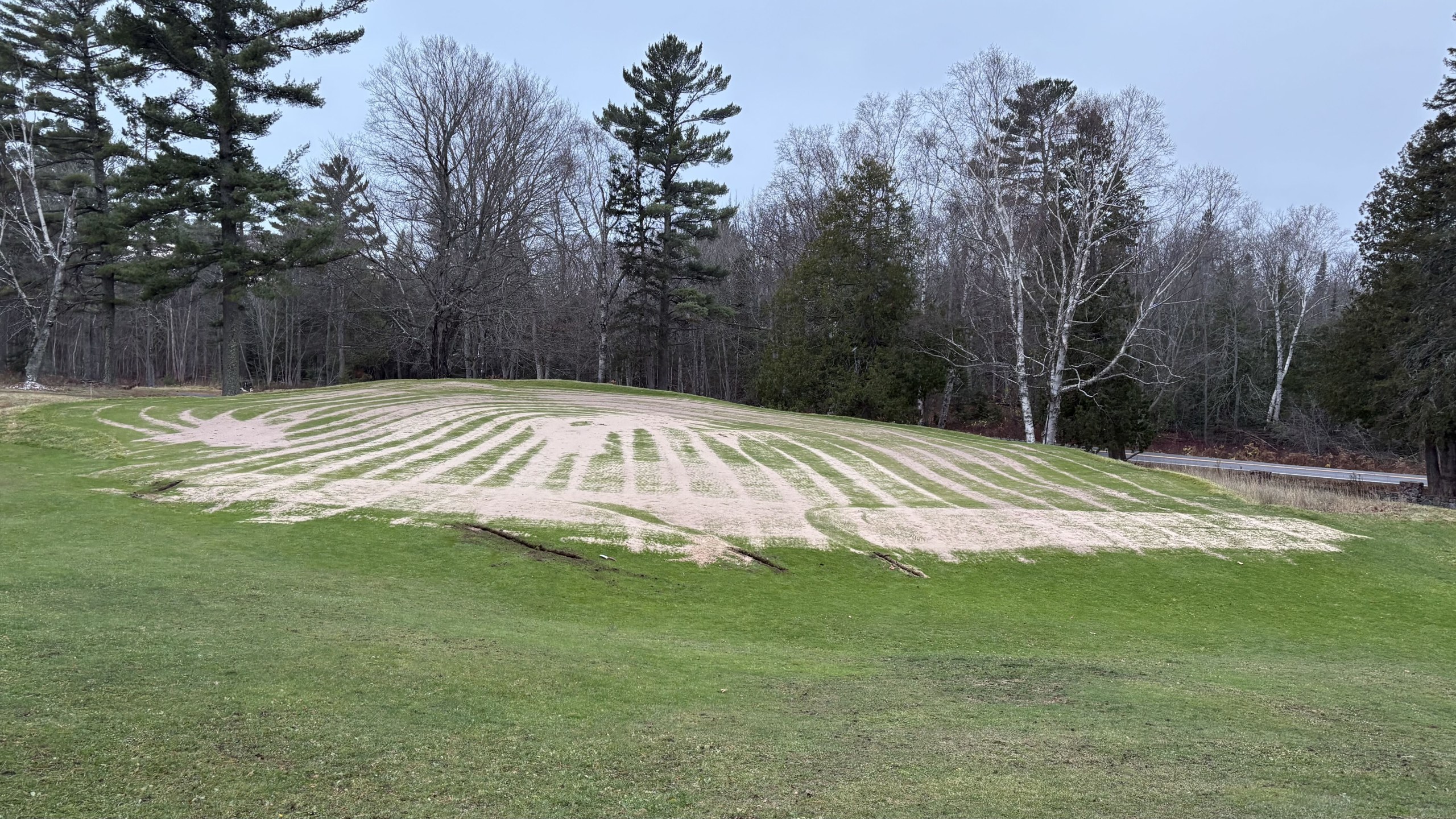
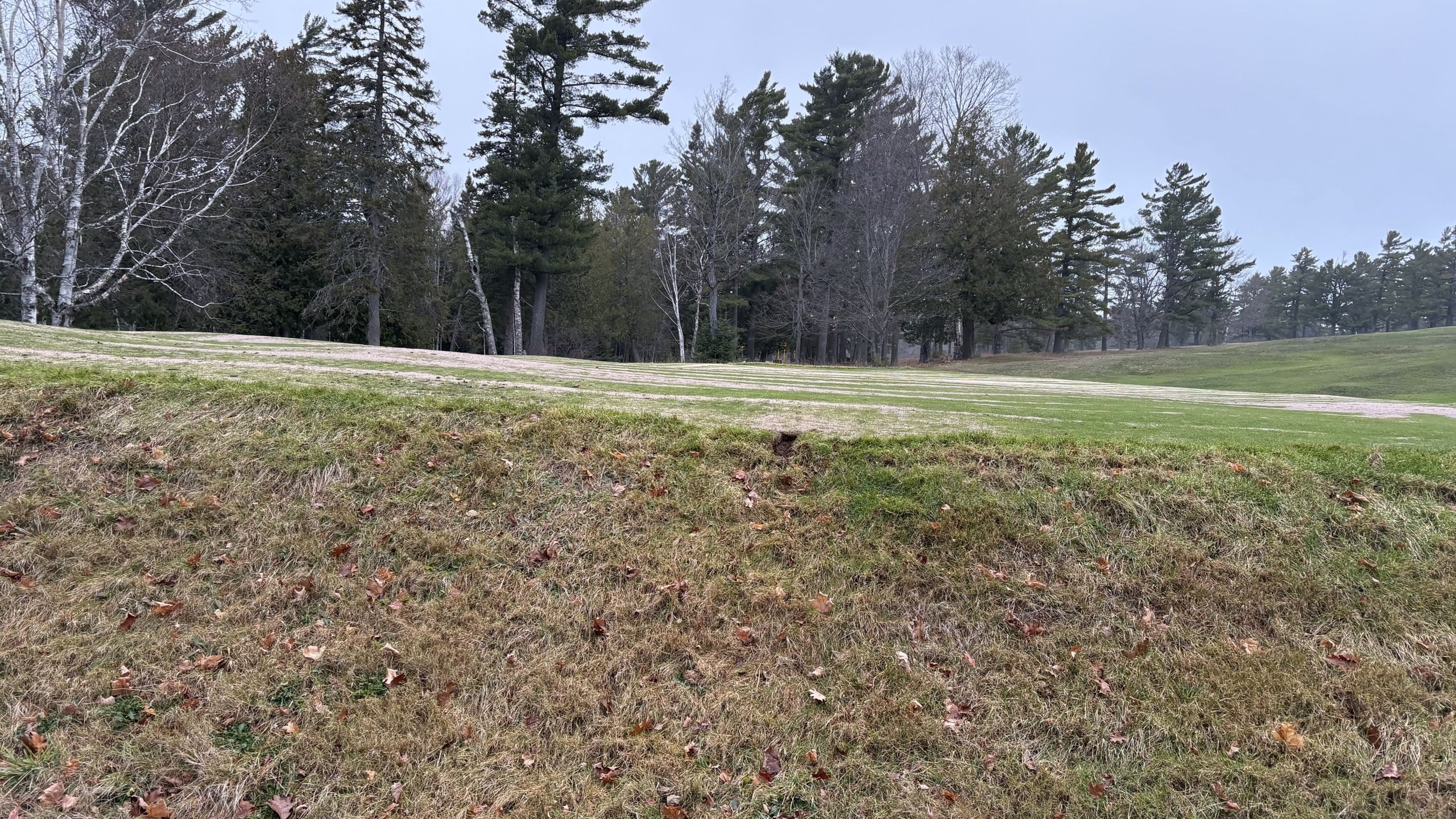
On hole 2 green, we tried something new for the spring. When the snow melts, the collar around the front and left side of the green can act like a dam, holding the meltwater on the putting surface — and standing water is one of the main causes of winterkill. On November 12th, we cut six drainage trenches through the collar on the front and left side of the green to give that water a way off. We placed the trenches where the water collected when the green flooded in July. Together with the expansion of hole 2 green this year, we will see in the spring how well the trenches move the water off the green.
Audubon Cooperative Sanctuary — Certified
On August 20th, we received word from Scott Turner at Audubon International that the golf course has passed all of the environmental stewardship thresholds of the Audubon Cooperative Sanctuary Program for Golf. The Keweenaw Mountain Lodge golf course is now a Certified Audubon Cooperative Sanctuary.
We have been working toward this for the past 5-6 years. For us, the goal was never the certificate. We used the process to get better and better at caring for the land — reducing chemical use, protecting our water, managing habitat for wildlife, and teaching guests about it along the way. That work continues.
Wildlife and Nature on the Golf Course
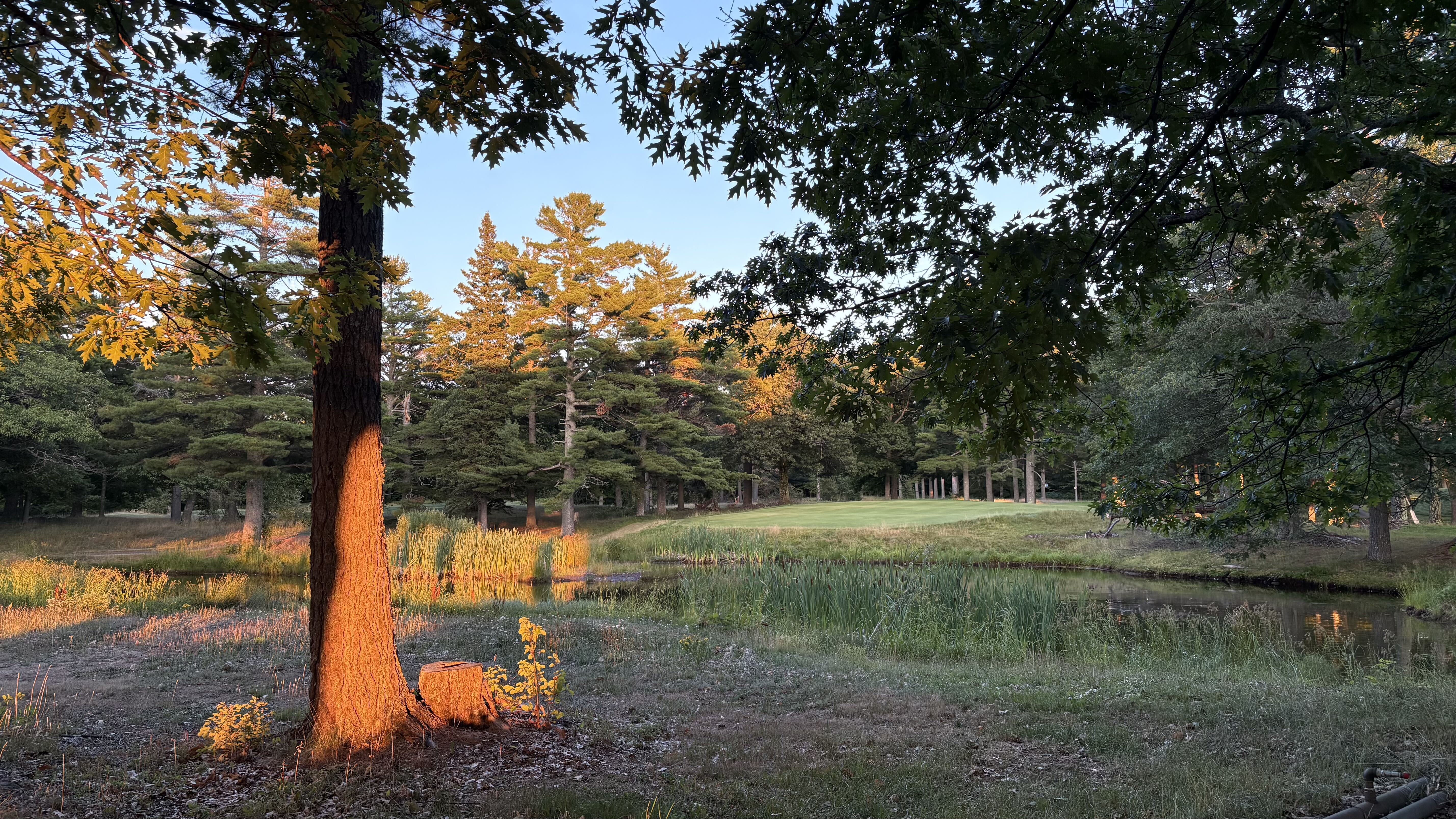
The wildlife was as much a part of the course as ever. Our Sandhill Cranes spent the summer in the tall fine fescue and left for the south in mid-September. Deer — including a doe and her fawn in front of hole 5 green — turkeys, hummingbirds, and a flock of up to 14 geese passing through on their way north were all part of the season.
Golf by Day, Stargazing by Night
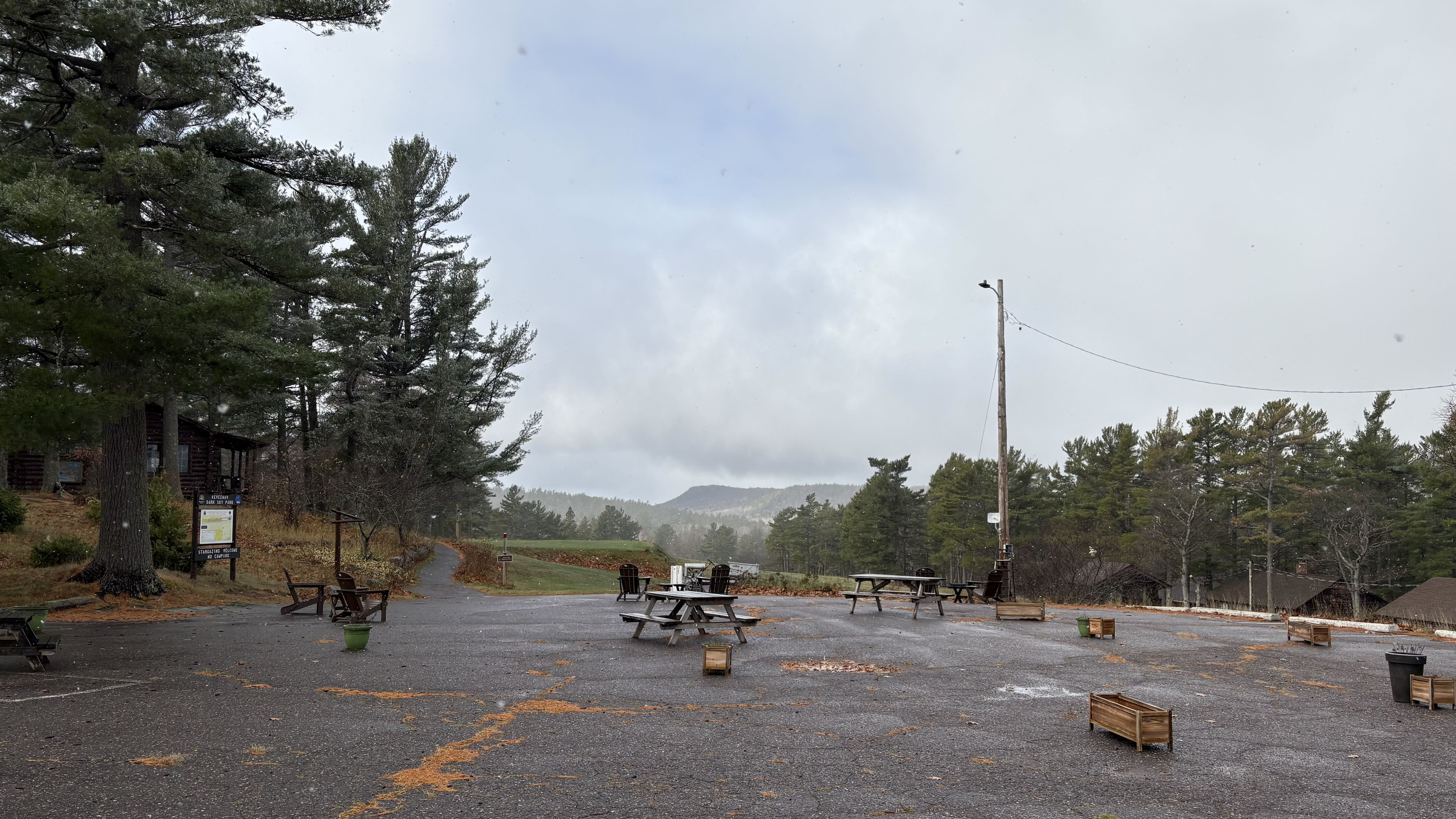
The golf course is also part of the Keweenaw Dark Sky Park. All golfers are off the course by 7:00pm so that, after dark, the course becomes a place to take in the night sky. From 7:00pm to 7:00am, the dark sky park is open for stargazing to both cabin guests and non-cabin guests. When you are out on the course at night, please stay off the greens and tee boxes.
A Reminder for Visitors
During golf hours, the golf course is private property, and it is for cabin guests only. This season we again had people walk onto the course to play or to look for golf balls without permission. Please respect the signs, and if you would like to play, stay with us in one of our cabins.
A New Hole Order for 2027
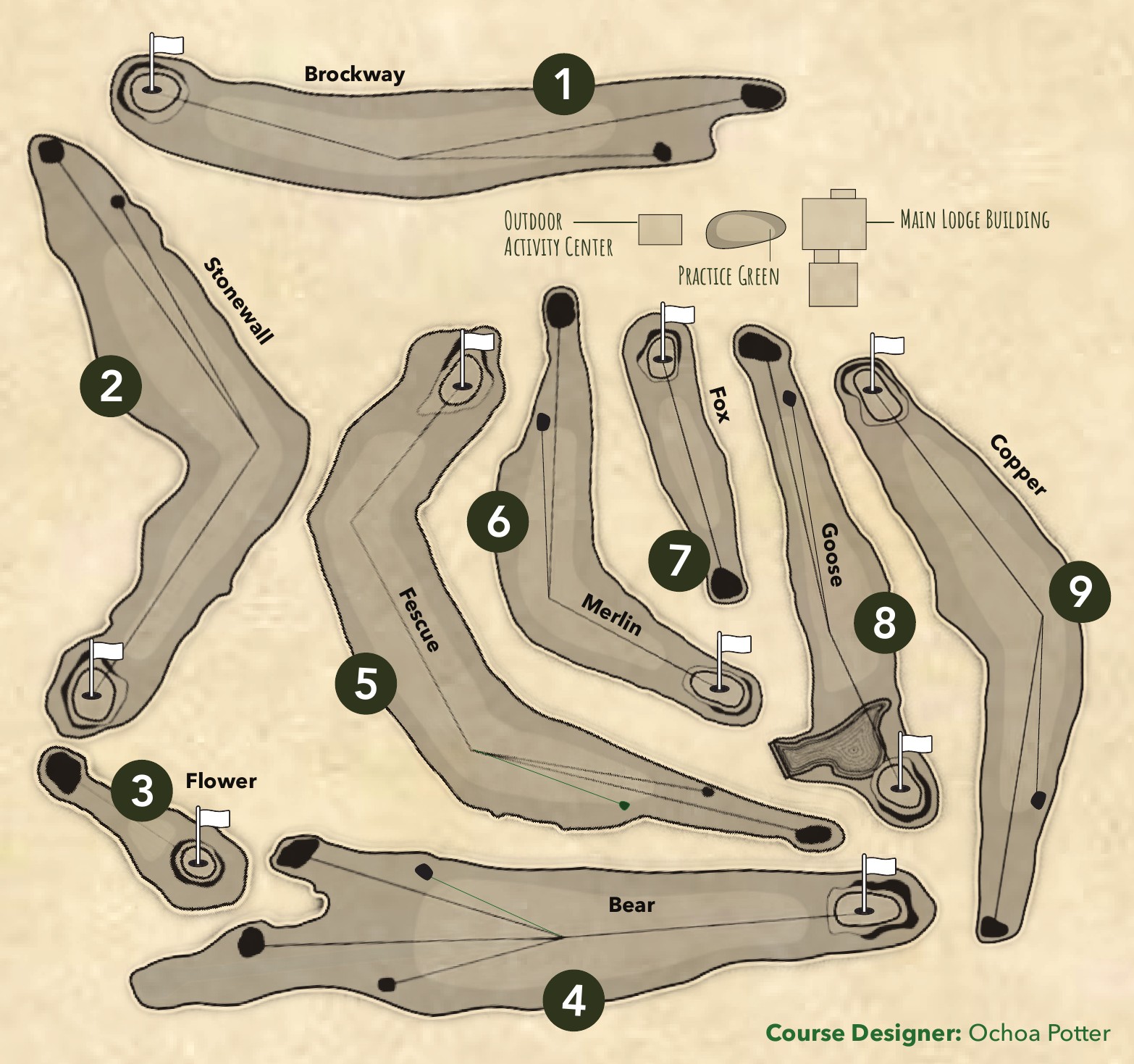
For the 2027 season, we are changing the order of the holes. Holes 1 through 4 stay the same. The back of the routing changes: hole 7 becomes hole 5, hole 8 becomes hole 6, hole 9 becomes hole 7, hole 6 becomes hole 8, and hole 5 becomes hole 9. The course stays a par 35 at 2,968 yards. Golfers will walk a mowed path from the new hole 8 green (today’s hole 6) to the new hole 9 tee (today’s hole 5).
| 2027 Hole | 2026 Hole | Yards | Par |
|---|---|---|---|
| 1 | 1 | 394 | 4 |
| 2 | 2 | 395 | 4 |
| 3 | 3 | 119 | 3 |
| 4 | 4 | 395 | 4 |
| 5 | 7 | 485 | 5 |
| 6 | 8 | 318 | 4 |
| 7 | 9 | 177 | 3 |
| 8 | 6 | 313 | 4 |
| 9 | 5 | 372 | 4 |
Looking Forward: The 2027 Season
Here are several items we are focusing on for 2027:
- Our first full season as a walking-only, hickory-only golf course
- A new order of the holes (see below)
- Finishing the expansion of the greens, to close to 1.8 acres of putting surface
- Building out information about hickory golf clubs on our website and on posters at the Outdoor Activity Center
- Continuing to improve the historic and wilderness nature of the golf course
- Continuing autonomous mowing with the WALL-Es
- Following our 2027 fertilizer plan
- Continuing our environmental stewardship as a Certified Audubon Cooperative Sanctuary
The golf course is now closed for the 2026 golf season and has been put to sleep for the winter. We will open for the 2027 golf season on June 1, 2027.
[ Read the 2025 Golf Season Recap ]
[ a historic wilderness golf course ]
— not a golf course in the wilderness —