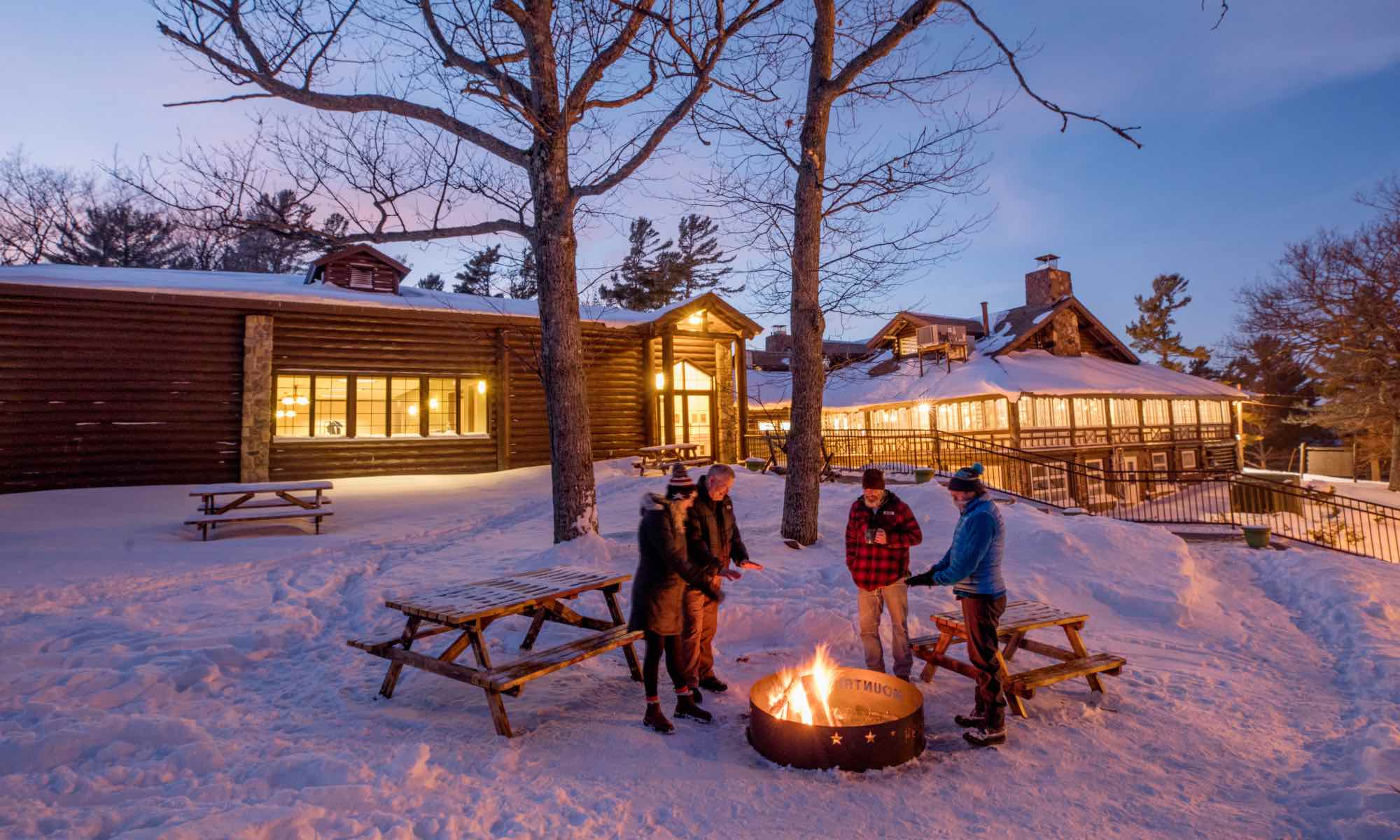
The Keweenaw Peninsula points like a finger into Lake Superior, and for birds heading south in the fall, that finger matters. Migrating birds tend to gather along the peninsula before they decide whether to cross open water, and a great deal of that activity ends up around Copper Harbor. The Keweenaw Mountain Lodge sits right in the middle of it, on 600 acres of natural fairways, forest, and open meadow, surrounded by roughly 32,000 acres owned by The Nature Conservancy.
You do not need a spotting scope, a life list, or any experience to enjoy it. The Lodge is a self-paced place, and birding fits that well. Walk slowly, stand still, and let the property show you what is passing through.
What to Look and Listen For
Fall migration in the Keweenaw is a long season rather than a single weekend. According to Copper Harbor birding resources, warblers and sparrows show up early in the fall. Later come flocks of Horned Larks, American Pipits, Lapland Longspurs, and Rusty Blackbirds, and Snow Buntings are the sign that winter is close behind.
Our three sandhill cranes this year have left for the south, but geese are still passing through our area this fall – with a new guest this year for a week or two, a lone blue heron.
Raptors are a highlight of the region as well. Brockway Mountain, a short drive from the Lodge, is known for raptor movement, with 18 North American raptor species recorded there. The official Brockway Mountain Hawk Watch counts each spring, and the mountain also sees a strong raptor movement in the fall, so a clear day with a northwest wind is a good reason to head up the drive.
Where to Watch on the Property
- The natural fairways. When no one is playing, the golf course looks like a natural area, and it behaves like one. Open ground draws sparrows, pipits, and the occasional raptor hunting the edges.
- The pollinator plots. Our “Monarchs in the Rough” plots, planted with milkweed and Maximilian sunflowers, hold seed late into the season, and seed-eating birds know it.
- The water features and buffers. Vegetative buffers and raised mowing heights around the water give waterbirds and small songbirds cover and food.
- The forest edge near the cabins. Mixed forest is where many migrating songbirds rest and feed before moving on. Sit on your porch with coffee and watch the edge.
- The sky at night. Migration does not stop at dusk. Many songbirds travel after dark, and a clear night with the red lights on and the Lights Out! rule in effect is good for the birds as well as for stargazing.
Birding on Foot or by Bike
The best way to cover the property is on the trails, and we have about 15 miles of them on the property. In the warm months our trails are multi-use and non-motorized, shared by hikers and mountain bikers. The Back 9 Trails are beginner-level (“green”) loops built in the summer of 2019 by Rock Solid Trail Contracting with the Copper Harbor Trails Club: Chipmunk Run (orange loop), Moose on the Loose (purple loop), and Little Loon (yellow loop). They are gentle, quiet routes, helpful for slow birding. From the Lodge trailheads, more experienced riders and hikers can connect into the beginner, intermediate, and advanced trails of the Copper Harbor Trail System.
A few suggestions for birders on the trails:
- Walk, or ride slowly. A bike is a fine way to reach a good spot, but stop and stand still once you arrive. Most birds are heard before they are seen.
- Pick up a map. Trail maps for the Back 9, East, and West trail areas are on our mountain biking page, and the Outdoor Activity Center can point you in the right direction when you arrive. Trek rental bikes are available by reservation.
- Plan for little or no cell service. Download maps and any bird-identification data before you head out.
- Remember the trails belong to the season. From December 15 through March 31, weather permitting, the trails are groomed for cross-country skiing and snowshoeing, which makes winter birding (chickadees, nuthatches, and the occasional Pine Grosbeak, Snow Bunting, or redpoll) a skis-or-snowshoes activity.
What the Lodge Has Been Hearing
We do not only rely on our eyes. A BirdWeather acoustic station (PUC 19597) listens for birds around the Lodge building and identifies them by sound, and you can follow it live on our birding page. The station occasionally moves when a guide takes guests on a hike, so its detections are a good snapshot rather than a formal survey.
At the time of writing, the station showed 7,462 detections of 54 species. The most frequently heard birds were:
| Species | Detections |
|---|---|
| Yellow-rumped Warbler | 2,469 |
| American Crow | 1,253 |
| Golden-crowned Kinglet | 977 |
| Northern Flicker | 365 |
| Blue Jay | 358 |
| Dark-eyed Junco | 322 |
| Eastern Bluebird | 315 |
| White-throated Sparrow | 201 |
Farther down the list are fall migrants that reward a patient listener: Palm Warbler, Brown Creeper, White-crowned Sparrow, American Tree Sparrow, Sandhill Crane, Hermit Thrush, American Pipit, Pine Siskin, Blackpoll Warbler, Ruby-crowned Kinglet, and Fox Sparrow, plus single detections of Merlin, Bald Eagle, Boreal Chickadee, and Rusty Blackbird. On October 15 alone, the station picked up Brown Creepers, White-crowned Sparrows, Golden-crowned Kinglets, Dark-eyed Juncos, and Hairy Woodpeckers around the Lodge building, with American Crows calling throughout the afternoon.
Why the Habitat Matters
On August 20, 2026, our historic wilderness golf course was designated a Certified Audubon Cooperative Sanctuary by Audubon International. The program looks at wildlife and habitat management, chemical use reduction, water conservation, water quality, and outreach and education. The choices behind it are the same ones that help migrating birds: minimal chemical inputs, an integrated pest management program, hand-pulling weeds rather than using aquatic herbicides, hybrid and electric maintenance equipment, and walking-only, hickory-only play that avoids carts and soil compaction. We coexist with the cranes, geese, foxes, and deer rather than trying to deter them.
This is also why the grounds are quiet. Since 2024 the Lodge has been for cabin guests only, which means fewer cars, fewer people, and less noise and disturbance for wildlife. Birds notice.
Tips for a Good Birding Stay
- Go early. The first two hours after sunrise are usually the busiest.
- Move slowly and stop often. Most birds are heard before they are seen.
- Bring binoculars if you have them. We do not require anything else. Binoculars simply turn a gray flicker into a species.
- Use free tools. The Merlin Bird ID and eBird apps work well for identification and for logging what you see. Download any offline data before you arrive, because the Wi-Fi is better closer to the Lodge than at the outer cabins.
- Keep your distance. Stay on trails, keep dogs leashed in the designated areas, and leave nests and roosting birds undisturbed.
- Dress for the weather. Late fall in the Keweenaw can change in an hour.
Plan Your Visit
The Lodge is open to cabin guests year-round except for our staff holiday closure, November 16 through December 14, and all of April. The forest-side cabins (15 through 25) close October 16 through May 15, so late-season guests stay in the golf-course-side cabins (1 through 14), which are also close to the open ground where many migrants feed. Every lodging reservation includes a from-scratch breakfast burrito and drip coffee at the Little Cabin Café, 8 to 11 am, which is a fine way to start a morning in the field.
If you would like to go deeper, the Upper Peninsula Dark Sky Festival and the Keweenaw’s Migratory Bird Festival both fit well with a stay, and Copper Harbor Birding and Copper Country Audubon publish local sightings and hawk watch information.
Reserve a cabin · Read about our Audubon certification · Our sustainability work
Our purpose is to get people closer to nature. The birds are already doing their part.